


Spatial distribution and factors shaping the niche segregation of ammonia-oxidizing microorganisms in the Qiantang River, China
- PMID: 23624482
- PMCID: PMC3697550
- DOI: 10.1128/AEM.00543-13
Spatial distribution and factors shaping the niche segregation of ammonia-oxidizing microorganisms in the Qiantang River, China
Abstract
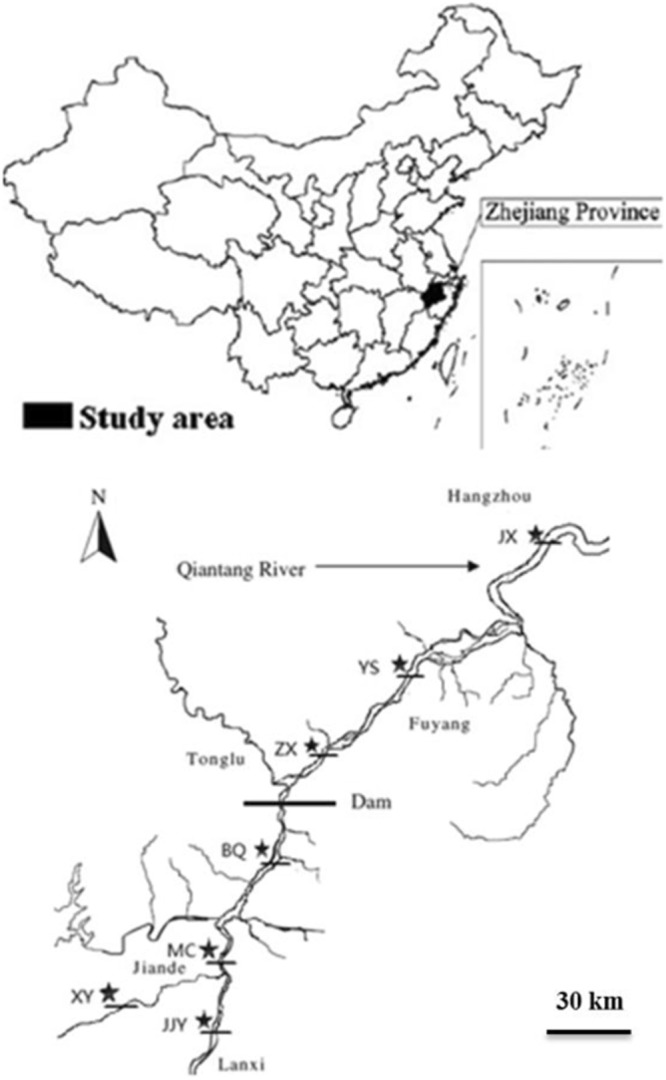
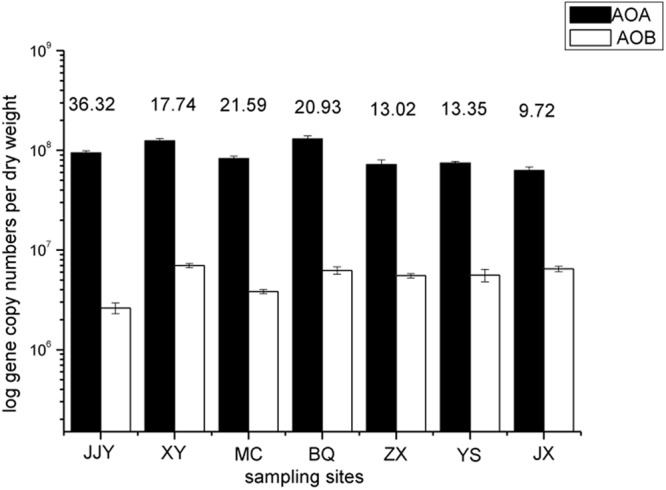
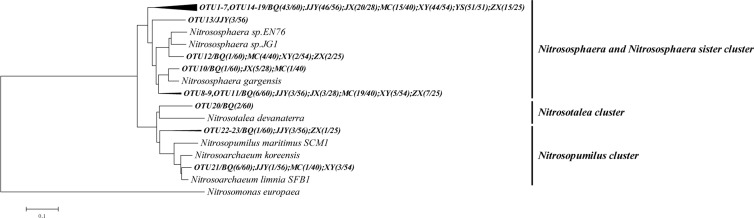
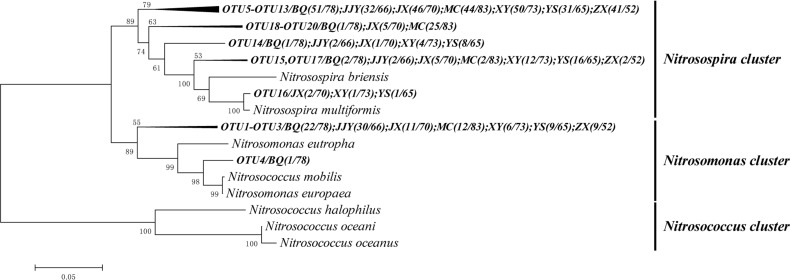
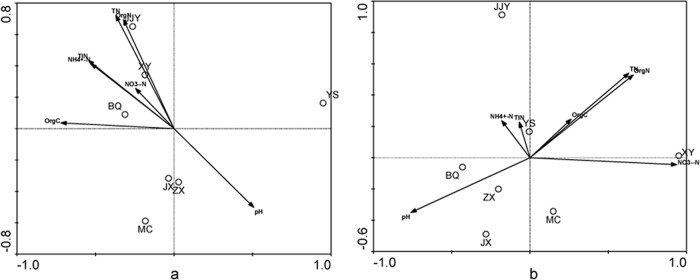
Ammonia oxidation is performed by both ammonia-oxidizing archaea (AOA) and ammonia-oxidizing bacteria (AOB). However, the current knowledge of the distribution, diversity, and relative abundance of these two microbial groups in freshwater sediments is insufficient. We examined the spatial distribution and analyzed the possible factors leading to the niche segregation of AOA and AOB in the sediments of the Qiantang River, using clone library construction and quantitative PCR for both archaeal and bacterial amoA genes. pH and NH4(+)-N content had a significant effect on AOA abundance and AOA operational taxonomy unit (OTU) numbers. pH and organic carbon content influenced the ratio of AOA/AOB OTU numbers significantly. The influence of these factors showed an obvious spatial trend along the Qiantang River. This result suggested that AOA may contribute more than AOB to the upstream reaches of the Qiantang River, where the pH is lower and the organic carbon and NH4(+)-N contents are higher, but AOB were the principal driver of nitrification downstream, where the opposite environmental conditions were present.
Figures
References
-
- Venter JC, Remington K, Heidelberg JF, Halpern AL, Rusch D, Eisen JA, Wu DY, Paulsen I, Nelson KE, Nelson W, Fouts DE, Levy S, Knap AH, Lomas MW, Nealson K, White O, Peterson J, Hoffman J, Parsons R, Baden-Tillson H, Pfannkoch C, Rogers YH, Smith HO. 2004. Environmental genome shotgun sequencing of the Sargasso Sea. Science 304:66–74 - PubMed
-
- Treusch AH, Leininger S, Kletzin A, Schuster SC, Klenk HP, Schleper C. 2005. Novel genes for nitrite reductase and Amo-related proteins indicate a role of uncultivated mesophilic crenarchaeota in nitrogen cycling. Environ. Microbiol. 7:1985–1995 - PubMed
-
- Könneke M, Bernhard AE, de la Torre JR, Walker CB, Waterbury JB, Stahl DA. 2005. Isolation of an autotrophic ammonia-oxidizing marine archaeon. Nature 437:543–546 - PubMed
Publication types
MeSH terms
Substances
Associated data
- Actions
- Actions
- Actions
- Actions
- Actions
- Actions
- Actions
- Actions
- Actions
- Actions
- Actions
- Actions
- Actions
- Actions
- Actions
- Actions
- Actions
- Actions
- Actions
- Actions
- Actions
- Actions
- Actions
- Actions
- Actions
- Actions
- Actions
- Actions
- Actions
- Actions
- Actions
- Actions
- Actions
- Actions
- Actions
- Actions
LinkOut - more resources
Full Text Sources
Other Literature Sources
