


An analysis of the treatment effect of panitumumab on overall survival from a phase 3, randomized, controlled, multicenter trial (20020408) in patients with chemotherapy refractory metastatic colorectal cancer
- PMID: 23625191
- PMCID: PMC3669517
- DOI: 10.1007/s11523-013-0271-z
An analysis of the treatment effect of panitumumab on overall survival from a phase 3, randomized, controlled, multicenter trial (20020408) in patients with chemotherapy refractory metastatic colorectal cancer
Abstract
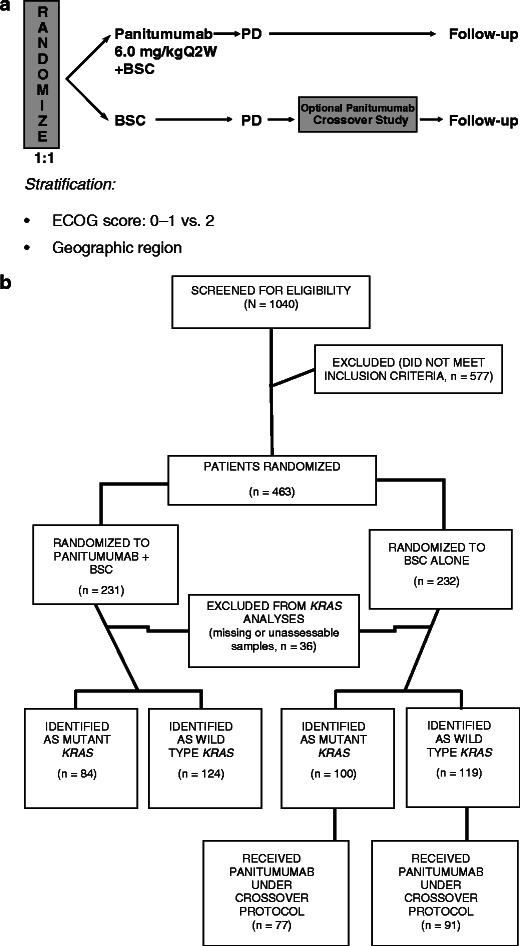
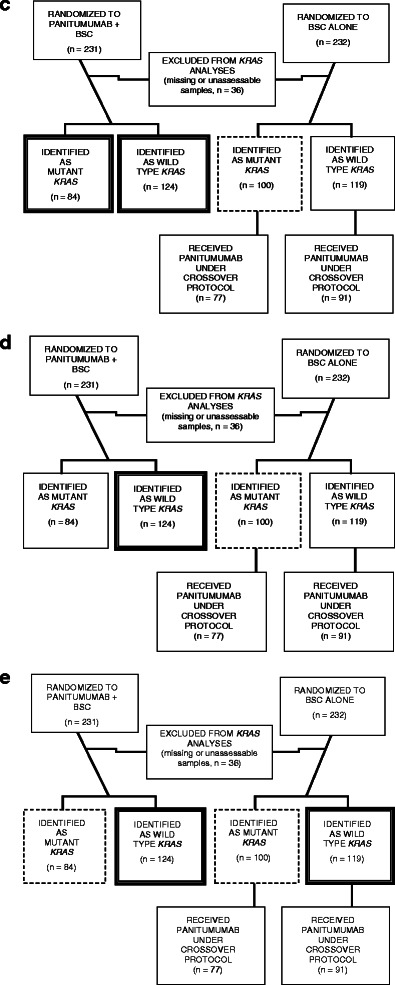
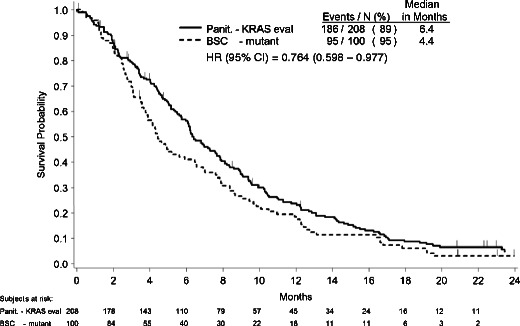
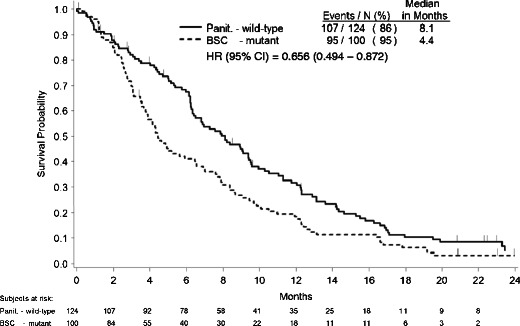
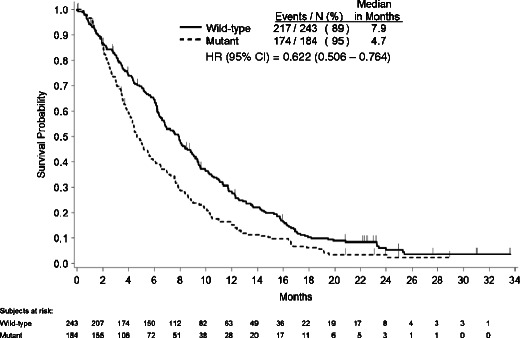
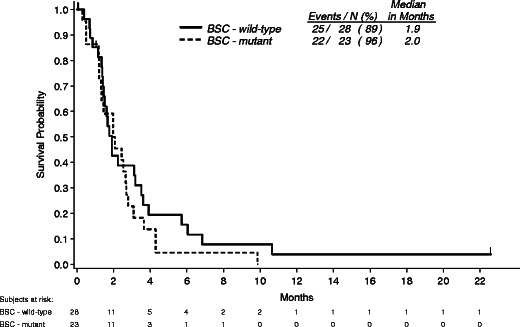
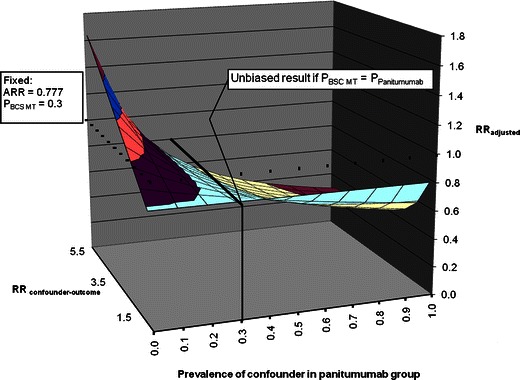
Panitumumab is a fully human monoclonal antibody that targets the epidermal growth factor receptor. Results from the primary analysis of a phase 3, randomized, controlled study showed a statistically significant improvement in progression-free survival for patients receiving panitumumab; however, overall survival was confounded by best supportive care (BSC) patients that crossed over to panitumumab therapy after disease progression. Three post hoc analyses are presented that approximate the panitumumab overall survival treatment effect in both the all-randomized and wild-type (WT) KRAS populations by using the BSC patients with mutant (MT) KRAS as the comparator group to discount the effect of crossover from BSC to panitumumab. The primary post hoc analysis showed a median overall survival of 6.4 months for all KRAS-evaluable patients randomized to panitumumab versus 4.4 months for patients with MT KRAS tumors randomized to BSC, yielding an adjusted hazard ratio (95 % CI) of 0.764 (0.598-0.977). Similar results were observed for the two secondary post hoc analyses. These analyses suggest a positive treatment effect of panitumumab in both the overall and WT KRAS patient populations consistent with an improvement in overall survival relative to BSC.
Trial registration: ClinicalTrials.gov NCT00113763.
Figures
References
-
- Van Cutsem E, Peeters M, Siena S, Humblet Y, Hendlisz A, Neyns B, Canon JL, Van Laethem JL, Maurel J, Richardson G, Wolf M, Amado RG. Open-label phase III trial of panitumumab plus best supportive care compared with best supportive care alone in patients with chemotherapy-refractory metastatic colorectal cancer. J Clin Oncol. 2007;25(13):1658–1664. doi: 10.1200/JCO.2006.08.1620. - DOI - PubMed
-
- Cunningham D, Humblet Y, Siena S, Khayat D, Bleiberg H, Santoro A, Bets D, Mueser M, Harstrick A, Verslype C, Chau I, Van Cutsem E. Cetuximab monotherapy and cetuximab plus irinotecan in irinotecan-refractory metastatic colorectal cancer. N Engl J Med. 2004;351(4):337–345. doi: 10.1056/NEJMoa033025. - DOI - PubMed
-
- Van Cutsem E, Kohne CH, Hitre E, Zaluski J, Chang Chien CR, Makhson A, D'Haens G, Pinter T, Lim R, Bodoky G, Roh JK, Folprecht G, Ruff P, Stroh C, Tejpar S, Schlichting M, Nippgen J, Rougier P. Cetuximab and chemotherapy as initial treatment for metastatic colorectal cancer. N Engl J Med. 2009;360(14):1408–1417. doi: 10.1056/NEJMoa0805019. - DOI - PubMed
Publication types
MeSH terms
Substances
Associated data
LinkOut - more resources
Full Text Sources
Other Literature Sources
Medical
Research Materials
Miscellaneous
