


An Evolutionary Fitness Enhancement Conferred by the Circadian System in Cyanobacteria
- PMID: 23626410
- PMCID: PMC3633149
- DOI: 10.1016/j.chaos.2012.11.006
An Evolutionary Fitness Enhancement Conferred by the Circadian System in Cyanobacteria
Abstract
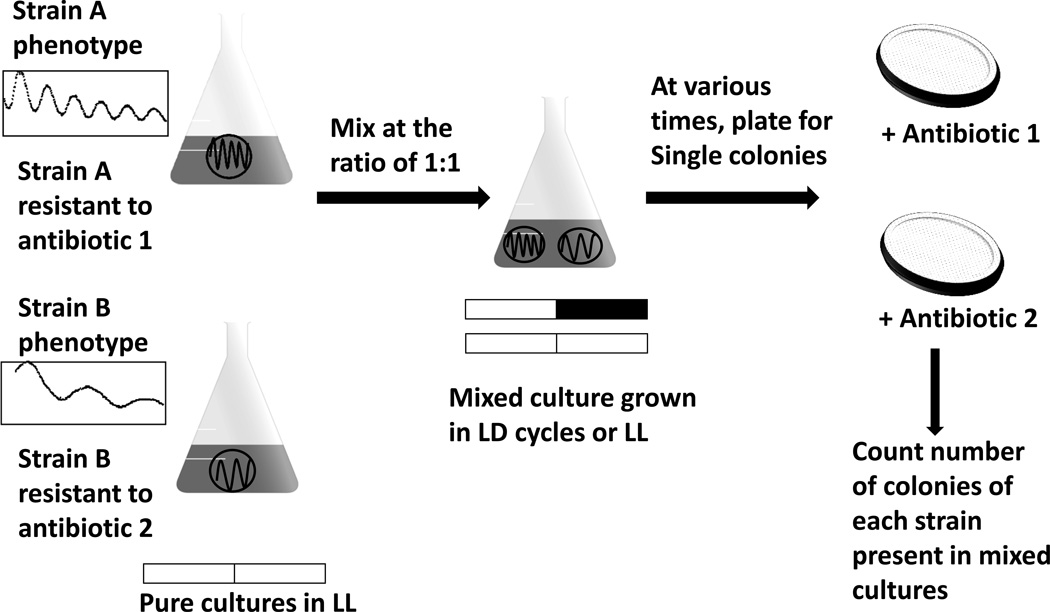
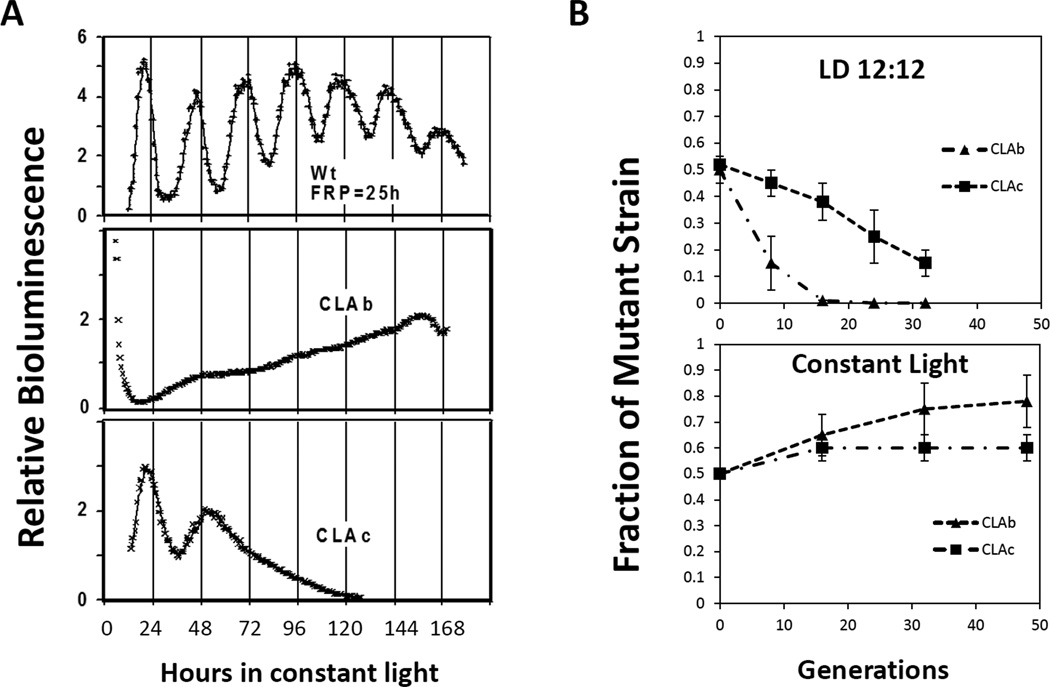
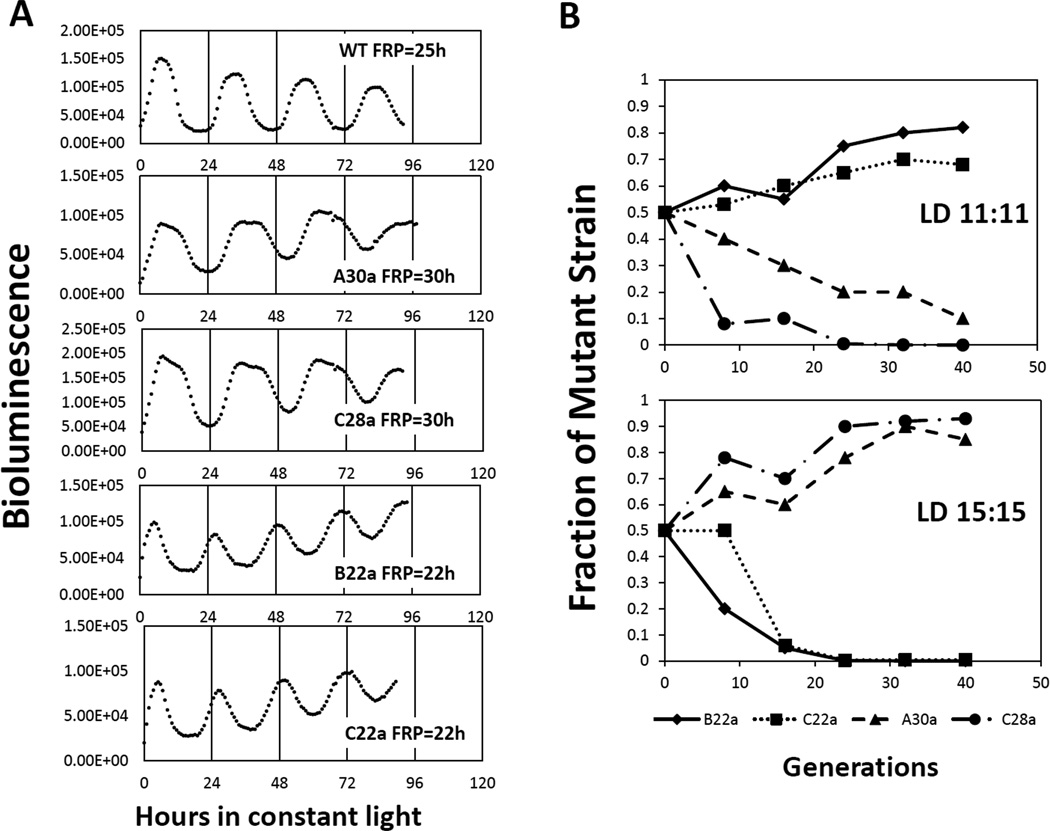
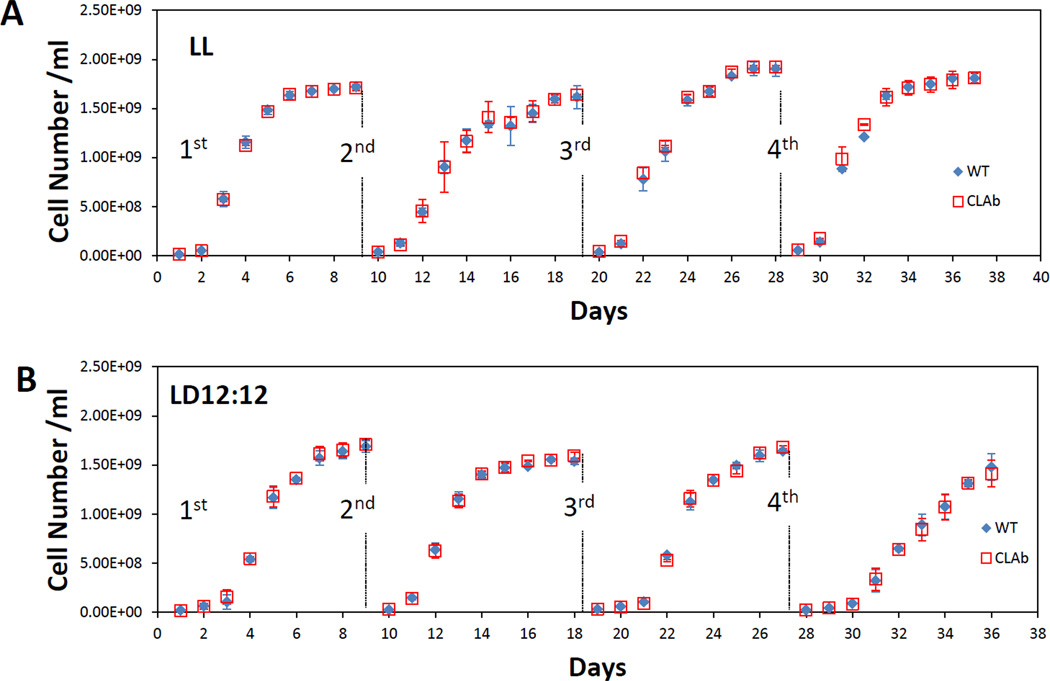
Circadian clocks are found in a wide variety of organisms from cyanobacteria to mammals. Many believe that the circadian clock system evolved as an adaption to the daily cycles in light and temperature driven by the rotation of the earth. Studies on the cyanobacterium, Synechococcus elongatus PCC 7942, have confirmed that the circadian clock in resonance with environmental cycles confers an adaptive advantage to cyanobacterial strains with different clock properties when grown in competition under light-dark cycles. The results thus far suggest that in a cyclic environment, the cyanobacterial strains whose free running periods are closest to the environmental period are the most fit and the strains lacking a functional circadian clock are at a competitive disadvantage relative to strains with a functional clock. In contrast, the circadian system provides little or no advantage to cyanobacteria grown in competition in constant light. To explain the potential mechanism of this clock-mediated enhancement in fitness in cyanobacteria, several models have been proposed; these include the limiting resource model, the diffusible inhibitor model and the cell-to-cell communication model. None of these models have been excluded by the currently available experimental data and the mechanistic basis of clock-mediated fitness enhancement remains elusive.
Figures
References
-
- Johnson CH, Elliott J, Foster R, Honma K, Kronauer R. Fundamental Properties of Circadian Rhythms. In: Dunlap JC, Loros JJ, DeCoursey PJ, editors. Chronobiology: Biological timekeeping. Sunderland: Sinauer; 2004. pp. 67–105.
-
- Edmunds LN., Jr Chronobiology at the cellular and molecular levels: models and mechanisms for circadian timekeeping. Am. J. Anat. 1983;168:389–431. - PubMed
-
- Woelfle MA, Johnson CH. The adaptive value of the circadian clock system in cyanobacteria. In: Ditty JL, Mackey SR, Johnson CH, editors. Bacterial circadian programs. New York: Springer-Verlag LLC; 2009. pp. 207–224.
-
- DeCoursey PJ, Walker JK, Smith SA. A circadian pacemaker in free-living chipmunks: essential for survival. J. Comp. Physiol. A. 2000;186:169–180. - PubMed
-
- Klarsfeld A, Rouyer F. Effects of circadian mutations and LD periodicity on the life span of Drosophila melanogaster. J. Biol. Rhythms. 1998;13:471–478. - PubMed
Grants and funding
LinkOut - more resources
Full Text Sources
Other Literature Sources
Molecular Biology Databases