


Predicting mortality of incident dialysis patients in Taiwan--a longitudinal population-based study
- PMID: 23626754
- PMCID: PMC3633990
- DOI: 10.1371/journal.pone.0061930
Predicting mortality of incident dialysis patients in Taiwan--a longitudinal population-based study
Abstract
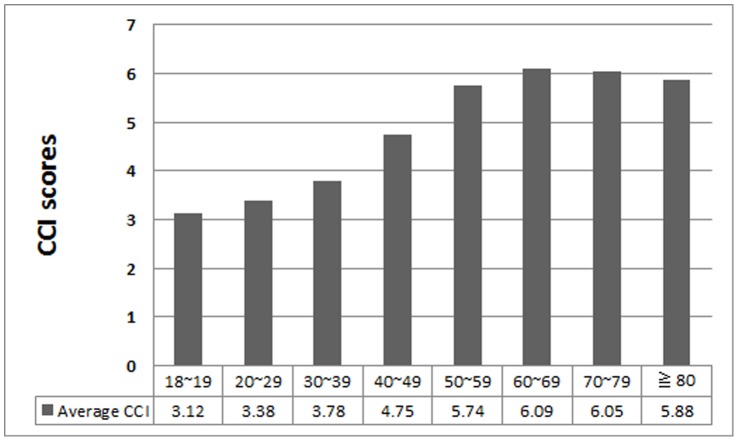
Background: Comorbid conditions are highly prevalent among patients with end-stage renal disease (ESRD) and index score is a predictor of mortality in dialysis patients. The aim of this study is to perform a population-based cohort study to investigate the survival rate by age and Charlson comorbidity index (CCI) in incident dialysis patients.
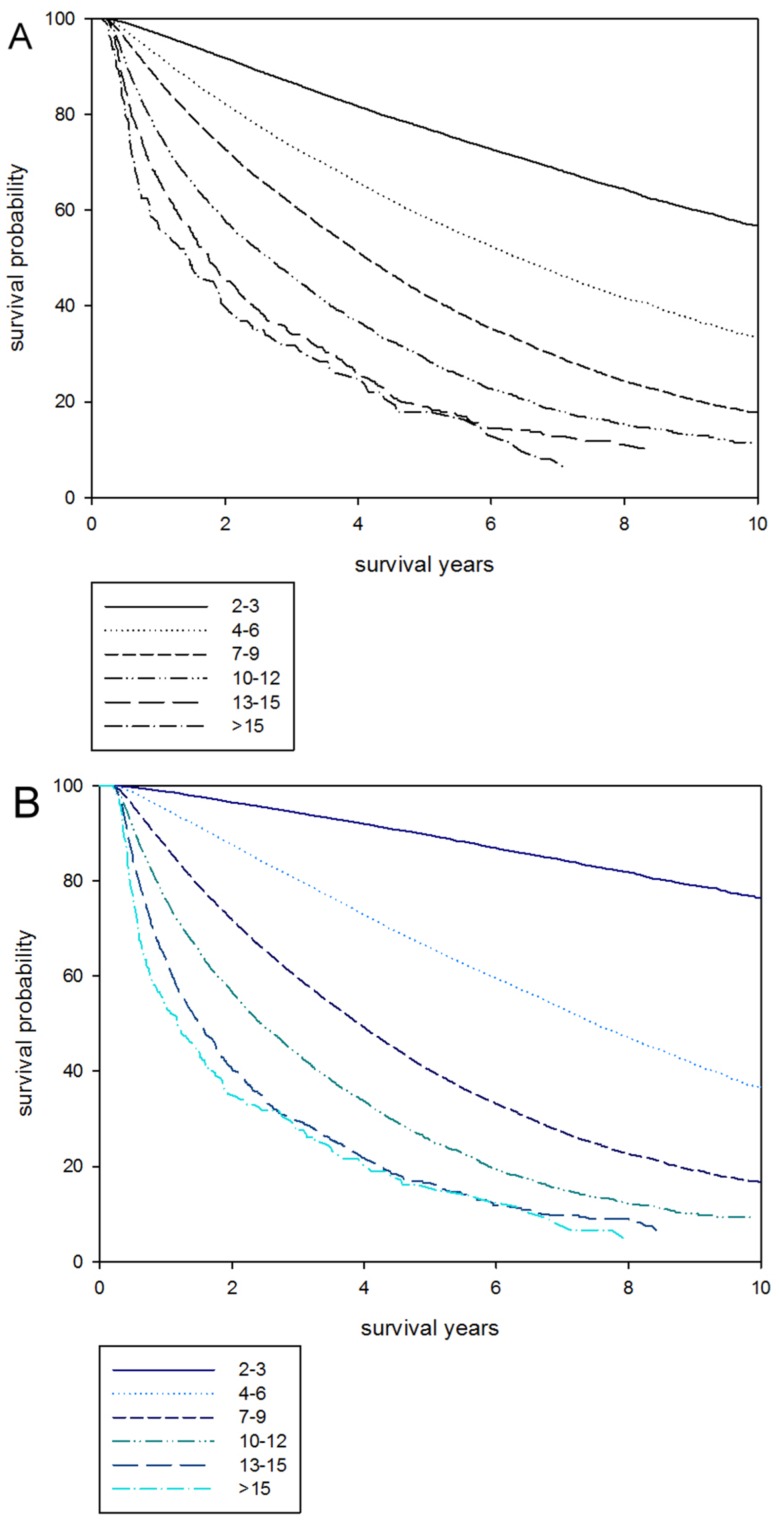
Methods: Using the catastrophic illness registration of the Taiwan National Health Insurance Research Database for all patients from 1 January 1998 to 31 December 2008, individuals newly diagnosed with ESRD and receiving dialysis for more than 90 days were eligible for our study. Individuals younger than 18 years or renal transplantation patients either before or after dialysis were excluded. We calculated the CCI, age-weighted CCI by Deyo-Charlson method according to ICD-9 code and categorized CCI into six groups as index scores <3, 4-6, 7-9, 10-12, 13-15, >15. Cox regression models were used to analyze the association between age, CCI and survival, and the risk markers of survival.
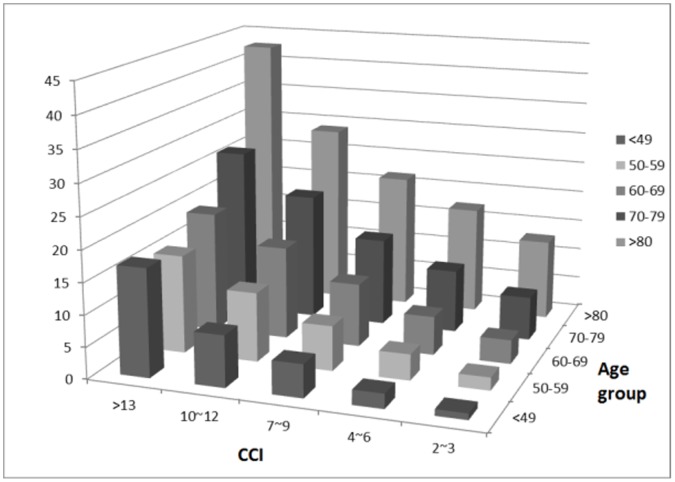
Results: There were 79,645 incident dialysis patients, whose mean age (± SD) was 60.96 (±13.92) years; 51.43% of patients were women and 51.2% were diabetic. In cox proportional hazard models and stratifying by age, older patients had significantly higher mortality than younger patients. The mortality risk was higher in persons with higher CCI as compared with low CCI. Mortality increased steadily with higher age or comorbidity both for unadjusted and for adjusted models. For all age groups, mortality rates increased in different CCI groups with the highest rates occurring in the oldest age groups.
Conclusions: Age and CCI are both strong predictors of survival in Taiwan. The older age or higher comorbidity index in incident dialysis patient is associated with lower long-term survival rates. These population-based estimates may assist clinicians who make decisions when patients need long-term dialysis.
Conflict of interest statement
Figures
References
-
- Bradbury BD, Fissell RB, Albert JM, Anthony MS, Critchlow CW, et al. (2007) Predictors of early mortality among incident US hemodialysis patients in the Dialysis Outcomes and Practice Patterns Study (DOPPS). Clin J Am Soc Nephrol 2: 89–99. - PubMed
-
- Collins AJ, Foley RN, Herzog C, Chavers B, Gilbertson D, et al. (2009) United States Renal Data System 2008 Annual Data Report. Am J Kidney Dis 53: S1–374. - PubMed
-
- Khan IH, Catto GR, Edward N, Fleming LW, Henderson IS, et al. (1993) Influence of coexisting disease on survival on renal-replacement therapy. Lancet 341: 415–418. - PubMed
-
- Nicolucci A, Cubasso D, Labbrozzi D, Mari E, Impicciatore P, et al. (1992) Effect of coexistent diseases on survival of patients undergoing dialysis. ASAIO J 38: M291–295. - PubMed
-
- van Manen JG, Korevaar JC, Dekker FW, Boeschoten EW, Bossuyt PM, et al. (2002) How to adjust for comorbidity in survival studies in ESRD patients: a comparison of different indices. Am J Kidney Dis 40: 82–89. - PubMed
MeSH terms
LinkOut - more resources
Full Text Sources
Other Literature Sources
Medical
