


Methamphetamine and dopamine receptor D1 regulate entrainment of murine circadian oscillators
- PMID: 23626822
- PMCID: PMC3633847
- DOI: 10.1371/journal.pone.0062463
Methamphetamine and dopamine receptor D1 regulate entrainment of murine circadian oscillators
Abstract
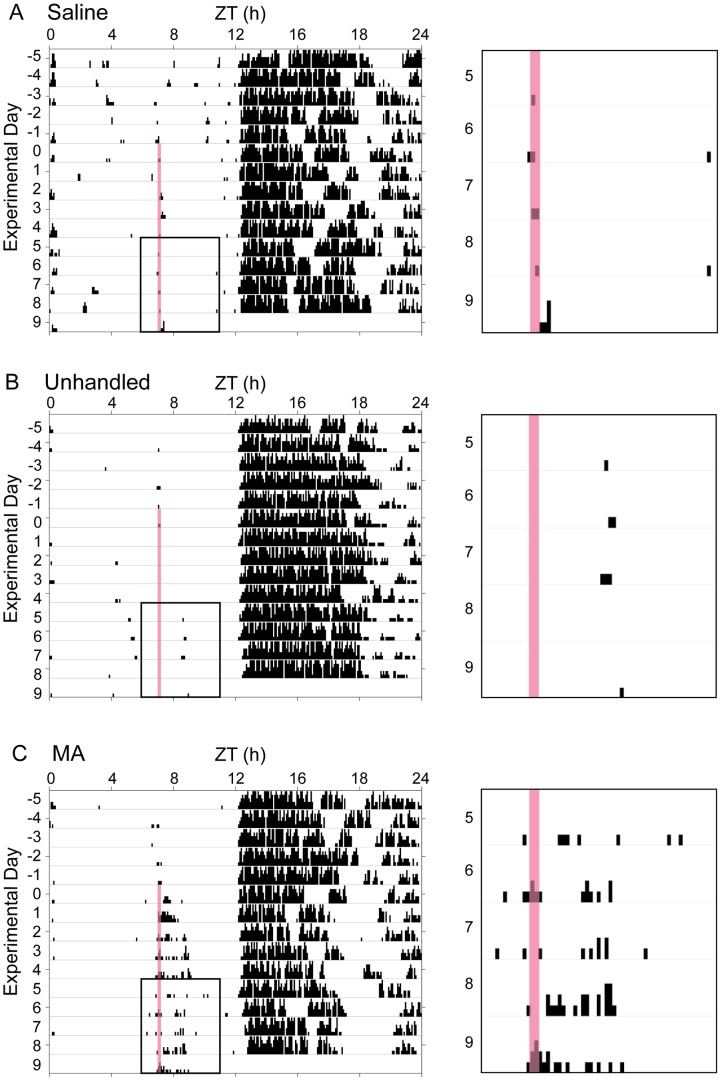
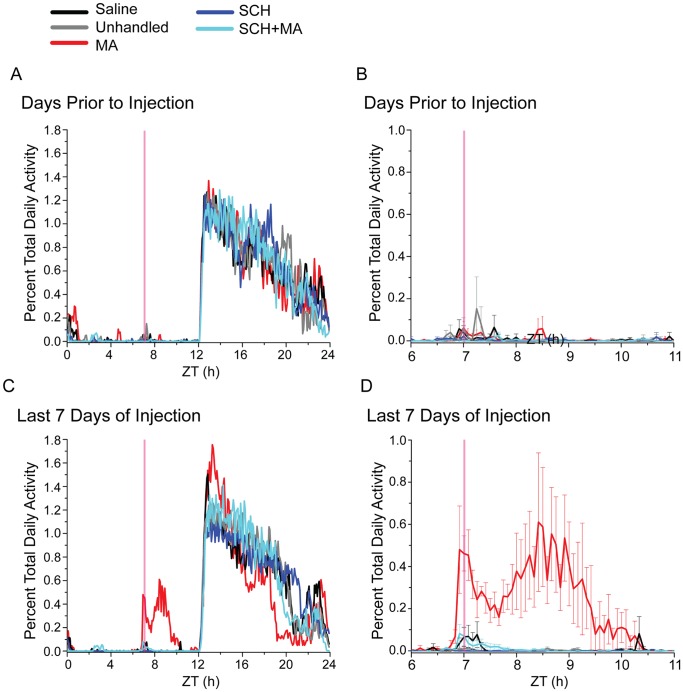
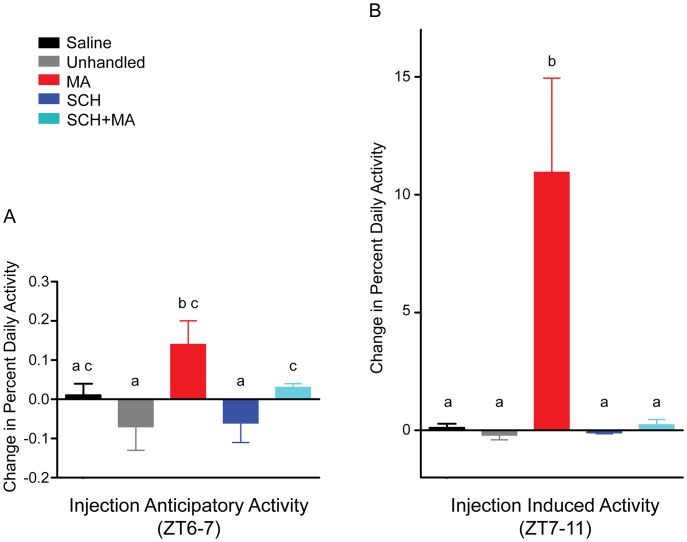
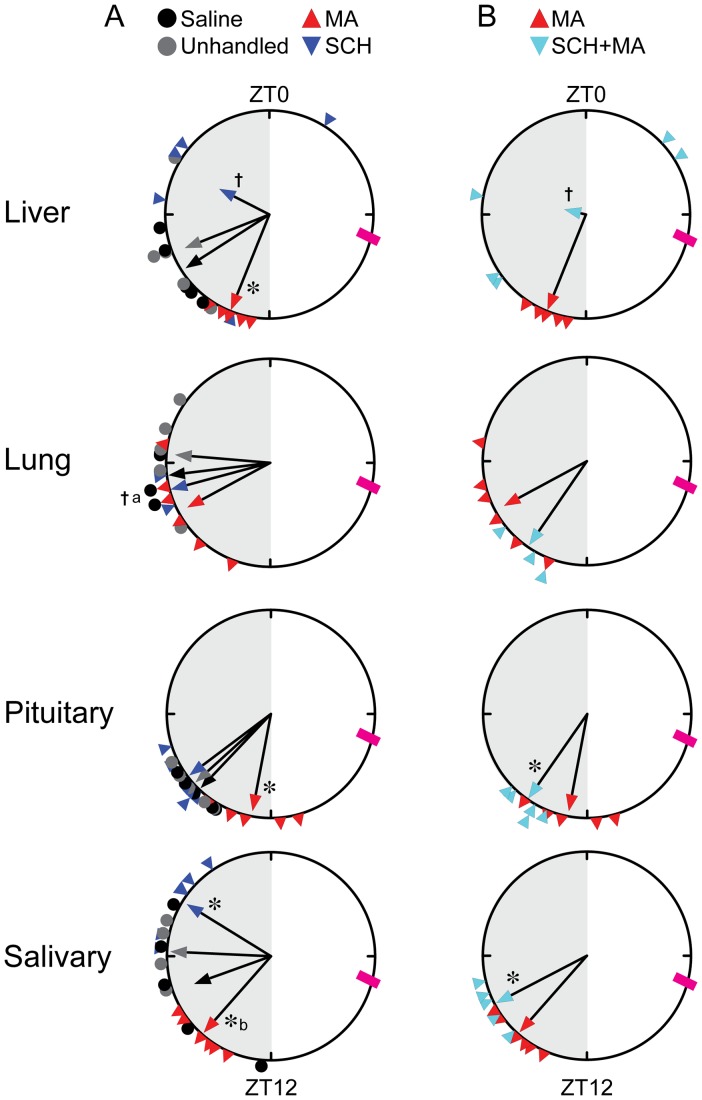
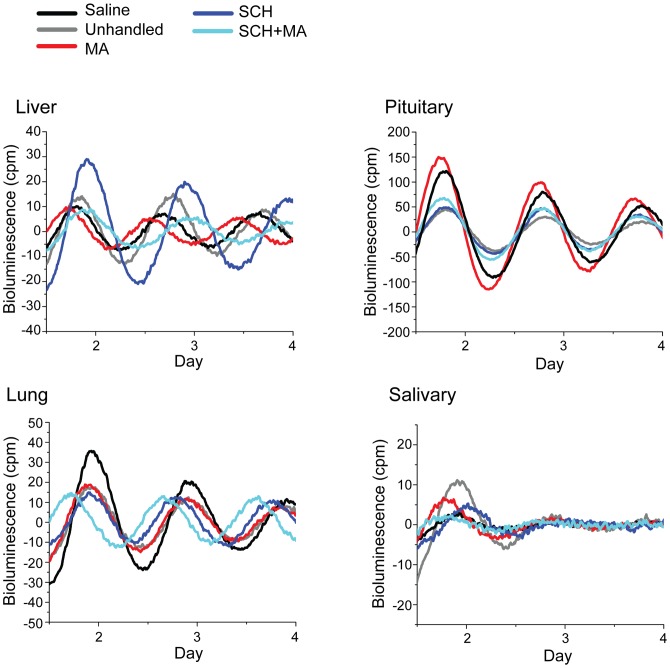
We investigated the effect of methamphetamine (MA) injections on the circadian organization of behavior and individual tissues in the mouse. Scheduled, daily injections of MA resulted in anticipatory activity, with an increase in locomotor activity immediately prior to the time of injection. Daily MA also shifted the peak time of PER2 expression in the liver, pituitary, and salivary glands. It has been suggested that reward pathways, and dopamine signaling in particular, may underlie the effects of MA on the circadian system. To test this hypothesis, we examined the effect of the D1 receptor antagonist SCH23390 (SCH) on circadian rhythms. The MA-induced shift in the phase of pituitary and salivary glands was attenuated by pretreatment with the D1 antagonist SCH23390 (SCH). Interestingly, daily SCH, administered alone, also affected some circadian oscillators. The livers and lungs (but not pituitaries or salivary glands) of mice treated with daily injections of SCH displayed disrupted rhythms of PER2 expression, suggesting that D1 receptor signaling is important for entrainment of these organs. From these results, we conclude that MA has widespread effects within the circadian system, and that these effects are mediated, at least in part, by the dopaminergic system. This study also identifies a role for dopamine signaling in normal entrainment of circadian oscillators.
Conflict of interest statement
Figures
References
-
- Moore RY, Eichler VB (1972) Loss of a circadian adrenal corticosterone rhythm following suprachiasmatic lesions in the rat. Brain Res 42: 201–206. - PubMed
-
- Honma K, Honma S, Hiroshige T (1987) Activity rhythms in the circadian domain appear in suprachiasmatic nuclei lesioned rats given methamphetamine. Physiol Behav 40: 767–774. - PubMed
-
- Krieger DT, Hauser H, Krey LC (1977) Suprachiasmatic nuclear lesions do not abolish food-shifted circadian adrenal and temperature rhythmicity. Science 197: 398–399. - PubMed
-
- Marchant EG, Mistlberger RE (1997) Anticipation and entrainment to feeding time in intact and SCN-ablated C57BL/6j mice. Brain Res 765: 273–282. - PubMed
Publication types
MeSH terms
Substances
Grants and funding
LinkOut - more resources
Full Text Sources
Other Literature Sources
Medical
Miscellaneous
