


Endothelial necrosis at 1 hour postburn predicts progression of tissue injury
- PMID: 23627744
- PMCID: PMC3700667
- DOI: 10.1111/wrr.12053
Endothelial necrosis at 1 hour postburn predicts progression of tissue injury
Abstract
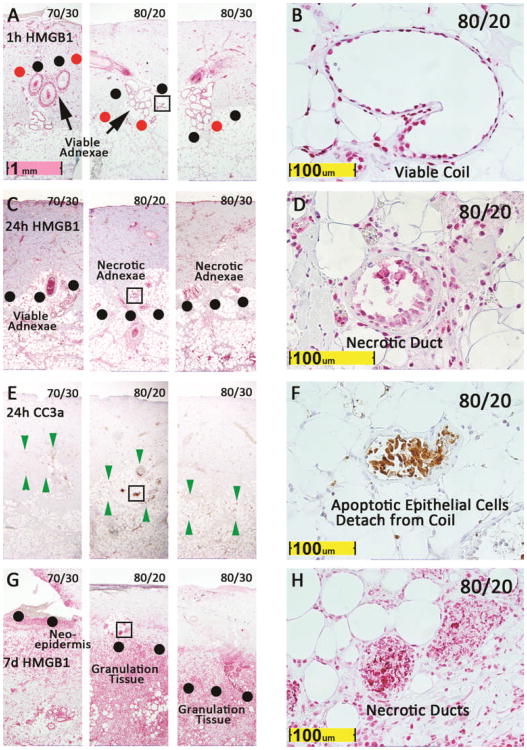
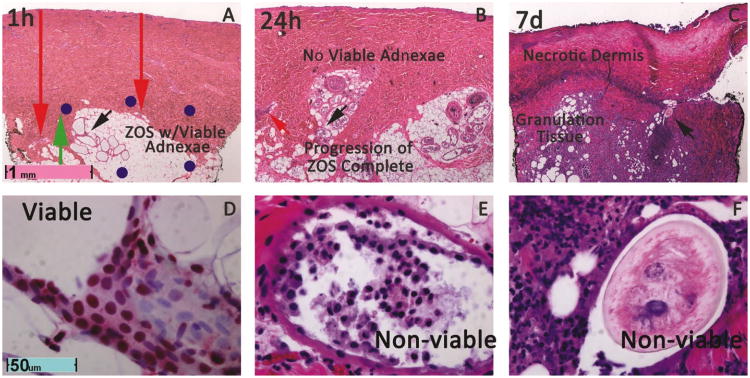
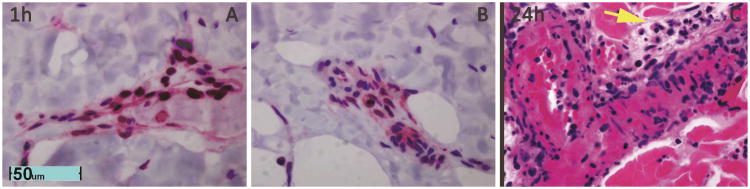
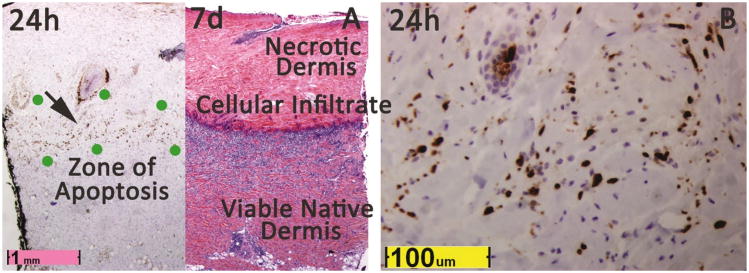
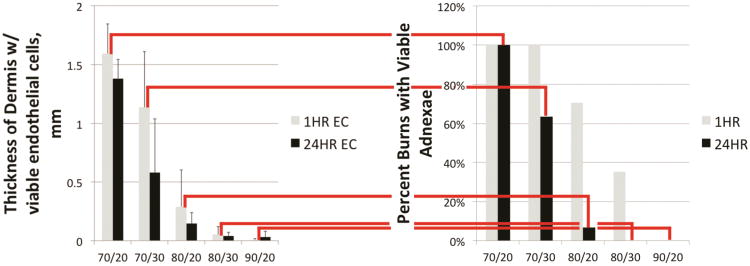
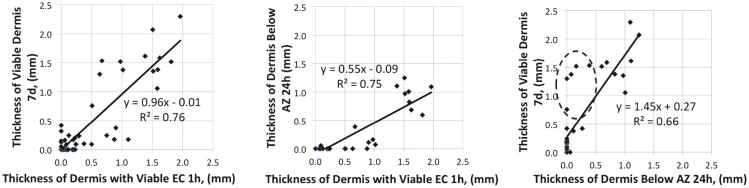
Burn injury progression has not been well characterized at the cellular level. To define burn injury progression in terms of cell death, histopathologic spatiotemporal relationships of cellular necrosis and apoptosis were investigated in a validated porcine model of vertical burn injury progression. Cell necrosis was identified by high mobility group box 1 protein and apoptosis by Caspase 3a staining of tissue samples taken 1 hour, 24 hours, and 7 days postburn. Level of endothelial cell necrosis at 1 hour was predictive of level of apoptosis at 24 hours (Pearson's r = 0.87) and of level of tissue necrosis at 7 days (Pearson's r = 0.87). Furthermore, endothelial cell necrosis was deeper than interstitial cell necrosis at 1 hour (p < 0.001). Endothelial cell necrosis at 1 hour divided the zone of injury progression (Jackson's zone of stasis) into an upper subzone with necrotic endothelial cells and initially viable adnexal and interstitial cells at 1 hour that progressed to necrosis by 24 hours and a lower zone with initially viable endothelial cells at 1 hour but necrosis and apoptosis of all cell types by 24 hours. Importantly, this spatiotemporal series of events and rapid progression resembles myocardial infarction and stroke and implicates mechanisms of these injuries, ischemia, ischemia reperfusion, and programmed cell death in burn progression.
© 2013 by the Wound Healing Society.
Conflict of interest statement
Figures
References
-
- Singh V, Devgan L, Bhat S, Milner SM. The pathogenesis of burn wound conversion. Ann Plast Surg. 2007;59(1):109–15. - PubMed
-
- Jackson DM. Diagnosis of the Depth of Burning. Br J Surg. 1953:588–596. - PubMed
-
- Langton AK, Herrick SE, Headon DJ. An extended epidermal response heals cutaneous wounds in the absence of a hair follicle stem cell contribution. J Invest Dermatol. 2008;128:1311–1318. - PubMed
-
- Jackson DM. Second Thoughts on the Burn Wound. J Trauma. 1969;9(10):839–62. - PubMed
-
- Shupp JW, Nasabzadeh TJ, Rosenthal DS, Jordan MH, Filder P, Jeng JC. A Review of the Local Pathophysiologic Bases of Burn Wound Progression. J Burn Care Res. 2010;31(6):849–73. - PubMed
Publication types
MeSH terms
Substances
Grants and funding
LinkOut - more resources
Full Text Sources
Other Literature Sources
Medical
