


Meta-analyses of fertility desires of people living with HIV
- PMID: 23627965
- PMCID: PMC3649930
- DOI: 10.1186/1471-2458-13-409
Meta-analyses of fertility desires of people living with HIV
Abstract
Background: Literature review has shown that some years back the fertility desires of people living with HIV was low but in the recent years, it was reported as increasing. However, little is known about the strength of association of fertility desire of HIV positive people with antiretroviral therapy (ART) experience, age, sex, education level, and number of children.
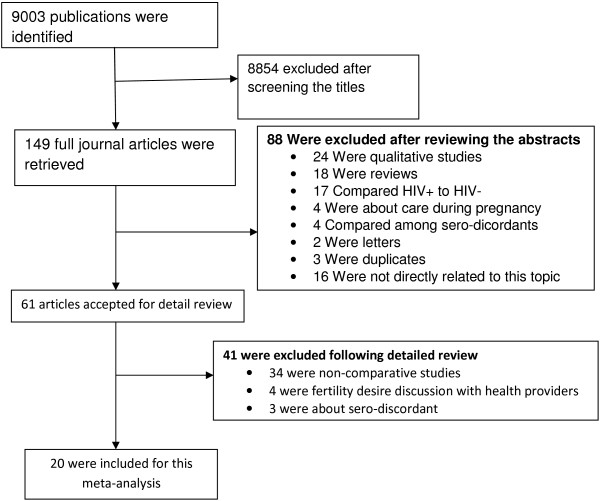
Methods: In these meta-analyses, twenty studies from different parts of the world were included. The odds ratios of fertility desires were determined using the random-effects model. Heterogeneity among the studies was assessed by computing values for Tau(2), Chi-square (Q), I(2) and P-value. Sensitivity analysis and funnel plot were done to assess the stability of pooled values to outliers and publication bias, respectively.
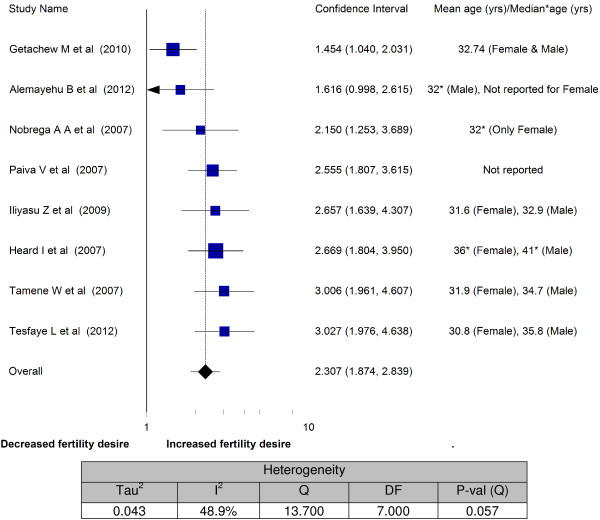
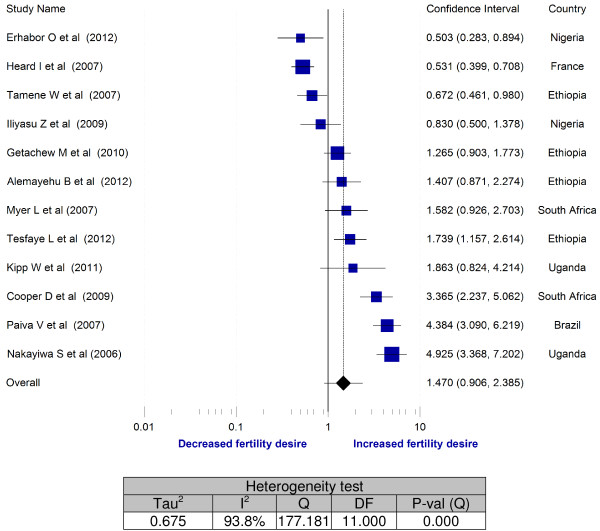
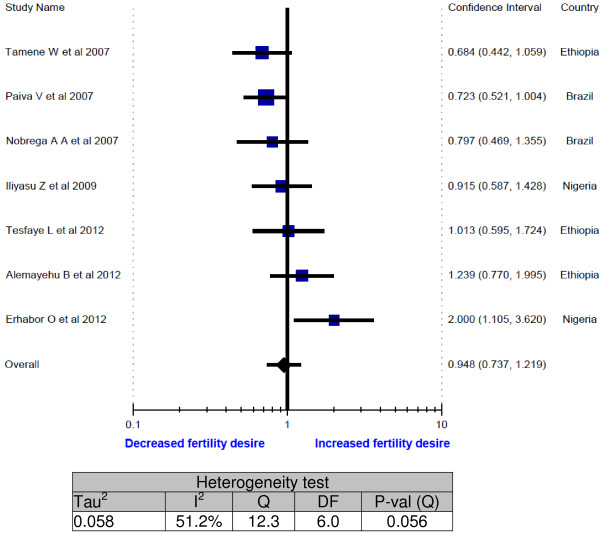
Results: The pooled analysis demonstrated that fertility desires of study participants had no association with ART. Similarly, the overall odds ratio did not show statistically significant association of fertility desires with sex and educational attainment of study participants although forest plots of some studies fall on increased and some others on decreased sides of fertility desires. The two variables that demonstrated a strong association with fertility desires were age less than 30 years and being childless. The lowest heterogeneity was found in a meta-analysis comparing ART experienced and ART naïve HIV positive people. In all meta-analyses, the sensitivity analyses showed the stability of the pooled odds ratios; and the funnel plots did not show publication or disclosure bias.
Conclusion: Although the fertility desires among childless and younger age group was very strong, we realized that quite a significant segment of HIV-infected people have desire for fertility. Therefore, including fertility issue as integral part of HIV patient care may help several of them in their reproductive decision making (letting them know the risks and methods of prevention while anticipating pregnancy).
Figures


References
-
- Berhan Y. Attitude of people living with HIV/AIDS to be a biological parent and their knowledge on MTCT reduction methods. Ethiop Med J. 2008;46(4):335–347. - PubMed
-
- Marcellin F, Protopopescu C, Abe C, Boyer S, Blanche J, Ongolo-Zogo P, Koulla-Shiro S, Moatti JP, Carrieri MP, Spire B. Desire for a child among HIV-infected women receiving antiretroviral therapy in Cameroon: results from the national survey, EVAL study. AIDS Care. 2010;22(4):441–451. doi: 10.1080/09540120903202913. - DOI - PubMed
Publication types
MeSH terms
LinkOut - more resources
Full Text Sources
Other Literature Sources
Medical
