


Biomaterials and bioengineering tomorrow's healthcare
- PMID: 23628868
- PMCID: PMC3749281
- DOI: 10.4161/biom.24717
Biomaterials and bioengineering tomorrow's healthcare
Abstract
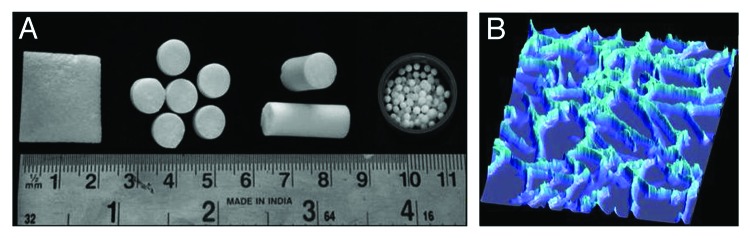
Biomaterials are being used for the healthcare applications from ancient times. But subsequent evolution has made them more versatile and has increased their utility. Biomaterials have revolutionized the areas like bioengineering and tissue engineering for the development of novel strategies to combat life threatening diseases. Together with biomaterials, stem cell technology is also being used to improve the existing healthcare facilities. These concepts and technologies are being used for the treatment of different diseases like cardiac failure, fractures, deep skin injuries, etc. Introduction of nanomaterials on the other hand is becoming a big hope for a better and an affordable healthcare. Technological advancements are underway for the development of continuous monitoring and regulating glucose levels by the implantation of sensor chips. Lab-on-a-chip technology is expected to modernize the diagnostics and make it more easy and regulated. Other area which can improve the tomorrow's healthcare is drug delivery. Micro-needles have the potential to overcome the limitations of conventional needles and are being studied for the delivery of drugs at different location in human body. There is a huge advancement in the area of scaffold fabrication which has improved the potentiality of tissue engineering. Most emerging scaffolds for tissue engineering are hydrogels and cryogels. Dynamic hydrogels have huge application in tissue engineering and drug delivery. Furthermore, cryogels being supermacroporous allow the attachment and proliferation of most of the mammalian cell types and have shown application in tissue engineering and bioseparation. With further developments we expect these technologies to hit the market in near future which can immensely improve the healthcare facilities.
Keywords: biomaterials; diagnostics; healthcare; nanomaterials; three-dimensional matrices.
Figures
References
-
- Paul C, Robert MN. Bioengineering: 25 years of progress—but still only a beginning. Technol Soc. 2004;26:415–31. doi: 10.1016/j.techsoc.2004.01.008. - DOI
-
- Young JB, Abraham WT, Smith AL, Leon AR, Lieberman R, Wilkoff B, et al. Multicenter InSync ICD Randomized Clinical Evaluation (MIRACLE ICD) Trial Investigators Combined cardiac resynchronization and implantable cardioversion defibrillation in advanced chronic heart failure: the MIRACLE ICD Trial. JAMA. 2003;289:2685–94. doi: 10.1001/jama.289.20.2685. - DOI - PubMed
Publication types
MeSH terms
Substances
LinkOut - more resources
Full Text Sources
Other Literature Sources
Miscellaneous
