


Extracellular vesicles: communication, coercion, and conditioning
- PMID: 23630232
- PMCID: PMC3639038
- DOI: 10.1091/mbc.E12-08-0572
Extracellular vesicles: communication, coercion, and conditioning
Abstract
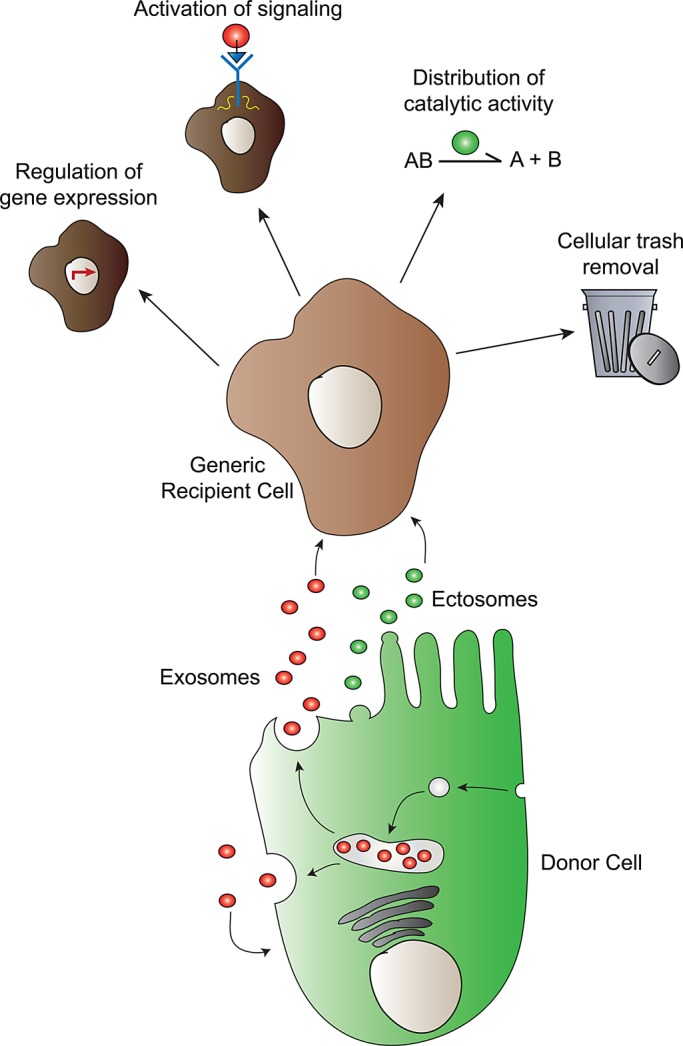
Cells communicate with neighboring cells and condition their local environment by secreting soluble factors into the extracellular space. These well-studied facets of cell biology are essential for the establishment and maintenance of physiological homeostasis. However, accumulating evidence has revealed that specific ligands, enzymes, and macromolecules are distributed into the extracellular space by virtue of their association with small vesicles, which are released by a variety of cell types. Although the biological significance of such vesicles was initially debated, purification and subsequent functional studies have shown that these extracellular vesicles are bioactive organelles carrying a wide range of protein and nucleic acid cargoes. In many cases these vesicles are laden with molecules that are involved in cell signaling, although other diverse functions are being revealed at a rapid pace. In this Perspective, we discuss recent developments in the understanding of the major pathways of extracellular vesicle biogenesis and how these vesicles contribute to the maintenance of physiological homeostasis.
Figures
References
-
- Abrahams VM, Straszewski-Chavez SL, Guller S, Mor G. First trimester trophoblast cells secrete Fas ligand which induces immune cell apoptosis. Mol Hum Reprod. 2004;10:55–63. - PubMed
-
- Al-Nedawi K, Meehan B, Micallef J, Lhotak V, May L, Guha A, Rak J. Intercellular transfer of the oncogenic receptor EGFRvIII by microvesicles derived from tumour cells. Nat Cell Biol. 2008;10:619–624. - PubMed
Publication types
MeSH terms
Grants and funding
LinkOut - more resources
Full Text Sources
Other Literature Sources
