. 2013 Apr 22;8(4):e61950.
doi: 10.1371/journal.pone.0061950. Print 2013.

Virome profiling of bats from Myanmar by metagenomic analysis of tissue samples reveals more novel Mammalian viruses

Affiliations

Virome profiling of bats from Myanmar by metagenomic analysis of tissue samples reveals more novel Mammalian viruses

Biao He et al. PLoS One. .

Erratum in

  • PLoS One. 2013;8(6). doi:10.1371/annotation/68f77773-a2a0-4bfe-b5e6-950dc30b79f9

Abstract

Bats are reservoir animals harboring many important pathogenic viruses and with the capability of transmitting these to humans and other animals. To establish an effective surveillance to monitor transboundary spread of bat viruses between Myanmar and China, complete organs from the thorax and abdomen from 853 bats of six species from two Myanmar counties close to Yunnan province, China, were collected and tested for their virome through metagenomics by Solexa sequencing and bioinformatic analysis. In total, 3,742,314 reads of 114 bases were generated, and over 86% were assembled into 1,649,512 contigs with an average length of 114 bp, of which 26,698 (2%) contigs were recognizable viral sequences belonging to 24 viral families. Of the viral contigs 45% (12,086/26,698) were related to vertebrate viruses, 28% (7,443/26,698) to insect viruses, 27% (7,074/26,698) to phages and 95 contigs to plant viruses. The metagenomic results were confirmed by PCR of selected viruses in all bat samples followed by phylogenetic analysis, which has led to the discovery of some novel bat viruses of the genera Mamastrovirus, Bocavirus, Circovirus, Iflavirus and Orthohepadnavirus and to their prevalence rates in two bat species. In conclusion, the present study aims to present the bat virome in Myanmar, and the results obtained further expand the spectrum of viruses harbored by bats.


Conflict of interest statement

Competing Interests: The authors have declared that no competing interests exist.

Figures

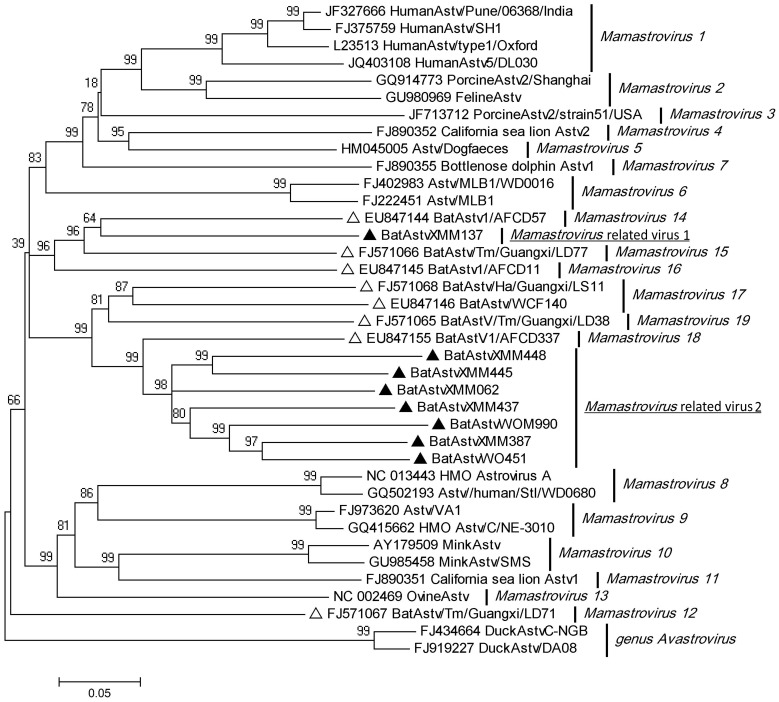
Figure 1
Figure 1. Phylogenetic analysis of bat astroviruses with representatives of all 19 species of mamastroviruses using 422 bp fragments of ORF1b gene.
Sequences from our study are identified by filled triangles and from previous studies by open triangles.
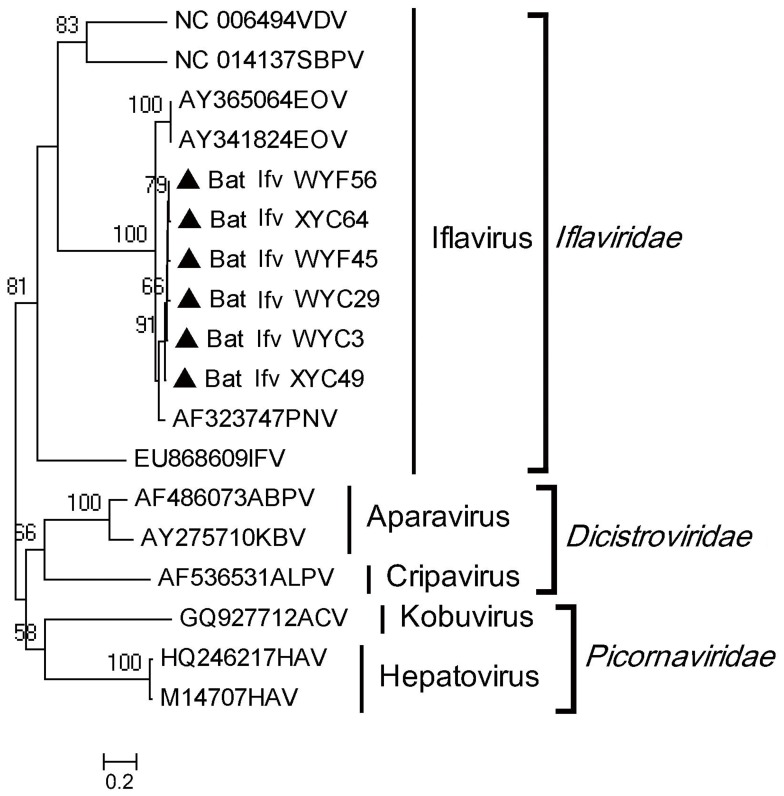
Figure 2
Figure 2. Phylogenetic analysis of partial ORF aa sequences deduced from 369 bp amplicons of bat iflaviruses with other representatives in the families of Iflaviridae, Dicistroviridae and Picornaviridae.
The Sequences from our study are identified by filled triangles.
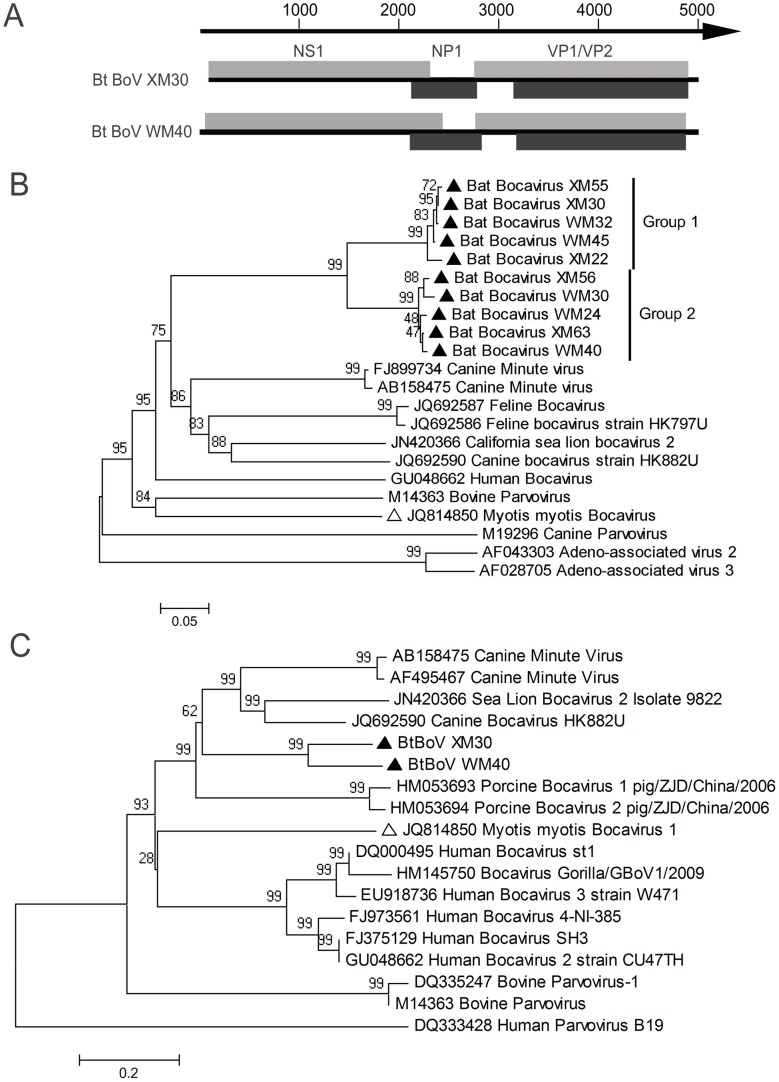
Figure 3
Figure 3. Phylogenetic analysis of BtBoVs.
(A) Genome schematics of BtBoV XM30 and WM40; (B) Phylogenetic analysis of partial VP1 aa sequences deduced from 620 bp amplicons of bat bocaviruses and other representatives with two adeno-associated viruses as outgroup; (C) The phylogenetic tree of full NS1 aa sequences deduced from. Sequences from our study are identified by filled triangles and that of a bat bocavirus from a previous study by an open triangle.
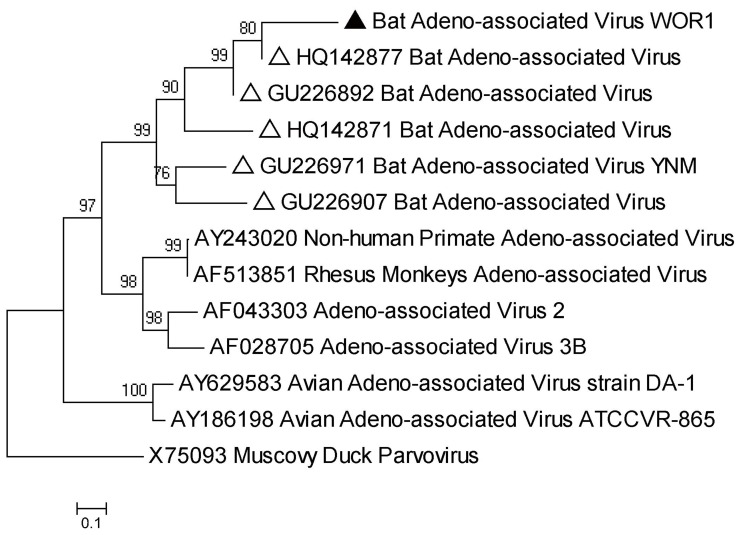
Figure 4
Figure 4. Phylogenetic analysis of 447 bp amplicons of partial VP gene sequence of bat adeno-associated viruses and other representatives with Muscovy duck parvovirus as outgroup.
The sequences in our study are identified by filled triangles and those of bat bocavirus and adeno-associated viruses from previous studies by open triangles.
Figure 5
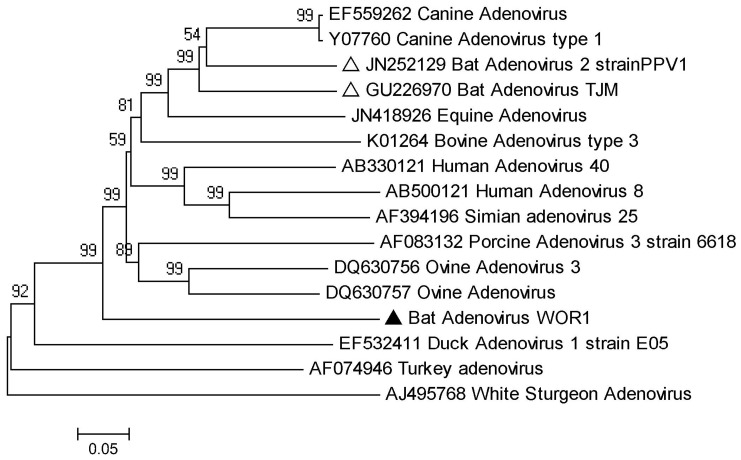
Figure 5. Phylogenetic analysis of bat adenovirus WOR1 and other representatives based on partial hexon aa sequences deduced from 767 bp amplicons.
The sequence in our study is identified by a filled triangle and those from previous studies by open triangles.
Figure 6
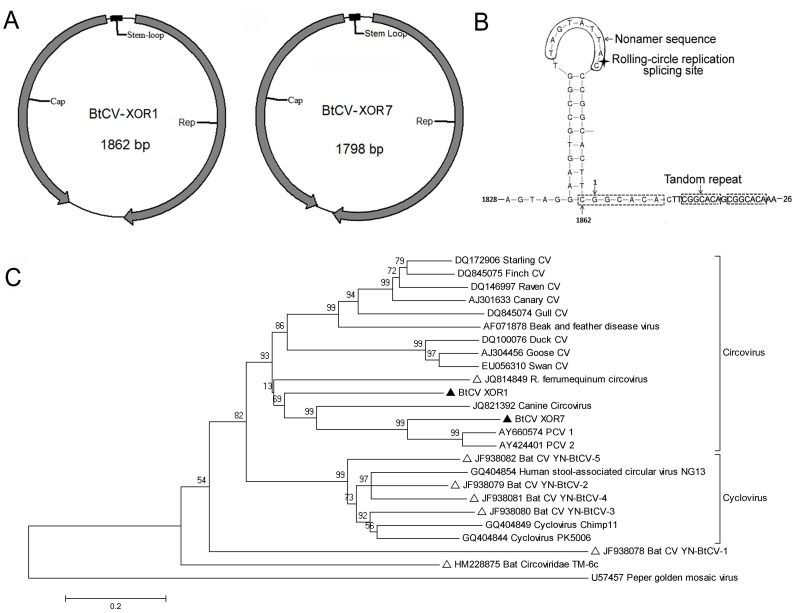
Figure 6. The genome structures of BtCVs in our study and comparative phylogenetic analysis with other CVs.
(A) Schematic genome structures of BtCVs; (B) The intergenic stem-loop structure of BtCV XOR1; (C) Phylogenetic analysis of BtCVs based on the complete aa sequence of Rep protein with other representatives. The sequences in our study are identified by filled triangles, those from previous studies by open triangles.
Figure 7
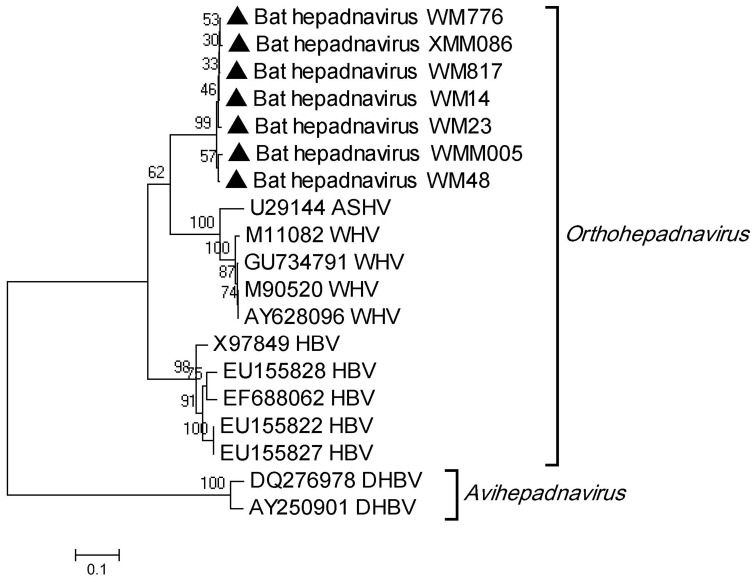
Figure 7. Phylogenetic analysis of bat hepadnaviruses based on 423 bp amplicons of partial S gene, with other representatives of HBV, rodent hepatitis viruses and duck hepatitis B virus.
The sequences in our study are identified by open triangles.

References

    1. Simmons NB (2005) Order Chiroptera. In: Wilson DE, Reeder DM, editor. Mammal species of the world: a taxonomic and geographic reference (3rd ed). Baltimore: Johns Hopkins University Press, 312–529.
    1. Calisher CH, Childs JE, Field HE, Holmes KV, Schountz T (2006) Bats: important reservoir hosts of emerging viruses. Clin Microbiol Rev 19: 531–545. - PMC - PubMed
    1. Halpin K, Young PL, Field HE, Mackenzie JS (2000) Isolation of Hendra virus from pteropid bats: a natural reservoir of Hendra virus. J Gen Virol 81: 1927–1932. - PubMed
    1. Kuzmin IV, Mayer AE, Niezgoda M, Markotter W, Agwanda B, et al. (2010) Shimoni bat virus, a new representative of the Lyssavirus genus. Virus Res 149: 197–210. - PubMed
    1. Lau SK, Woo PC, Li KS, Huang Y, Tsoi HW, et al. (2005) Severe acute respiratory syndrome coronavirus-like virus in Chinese horseshoe bats. Proc Natl Acad Sci U S A 102: 14040–14045. - PMC - PubMed

Publication types

LinkOut - more resources