


Neonatal disruption of serine racemase causes schizophrenia-like behavioral abnormalities in adulthood: clinical rescue by d-serine
- PMID: 23630632
- PMCID: PMC3632541
- DOI: 10.1371/journal.pone.0062438
Neonatal disruption of serine racemase causes schizophrenia-like behavioral abnormalities in adulthood: clinical rescue by d-serine
Abstract
Background: D-Serine, an endogenous co-agonist of the N-methyl-D-aspartate (NMDA) receptor, is synthesized from L-serine by serine racemase (SRR). Given the role of D-serine in both neurodevelopment and the pathophysiology of schizophrenia, we examined whether neonatal disruption of D-serine synthesis by SRR inhibition could induce behavioral abnormalities relevant to schizophrenia, in later life.
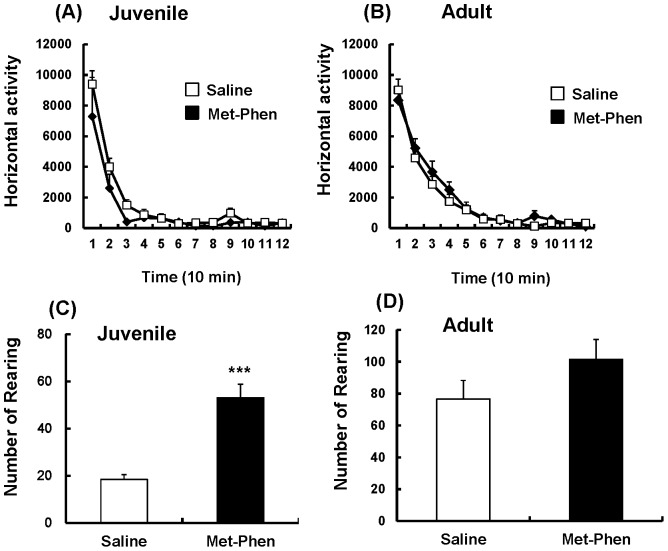
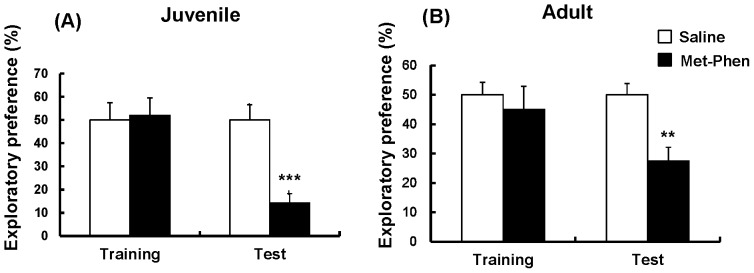
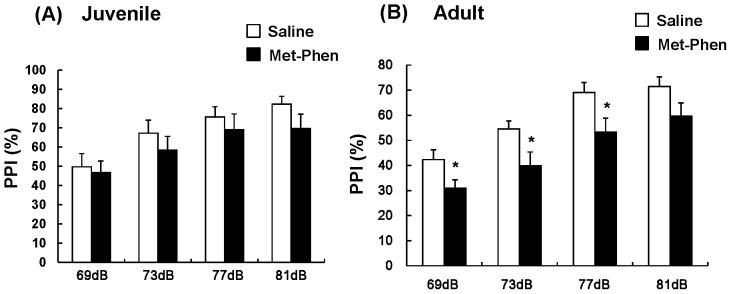
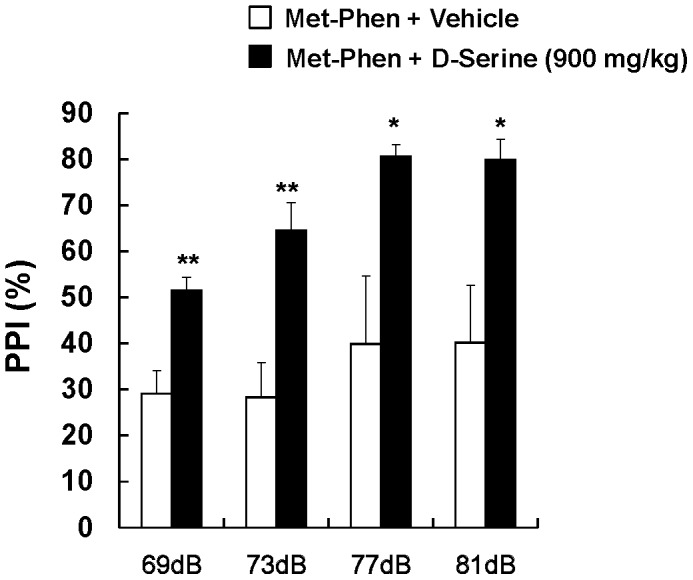
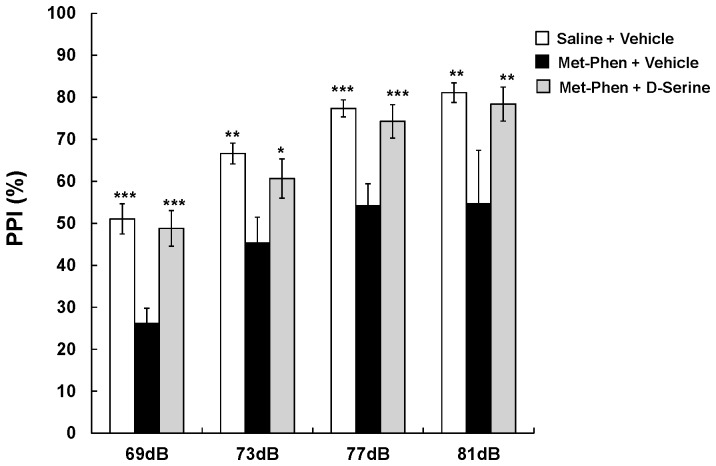
Methodology/principal findings: Neonatal mice (7-9 days) were injected with vehicle or phenazine methosulfate (Met-Phen: 3 mg/kg/day), an SRR inhibitor. Behavioral evaluations, such as spontaneous locomotion, novel object recognition test (NORT), and prepulse inhibition (PPI) were performed at juvenile (5-6 weeks old) and adult (10-12 weeks old) stages. In addition, we tested the effects of D-serine on PPI deficits in adult mice after neonatal Met-Phen exposure. Finally, we assessed whether D-serine could prevent the onset of schizophrenia-like behavior in these mice. Neonatal Met-Phen treatment reduced D-serine levels in the brain, 24 hours after the final dose. Additionally, this treatment caused behavioral abnormalities relevant to prodromal symptoms in juveniles and to schizophrenia in adults. A single dose of D-serine improved PPI deficits in adult mice. Interestingly, chronic administration of D-serine (900 mg/kg/day from P35 to P70) significantly prevented the onset of PPI deficits after neonatal Met-Phen exposure.
Conclusions/significance: This study shows that disruption of D-serine synthesis during developmental stages leads to behavioral abnormalities relevant to prodromal symptoms and schizophrenia, in later life. Furthermore, early pharmacological intervention with D-serine may prevent the onset of psychosis in adult.
Conflict of interest statement
Figures
References
-
- Javitt DC, Zukin SR (1991) Recent advances in the phencyclidine model of schizophrenia. Am J Psychiatry 148: 1301–1308. - PubMed
-
- Krystal JH, D’Souza DC, Petrakis IL, Belger A, Berman RM, et al. (1999) NMDA agonists and antagonists as probes of glutamatergic dysfunction and pharmacotherapies in neuropsychiatric disorders. Harv Rev Psychiatry 7: 125–143. - PubMed
-
- Coyle JT, Tsai G (2004) The NMDA receptor glycine modulatory site: a therapeutic target for improving cognition and reducing negative symptoms in schizophrenia. Psychopharmacology (Berl) 174: 32–38. - PubMed
-
- Javitt DC, Coyle JT (2004) Decoding schizophrenia. Sci Am 290: 48–55. - PubMed
-
- Hashimoto K, Shimizu E, Iyo M (2005) Dysfunction of glia-neuron communication in pathophysiology of schizophrenia. Curr Psychiatry Rev 1: 151–163.
Publication types
MeSH terms
Substances
LinkOut - more resources
Full Text Sources
Other Literature Sources
Medical
Research Materials
Miscellaneous
