


Phylogeographic origin of Helicobacter pylori determines host-adaptive responses upon coculture with gastric epithelial cells
- PMID: 23630959
- PMCID: PMC3697613
- DOI: 10.1128/IAI.01182-12
Phylogeographic origin of Helicobacter pylori determines host-adaptive responses upon coculture with gastric epithelial cells
Abstract
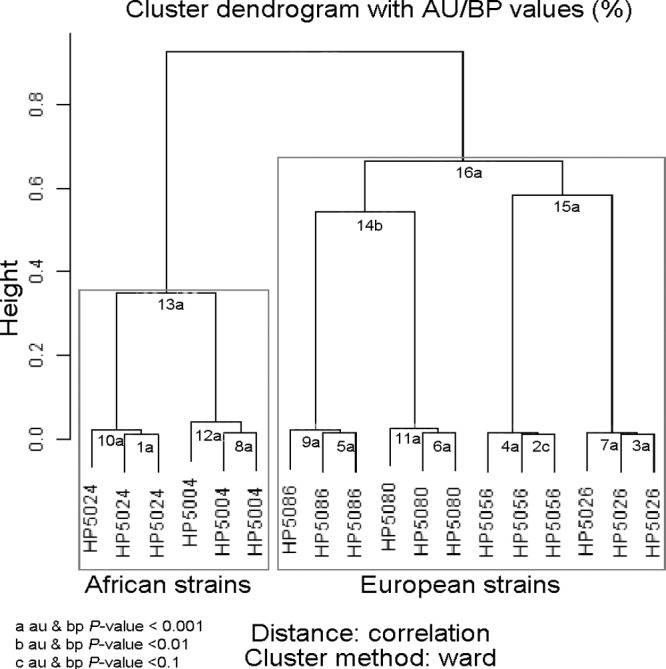
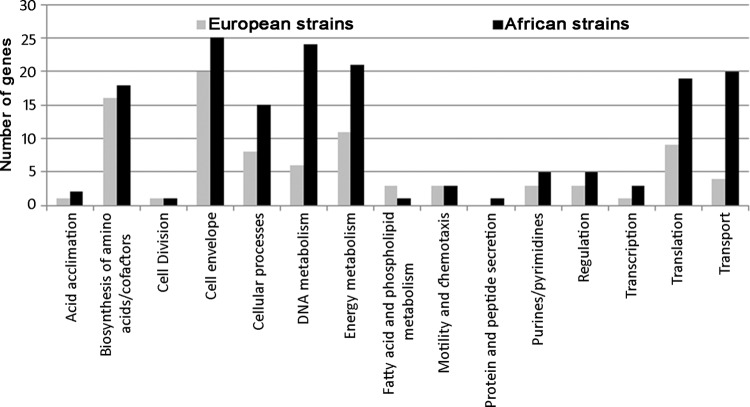
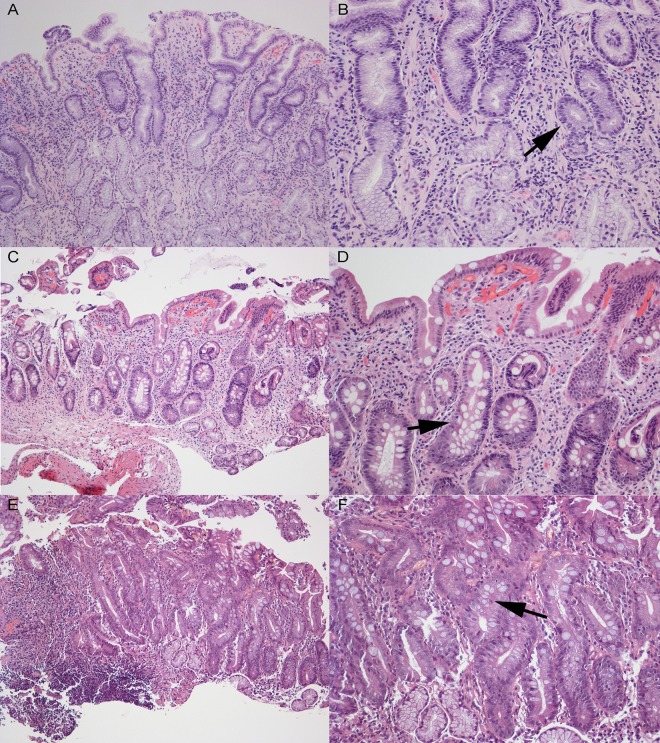
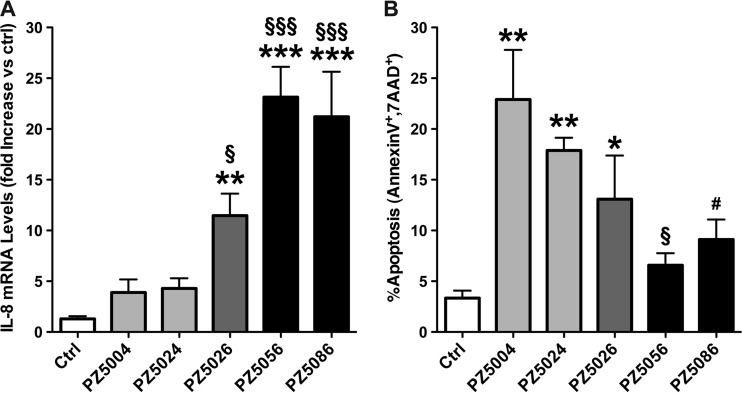
While Helicobacter pylori infects over 50% of the world's population, the mechanisms involved in the development of gastric disease are not fully understood. Bacterial, host, and environmental factors play a role in disease outcome. To investigate the role of bacterial factors in H. pylori pathogenesis, global gene expression of six H. pylori isolates was analyzed during coculture with gastric epithelial cells. Clustering analysis of six Colombian clinical isolates from a region with low gastric cancer risk and a region with high gastric cancer risk segregated strains based on their phylogeographic origin. One hundred forty-six genes had increased expression in European strains, while 350 genes had increased expression in African strains. Differential expression was observed in genes associated with motility, pathogenicity, and other adaptations to the host environment. European strains had greater expression of the virulence factors cagA, vacA, and babB and were associated with increased gastric histologic lesions in patients. In AGS cells, European strains promoted significantly higher interleukin-8 (IL-8) expression than did African strains. African strains significantly induced apoptosis, whereas only one European strain significantly induced apoptosis. Our data suggest that gene expression profiles of clinical isolates can discriminate strains by phylogeographic origin and that these profiles are associated with changes in expression of the proinflammatory and protumorigenic cytokine IL-8 and levels of apoptosis in host epithelial cells. These findings support the hypothesis that bacterial factors determined by the phylogeographic origin of H. pylori strains may promote increased gastric disease.
Figures
References
Publication types
MeSH terms
Substances
Grants and funding
- P01CA116087/CA/NCI NIH HHS/United States
- P01CA026731/CA/NCI NIH HHS/United States
- R01 AT004821/AT/NCCIH NIH HHS/United States
- P30 ES002109/ES/NIEHS NIH HHS/United States
- P01 CA116087/CA/NCI NIH HHS/United States
- P01 CA026731/CA/NCI NIH HHS/United States
- P30DK058404/DK/NIDDK NIH HHS/United States
- UL1 RR024975/RR/NCRR NIH HHS/United States
- R01DK053620/DK/NIDDK NIH HHS/United States
- P01CA028842/CA/NCI NIH HHS/United States
- R01 DK053620/DK/NIDDK NIH HHS/United States
- P01 CA028842/CA/NCI NIH HHS/United States
- P30 DK058404/DK/NIDDK NIH HHS/United States
- P30ES002109/ES/NIEHS NIH HHS/United States
- UL1RR024975/RR/NCRR NIH HHS/United States
- I01 BX001453/BX/BLRD VA/United States
LinkOut - more resources
Full Text Sources
Other Literature Sources
Molecular Biology Databases
