Review
. 2013 Dec;32(3-4):341-52.
doi: 10.1007/s10555-013-9429-5.

The detection and implication of genome instability in cancer

Affiliations
Review

The detection and implication of genome instability in cancer

Larissa Pikor et al. Cancer Metastasis Rev. 2013 Dec.

Abstract

Genomic instability is a hallmark of cancer that leads to an increase in genetic alterations, thus enabling the acquisition of additional capabilities required for tumorigenesis and progression. Substantial heterogeneity in the amount and type of instability (nucleotide, microsatellite, or chromosomal) exists both within and between cancer types, with epithelial tumors typically displaying a greater degree of instability than hematological cancers. While high-throughput sequencing studies offer a comprehensive record of the genetic alterations within a tumor, detecting the rate of instability or cell-to-cell viability using this and most other available methods remains a challenge. Here, we discuss the different levels of genomic instability occurring in human cancers and touch on the current methods and limitations of detecting instability. We have applied one such approach to the surveying of public tumor data to provide a cursory view of genome instability across numerous tumor types.


Figures
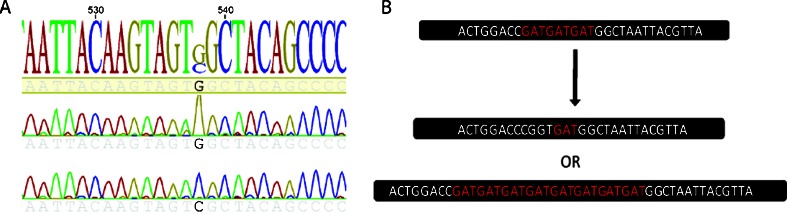
Fig. 1
Fig. 1
Nucleotide and microsatellite instability. a Detection of a G>C variant encoding a Gly>Arg amino acid change by Sanger sequencing in two lung cancer cell lines. b Defects in MMR lead to the expansion or contraction of microsatellites throughout the genome
Fig. 2
Fig. 2
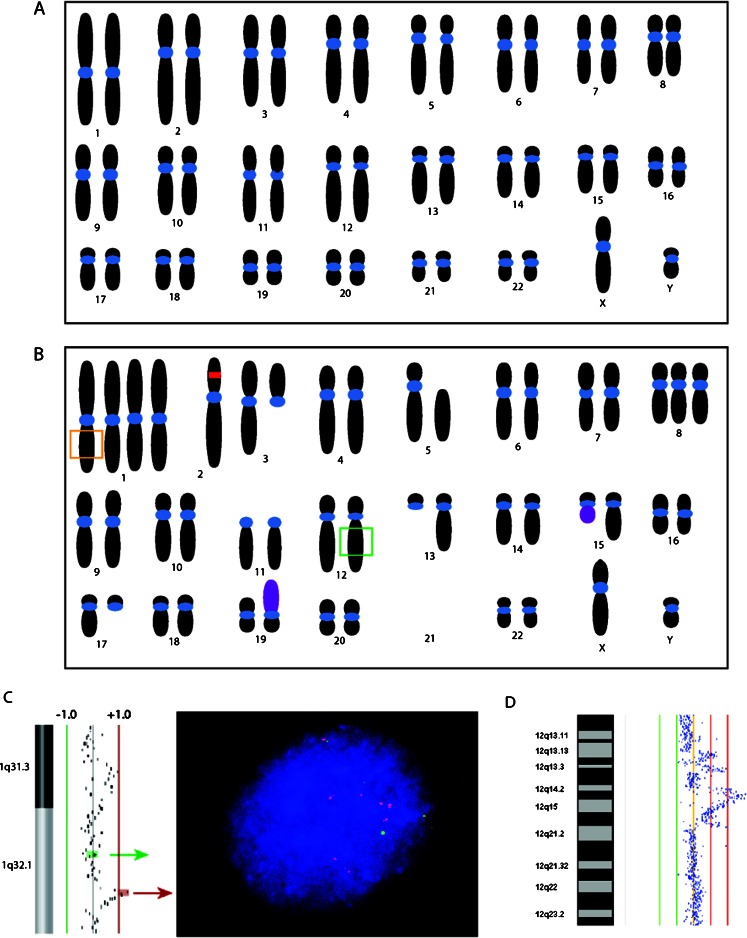
Chromosomal instability. a Normal karyotype. b Example of a potential karyotype of a cell with chromosomal instability and aneuploidy. The red box indicates an inversion and the purple chromosomes represent translocations. The orange and green boxes indicate the chromosomal regions depicted in (c) and (d) which harbor amplifications and can be visualized by FISH (c) and array-CGH (d)
Fig. 3
Fig. 3
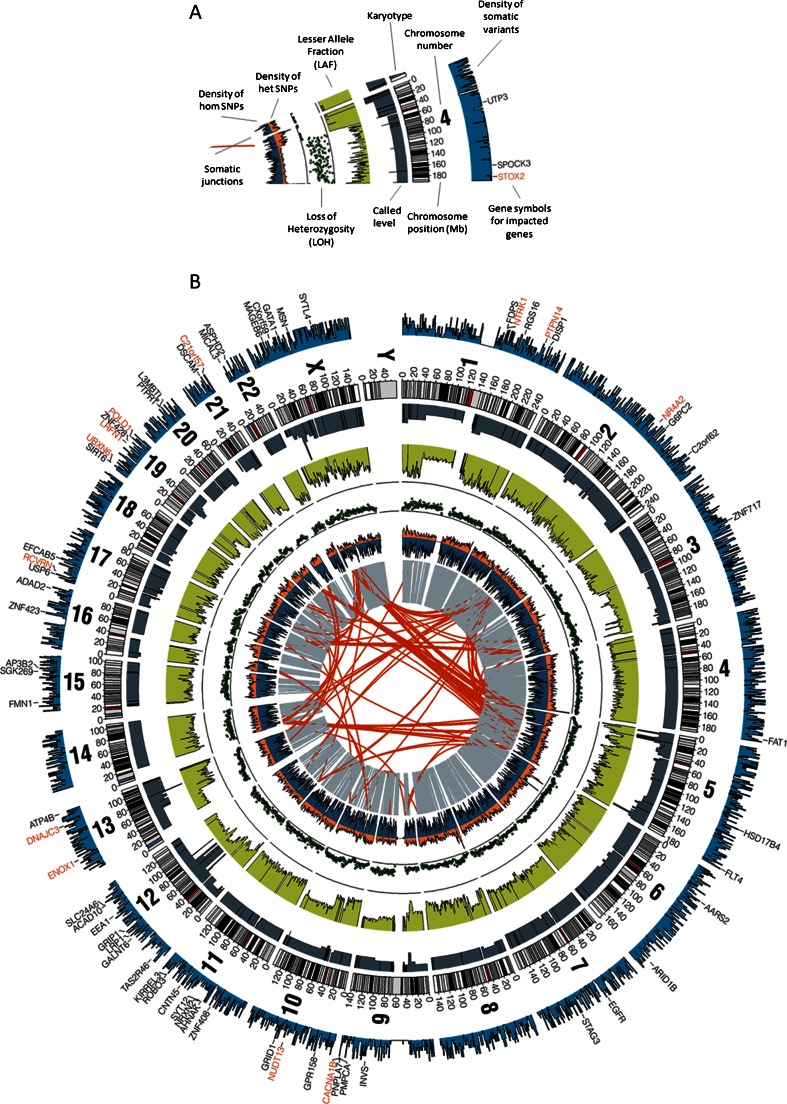
Information provided from whole-genome sequencing. a Legend depicting the genomic data (rearrangements, SNPs, LOH, lesser allele fraction, copy number, somatic mutations, and genes affected by these alterations) available following whole-genome sequencing. b Circos plot of a lung adenocarcinoma tumor from a never smoker referenced against the matched non-malignant tissue
Fig. 4
Fig. 4
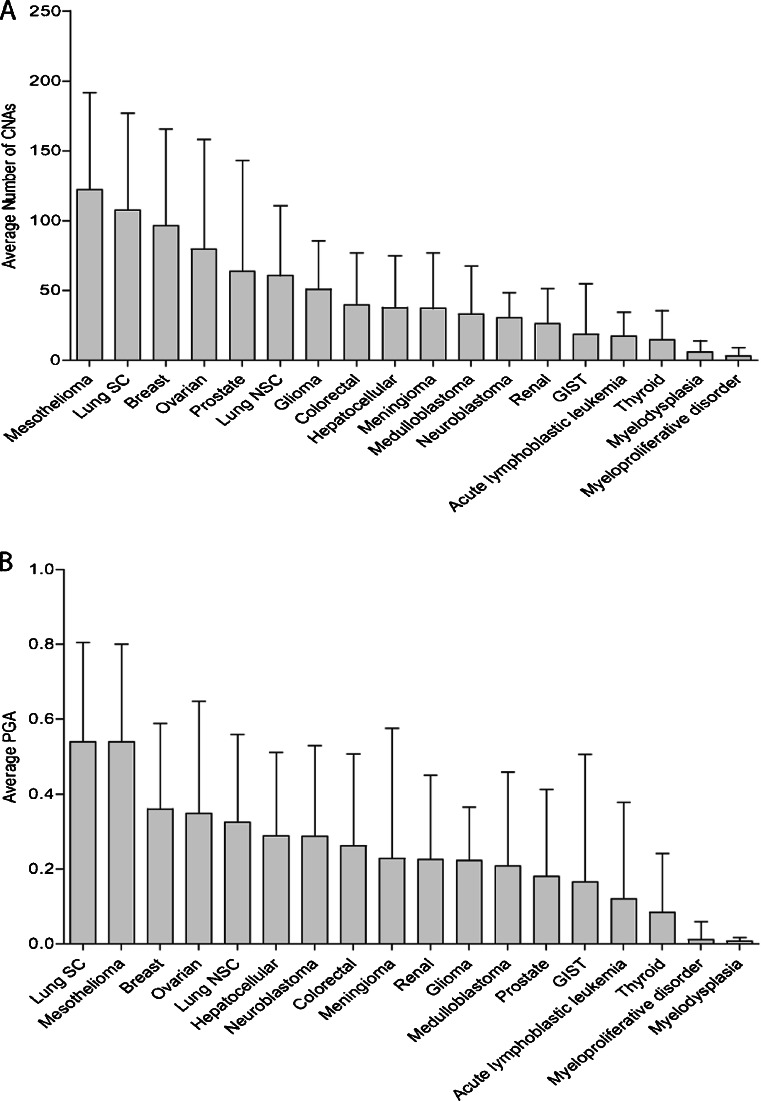
Pan-cancer trends in genome instability. a Average number of copy number alterations for cell lines from each cancer type. Error bars represent standard deviation. b Average percent of the genome altered for all cell lines within each tumor type. Error bars represent standard deviation

References

    1. Sieber OM, Heinimann K, Tomlinson IP. Genomic instability—the engine of tumorigenesis? Nature Reviews. Cancer. 2003;3(9):701–708. doi: 10.1038/nrc1170. - DOI - PubMed
    1. Nowell PC. The clonal evolution of tumor cell populations. Science. 1976;194(4260):23–28. doi: 10.1126/science.959840. - DOI - PubMed
    1. Lengauer C, Kinzler KW, Vogelstein B. Genetic instability in colorectal cancers. Nature. 1997;386(6625):623–627. doi: 10.1038/386623a0. - DOI - PubMed
    1. Gorgoulis VG, Vassiliou LV, Karakaidos P, Zacharatos P, Kotsinas A, Liloglou T, et al. Activation of the DNA damage checkpoint and genomic instability in human precancerous lesions. Nature. 2005;434(7035):907–913. doi: 10.1038/nature03485. - DOI - PubMed
    1. Loeb LA. A mutator phenotype in cancer. Cancer Research. 2001;61(8):3230–3239. - PubMed

Publication types