


Measuring expectations in orthopaedic surgery: a systematic review
- PMID: 23633186
- PMCID: PMC3792280
- DOI: 10.1007/s11999-013-3013-8
Measuring expectations in orthopaedic surgery: a systematic review
Abstract
Background: Advances in the surgical treatment of musculoskeletal conditions have resulted in an interest in better defining and understanding patients' expectations of these procedures, but the best ways to do this remain a topic of considerable debate.
Questions/purposes: (1) What validated instruments for the assessment of patient expectations of orthopaedic surgery have been used in published studies to date? (2) How were these expectation measures developed and validated? (3) What unvalidated instruments for the assessment of patient expectations have been used in published studies to date?
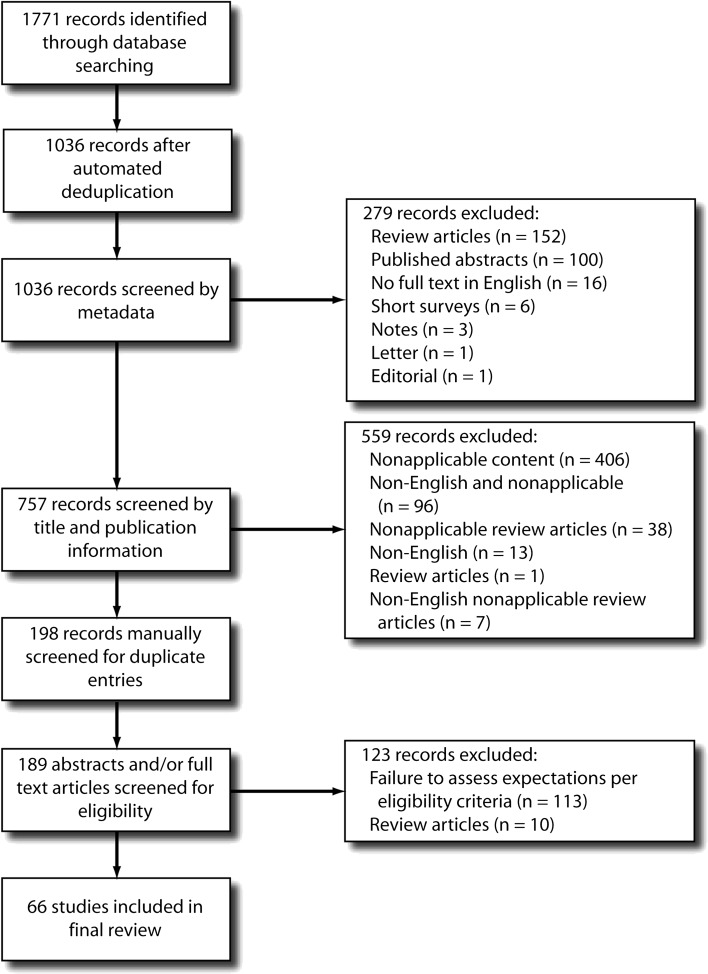
Methods: A systematic literature search was performed using the OVID Medline and EMBASE databases, in duplicate, to identify all studies that assessed patient expectations in orthopaedic surgery. Sixty-six studies were ultimately included in the present review.
Results: Seven validated expectation instruments were identified, all of which use patient-reported questionnaires. Five were specific to a particular procedure or affected anatomic location, whereas two were broadly applicable. Details of reliability and validity testing were available for all but one of these instruments. Forty additional unvalidated expectation assessment tools were identified. Thirteen were based on existing clinical outcome tools, and the others were study-specific, custom-developed tools. Only one of the unvalidated tools was used in more than one study.
Conclusions: Several validated expectation instruments have been developed for use by patients undergoing orthopaedic surgery. However, many tools have been reported without evidence of testing and validation. The wide range of untested instruments used in single studies substantially limits the interpretation and comparison of data concerning patient expectations.
Figures
References
-
- Becker SJ, Makanji HS, Ring D. Expected and actual improvement of symptoms with carpal tunnel release. J Hand Surg Am. 2012;37:1324–1329 e1321–1325. - PubMed
Publication types
MeSH terms
LinkOut - more resources
Full Text Sources
Other Literature Sources
