Referral and treatment patterns among patients with stages III and IV non-small-cell lung cancer
- PMID: 23633970
- PMCID: PMC3545662
- DOI: 10.1200/JOP.2012.000640
Referral and treatment patterns among patients with stages III and IV non-small-cell lung cancer
Abstract
Purpose: Little is known about how referrals to different cancer specialists influence cancer care for non-small-cell lung cancer (NSCLC). Among Medicare enrollees, we identified factors of patients and their primary care physician that were associated with referrals to cancer specialists, and how the types of cancer specialists seen correlated with delivery of guideline-based therapies (GBTs).
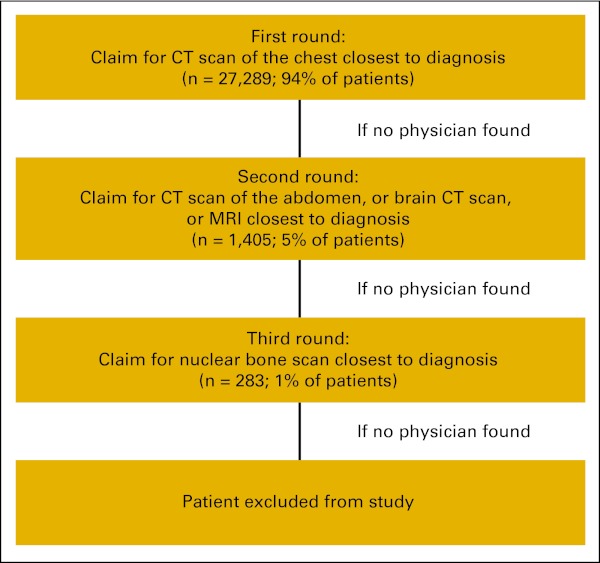
Methods: Data from patients with stages III and IV NSCLC included in the SEER-Medicare database were linked to their physicians in the American Medical Association Masterfile database. Using logistic regression, we (1) identified patient and physician factors that were associated with referrals to cancer specialists (medical oncologists, radiation oncologists, and surgeons); (2) identified the types of referral to cancer specialists that predicted greater likelihood of receiving GBT (per National Comprehensive Cancer Network guidelines).
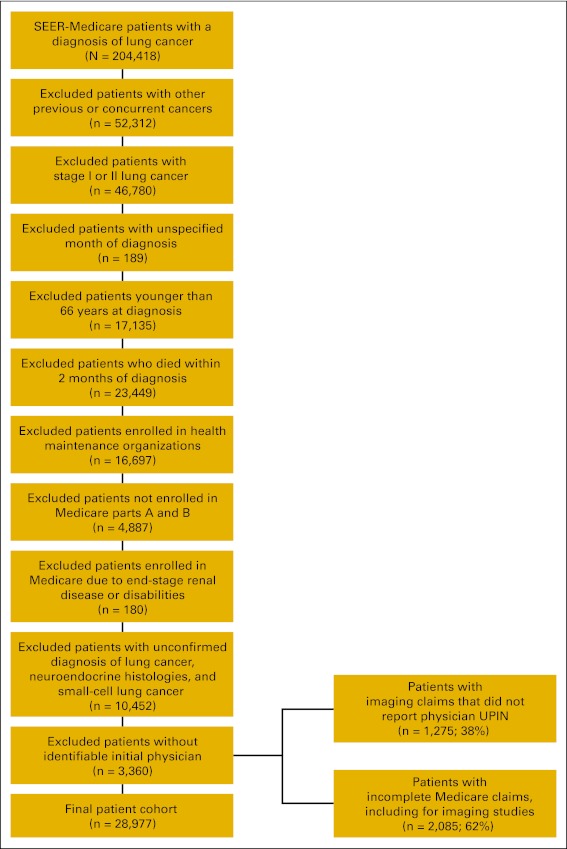
Results: A total of 28,977 patients with NSCLC diagnosed from January 1, 2000 to December 31, 2005 met eligibility criteria. Younger age, white race, higher income, and primary physician specialty other than family practice predicted higher likelihood of referrals to medical oncologists (P < .01 for all predictors). Seeing the three types of cancer specialists predicted higher likelihood of GBT (stage IIIA: odds ratio [OR] = 20.6; P < .001; IIIB: OR = 77.2; P < .001; and IV: OR = 1.2; P = .011), compared with seeing a medical oncologist only. Use of GBTs increased over the study period (42% to 48% from 2000 to 2005; P < .001).
Conclusion: Referrals to all types of cancer specialists increased the likelihood of treatment with standard therapies, particularly in stage III patients. However, racial and income disparities still prevent optimal referrals to cancer specialists.
Figures
References
-
- Siegel R, Ward E, Brawley O, et al. Cancer statistics, 2011: The impact of eliminating socioeconomic and racial disparities on premature cancer deaths. CA Cancer J Clin. 2011;61:212–236. - PubMed
-
- Govindan R, Page N, Morgensztern D, et al. Changing epidemiology of small-cell lung cancer in the United States over the last 30 years: Analysis of the Surveillance, Epidemiologic, and End Results database. J Clin Oncol. 2006;24:4539–4544. - PubMed
-
- Nair A, Klusmann MJ, Jogeesvaran KH, et al. Revisions to the TNM staging of non-small cell lung cancer: Rationale, clinicoradiologic implications, and persistent limitations. Radiographics. 2011;31:215–238. - PubMed
-
- van Meerbeeck JP, Kramer GW, Van Schil PE, et al. Randomized controlled trial of resection versus radiotherapy after induction chemotherapy in stage IIIA-N2 non-small-cell lung cancer. J Natl Cancer Inst. 2007;99:442–450. - PubMed
Publication types
MeSH terms
LinkOut - more resources
Full Text Sources
Other Literature Sources
Medical
Miscellaneous