


Acute lumbar burst fracture treated by minimally invasive lateral corpectomy
- PMID: 23634314
- PMCID: PMC3619695
- DOI: 10.1155/2013/953897
Acute lumbar burst fracture treated by minimally invasive lateral corpectomy
Abstract
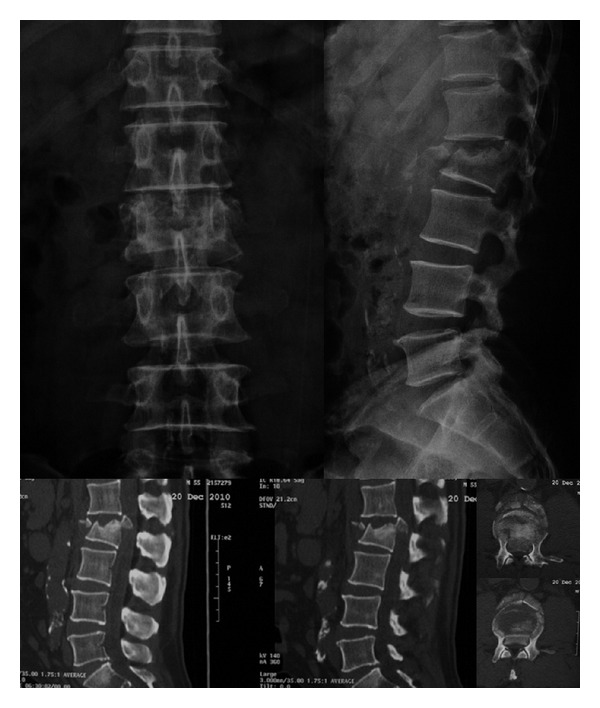
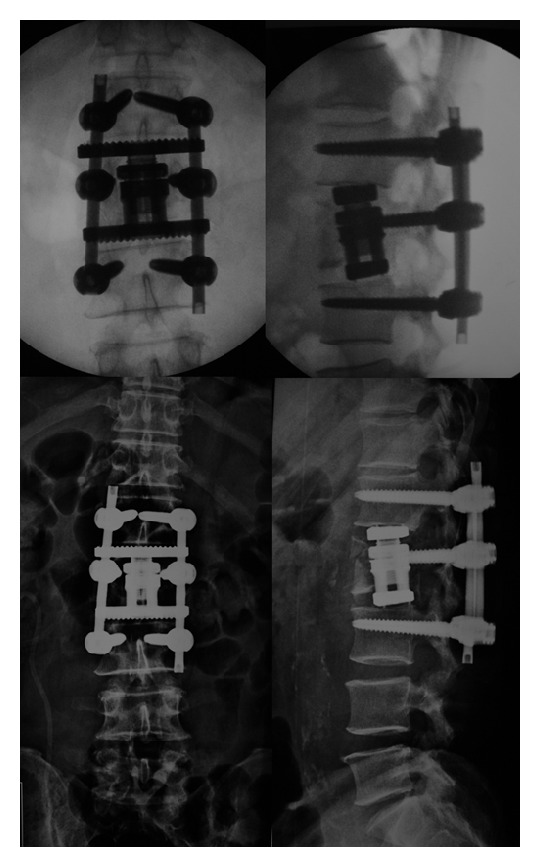
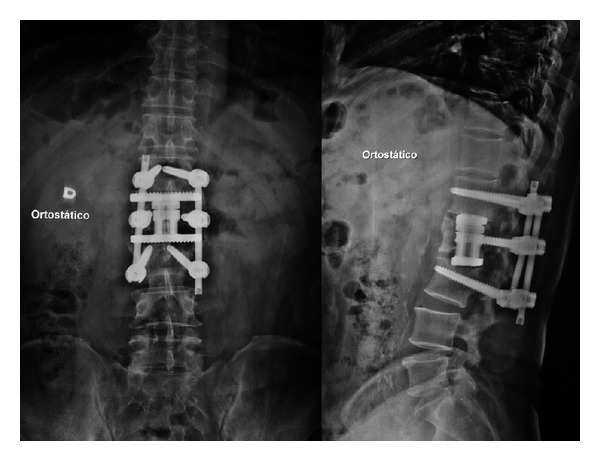
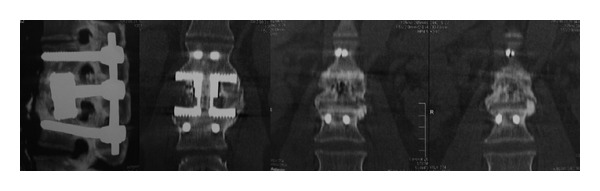
Burst fractures in acute spinal traumas are a difficult problem to solve. Different approaches and techniques have been utilized, but with high incidence of morbidity and mortality, besides unsatisfactory clinical and radiological results. Mini-open approaches recently emerged and have been shown to be safe and effective in the treatment of several spinal conditions. Here we report a case of acute lumbar burst fracture at L2 treated by minimally invasive true lateral approach posteriorly instrumented with percutaneous pedicle screws. The minimum disruptive access in addition to a rigid construction allowed a lumbar corpectomy without the morbidity of standard open approaches, lowering surgery costs and accelerating the patient recovery with successfully clinical and radiological results.
Figures
References
-
- Smith WD, Dakwar E, Le TV, Christian G, Serrano S, Uribe JS. Minimally invasive surgery for traumatic spinal pathologies: a mini-open, lateral approach in the thoracic and lumbar spine. Spine. 2010;35, supplement:S338–S346. - PubMed
-
- Sasso RC, Cotler HB. Posterior instrumentation and fusion for unstable fractures and fracture- dislocations of the thoracic and lumbar spine: a comparative study of three fixation devices in 70 patients. Spine. 1993;18(4):450–460. - PubMed
-
- Dai LY. Remodeling of the spinal canal after thoracolumbar burst fractures. Clinical Orthopaedics and Related Research. 2001;(382):119–123. - PubMed
-
- Verlaan JJ, Diekerhof CH, Buskens E, et al. Surgical treatment of traumatic fractures of the thoracic and lumbar spine: a systematic review of the literature on techniques, complications, and outcome. Spine. 2004;29(7):803–814. - PubMed
-
- Dimar JR, Fisher C, Vaccaro AR, et al. Predictors of complications after spinal stabilization of thoracolumbar spine injuries. Journal of Trauma. 2010;69(6):1497–1500. - PubMed
LinkOut - more resources
Full Text Sources
Other Literature Sources
