Non-adherence of new pulmonary tuberculosis patients to anti-tuberculosis treatment
- PMID: 23634333
- PMCID: PMC3634227
- DOI: 10.4103/2141-9248.109507
Non-adherence of new pulmonary tuberculosis patients to anti-tuberculosis treatment
Abstract
Background: Non-adherence to anti-tuberculosis (TB) treatment adversely affects treatment success rate. It increases disease morbidity and mortality. Also, it contributes significantly to the development of drug resistance.
Aim: To identify risk factors for non-adherence to anti-TB treatment by new pulmonary TB patients.
Subjects and methods: It is a prospective cohort study at 21 TB treatment centres in E ward of Mumbai Municipal Corporation. All sputum smear positive new pulmonary TB patients initiated on treatment regimen of short course chemotherapy fro 1(st) January to 30(th) June of a calendar year were enrolled and followed up till any final outcome as per revised national TB control program. Non-adherence was defined as interruption of anti-TB treatment for ≥ 1 month. The factors were identified by univariate and logistic regression analysis.
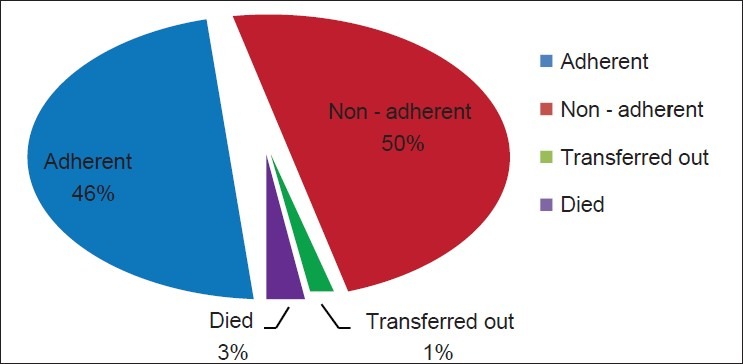
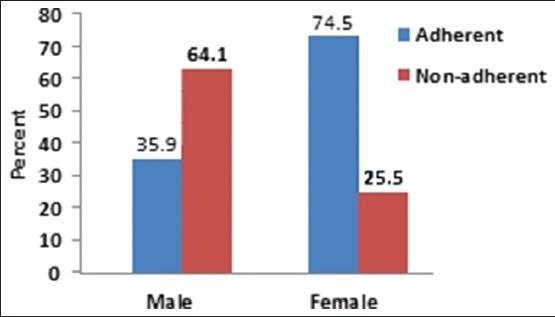
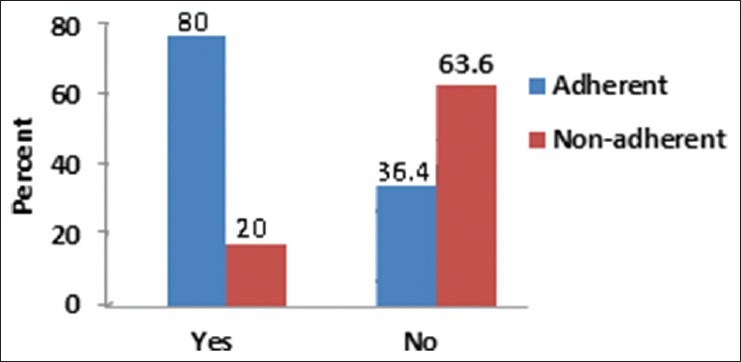
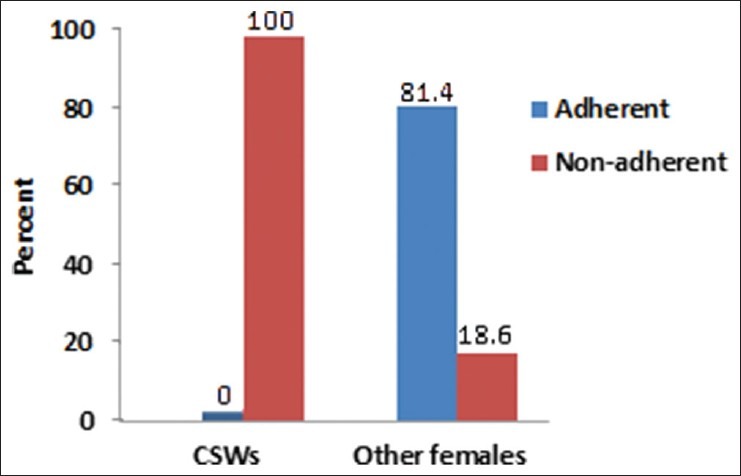
Results: We studied 156 newly diagnosed pulmonary TB patients. Out of these 78 (50%) were non-adherent to anti-tuberculosis treatment (ATT). Independent risk factors for non-adherence were identified as male gender (P = 0.035) and lack of knowledge of importance of regular treatment (P = 0.001). Being female sex worker (FSW) was also an absolute risk factor for non-adherence.
Conclusions: There is immense need for continuous, effective and reinforcing health education to the patient and his family. Special groups like males in the age group of 15-49 years, patients who do not have any family support like migrants, FSW need special attention to ensure adherence to ATT.
Keywords: Adherence; Anti-tuberculosis treatment; Non-adherence.
Conflict of interest statement
Figures
References
-
- Global tuberculosis control: Surveillance, planning, financing. Geneva: WHO; 2008. WHO.
-
- Esther S. When TB treatment fails: A socio-behavioral account of patient adherence. Am Rev Respir Dis. 1993;147:1311–20. - PubMed
-
- WHO. Tuberculosis control in South-East Asia Region. Regional Report. 2012
-
- USAID-India. Health overview. 2011
-
- WHO. The origins of DOTS. Research for action: Understanding and controlling TB in India. 2000
LinkOut - more resources
Full Text Sources
Other Literature Sources
Medical