


RHD variants in Polish blood donors routinely typed as D-
- PMID: 23634715
- PMCID: PMC5497842
- DOI: 10.1111/trf.12230
RHD variants in Polish blood donors routinely typed as D-
Abstract
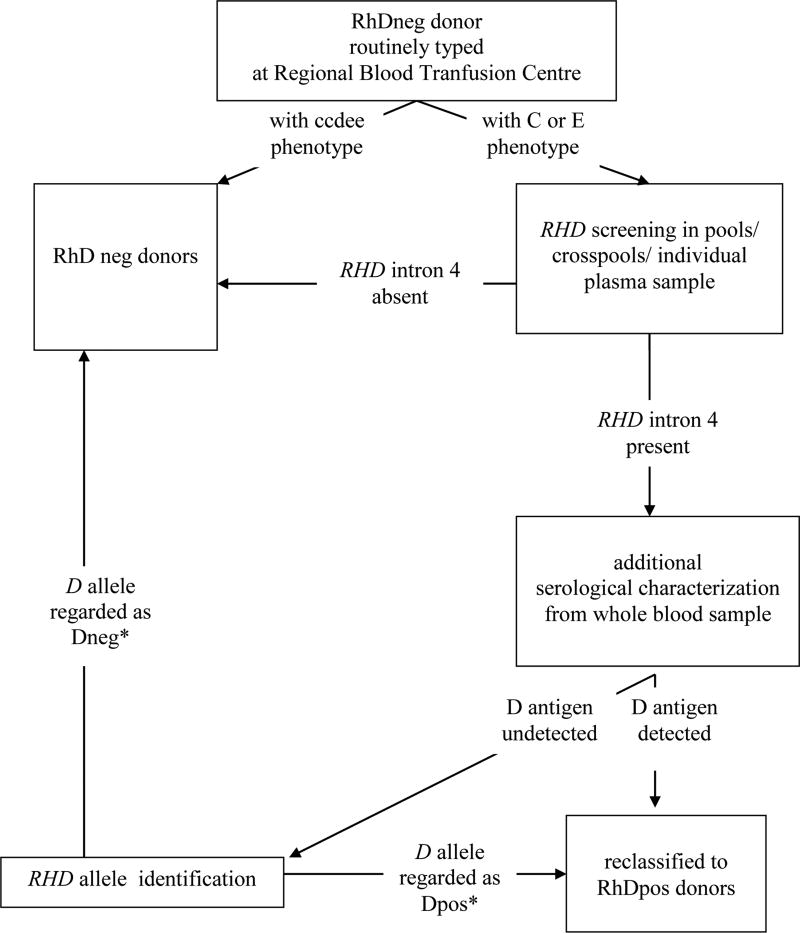
Background: Blood donors exhibiting a weak D or DEL phenotypical expression may be mistyped D- by standard serology hence permitting incompatible transfusion to D- recipients. Molecular methods may overcome these technical limits. Our aim was to estimate the frequency of RHD alleles among the apparently D- Polish donor population and to characterize its molecular background.
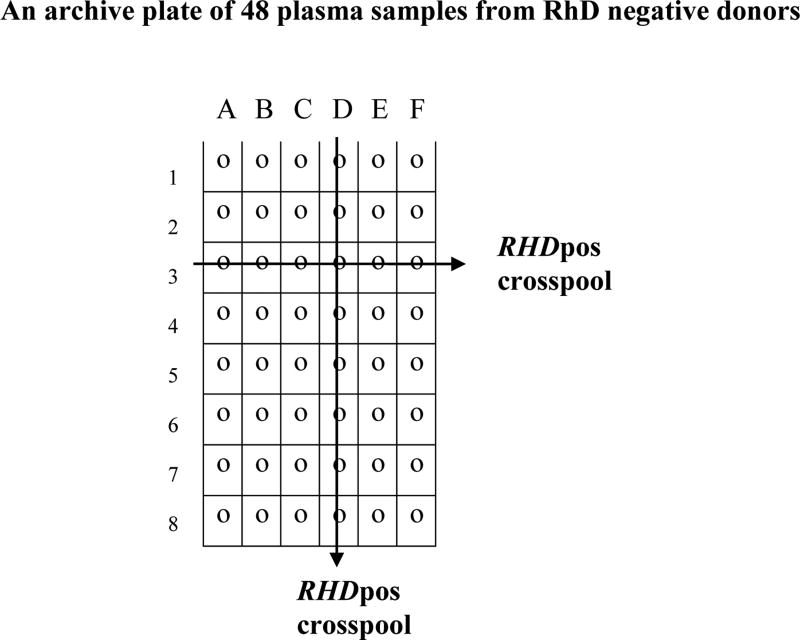
Study design and methods: Plasma pools collected from 31,200 consecutive Polish donors typed as D- were tested by real-time polymerase chain reaction (PCR) for the presence of RHD-specific markers located in Intron 4 and Exons 7 and 10. RHD+ individuals were characterized by PCR or cDNA sequencing and serology.
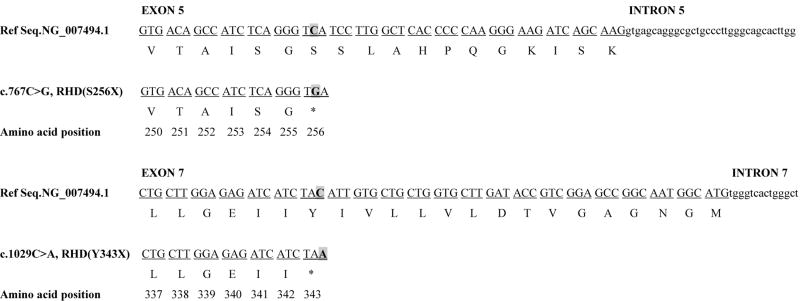
Results: Plasma cross-pool strategy revealed 63 RHD+ donors harboring RHD*01N.03 (n = 17), RHD*15 (n = 12), RHD*11 (n = 7), RHD*DEL8 (n = 3), RHD*01W.2 (n = 3), RHD-CE(10) (n = 3), RHD*01W.3, RHD*01W.9, RHD*01N.05, RHD*01N.07, RHD*01N.23, and RHD(IVS1-29G>C) and two novel alleles, RHD*(767C>G) (n = 3) and RHD*(1029C>A). Among 47 cases available for serology, 27 were shown to express the D antigen
Conclusion: 1) Plasma cross-pool strategy is a reliable and cost-effective tool for RHD screening. 2) Only 0.2% of D- Polish donors carry some fragments of the RHD gene; all of them were C or E+. 3) Almost 60% of the detected RHD alleles may be potentially immunogenic when transfused to a D- recipient.
© 2013 American Association of Blood Banks.
Conflict of interest statement
Conflict of interest
The other authors declare that they have no conflicts of interest relevant to this publication.
Figures
References
Publication types
MeSH terms
Substances
Associated data
- Actions
- Actions
Grants and funding
LinkOut - more resources
Full Text Sources
Other Literature Sources
Medical
