


Thickening agents used for dysphagia management: effect on bioavailability of water, medication and feelings of satiety
- PMID: 23634758
- PMCID: PMC3660277
- DOI: 10.1186/1475-2891-12-54
Thickening agents used for dysphagia management: effect on bioavailability of water, medication and feelings of satiety
Abstract
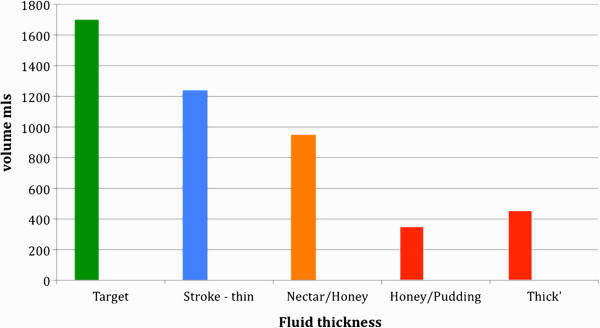
Dysphagia is the medical term for difficulty swallowing. Thickened liquids are often used in the management of dysphagia to improve bolus control and to help prevent aspiration. A range of starches and gums has historically been used to thicken liquids. Although thickened liquids improve swallow safety, they appear to have a great potential for unintended physiological consequences. Initial concerns were raised about the impact of thickeners on water binding due to the high prevalence of dehydration amongst individuals with dysphagia. Thankfully, regardless of thickening agent, thickeners do not affect water bioavailability. This effect holds true even for extremely thick fluids. However, bioavailability of medication is impaired with viscous substances. Liquids thickened to as little as 150 mPa.s retards drug release. In addition, feelings of satiety and thirst increase with increasingly viscous fluids. Flavour deteriorates with increasing thickness regardless of thickening agent. Therapeutically clinicians often prescribe small volumes of thickened liquids, consumed often. Yet small volumes of thick substances consumed with a long oral processing time, which is common for individuals with dysphagia, reduces the amount consumed. A combination of poor flavour, and increasing feelings of fullness result in little motivation and poor physiologic drive to consume thickened liquids.
Figures
References
-
- National Research Council of the National Academies. Ageing and the Macroeconomy: Long-term implications of an older population. 2012. http://www.nap.edu/catalog.php?record_id=13465. - PubMed
-
- Ageing and Aged Care in Australia. http://www.health.gov.au/internet/main/publishing.nsf/Content/ageing-pub....
-
- Holland G, Jayasersekeran V, Pendleton N, Horan M, Jones M, Hamdy S. Prevalence and symptom profiling of oropharyngeal dysphagia in a community dwelling of an elderly population: Self-reporting questionnaire survey. Dis Esophagus. 2011;24(7):476–480. doi: 10.1111/j.1442-2050.2011.01182.x. - DOI - PubMed
Publication types
MeSH terms
Substances
LinkOut - more resources
Full Text Sources
Other Literature Sources
Medical
