


Regional variation in caesarean deliveries in Germany and its causes
- PMID: 23634820
- PMCID: PMC3652783
- DOI: 10.1186/1471-2393-13-99
Regional variation in caesarean deliveries in Germany and its causes
Abstract
Background: Determinants of regional variation in caesarean sections can contribute explanations for the observed overall increasing trend of caesarean sections. We assessed which mechanism explains the higher rate of caesarean sections in the former West than East Germany: a more liberal use of caesarean sections in the case of relative indications or more common caesarean sections without indications.
Methods: We used a health insurance database from all regions of Germany with approximately 14 million insured individuals (about 17% of the total population in Germany). We selected women who gave birth in the years 2004 to 2006 and identified indications for caesarean section on the basis of hospital diagnoses in 30 days around birth. We classified pregnancies into three groups: those with strong indications for caesarean section (based on classification of absolute indications recommended by the Unmet Obstetrics Need network), those with moderate indications (other indications increasing the probability of caesarean section) and those with no indications. We investigated the percentage of caesarean sections among all births, presence of strong or moderate indications in all pregnancies, the probability of caesarean sections in the presence of indications and the fraction of caesarean sections attributable to strong, moderate and no indications.
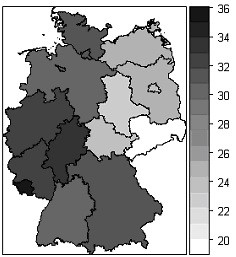
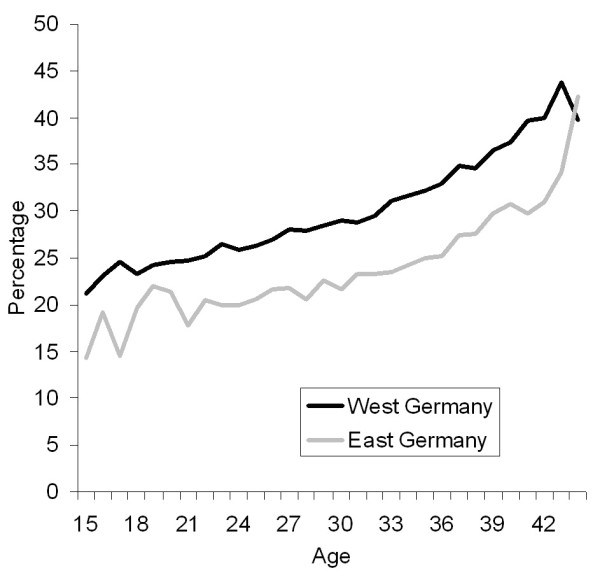
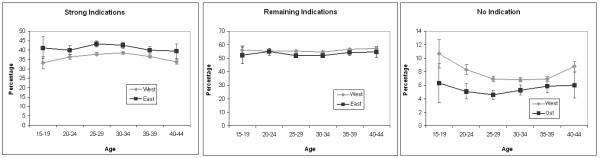
Results: In total, 294,841 births from 2004-2006 were included in the analysis. In the former West Germany, 30% births occurred by caesarean section, while in the former East Germany the caesarean section rate was 22%. Proportions of pregnancies with strong and moderate indications for caesarean section were similar in both regions. For strong indications the probability of caesarean section was similar in East and West Germany, but the probability of caesarean section among women with moderate indications was substantially higher in the former West Germany. Caesarean sections were also more common among women with no indications in the former West (8%) than in the former East (4-5%). The higher probability of caesarean section in the case of strong or moderate indications in the former West than in the East explained 87% of the difference between section rates in these two regions, while caesarean sections without indications contributed to only 13% of the difference observed.
Conclusions: The observed difference between caesarean section rates in the former East and West Germany was most likely due to different medical practice in handling relative indications.
Figures
References
-
- Lumbiganon P, Laopaiboon M, Gulmezoglu AM, Souza JP, Taneepanichskul S, Ruyan P, Attygalle DE, Shrestha N, Mori R, Nguyen DH. Method of delivery and pregnancy outcomes in Asia: the WHO global survey on maternal and perinatal health 2007–08. Lancet. 2010;375:490. doi: 10.1016/S0140-6736(09)61870-5. - DOI - PubMed
-
- Federal Statistical Office. 2010.
Publication types
MeSH terms
LinkOut - more resources
Full Text Sources
Other Literature Sources
Medical
