


Hydroxylated polychlorinated biphenyls in the environment: sources, fate, and toxicities
- PMID: 23636595
- PMCID: PMC3812322
- DOI: 10.1007/s11356-013-1742-6
Hydroxylated polychlorinated biphenyls in the environment: sources, fate, and toxicities
Abstract
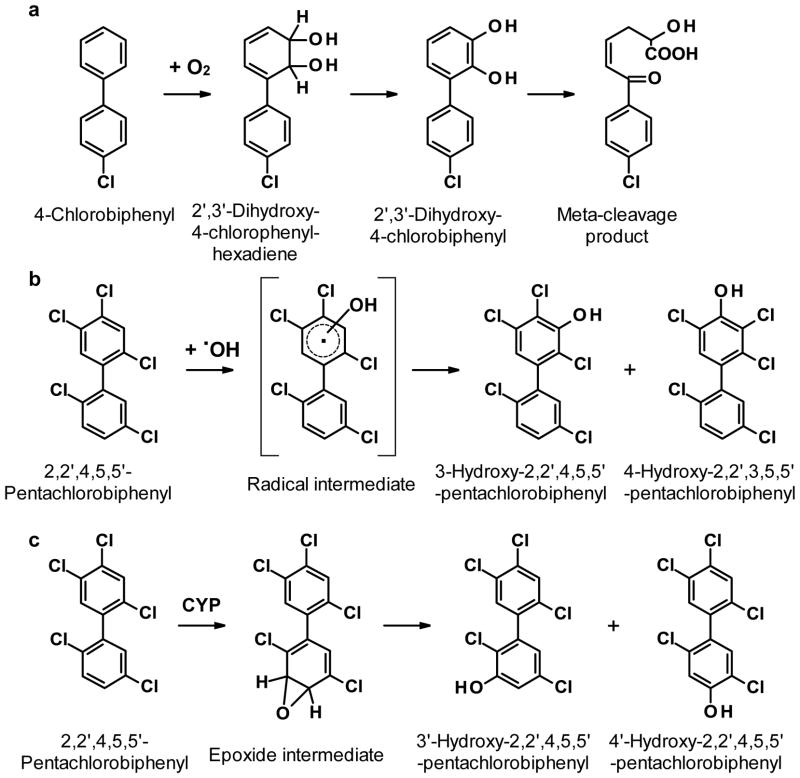
Hydroxylated polychlorinated biphenyls (OH-PCBs) are produced in the environment by the oxidation of PCBs through a variety of mechanisms, including metabolic transformation in living organisms and abiotic reactions with hydroxyl radicals. As a consequence, OH-PCBs have been detected in a wide range of environmental samples, including animal tissues, water, and sediments. OH-PCBs have recently raised serious environmental concerns because they exert a variety of toxic effects at lower doses than the parent PCBs and they are disruptors of the endocrine system. Although evidence about the widespread dispersion of OH-PCBs in various compartments of the ecosystem has accumulated, little is currently known about their biodegradation and behavior in the environment. OH-PCBs are, today, increasingly considered as a new class of environmental contaminants that possess specific chemical, physical, and biological properties not shared with the parent PCBs. This article reviews recent findings regarding the sources, fate, and toxicities of OH-PCBs in the environment.
Figures
References
-
- Aslund MLW, Rutter A, Reimer KJ, Zeeb BA. The effects of repeated planting, planting density, and specific transfer pathways on PCB uptake by Cucurbita pepo grown in field conditions. Sci Total Environ. 2008;405:14–25. - PubMed
-
- Agency for Toxic Substances and Disease Registry (ATSDR) Toxicological profile for polychlorinated biphenyls (PCBs) U.S. Department of Health and Human Services; Atlanta, GA: 2000. - PubMed
-
- Anderson PN, Hites RA. OH radical reactions: The major removal pathway for polychlorinated biphenyls from the atmosphere. Environ Sci Technol. 1996;30:1756–1763.
-
- Arulmozhiraja S, Shiraishi F, Okumura T, Iida M, Takigami H, Edmonds J, Morita M. Structural requirements for the interaction of 91 hydroxylated polychlorinated biphenyls with estrogen and thyroid hormone receptors. J Toxicol Sci. 2005;84:49–62. - PubMed
-
- Bedard DL, Pohl EA, Bailey JJ, Murphy A. Characterization of the PCB substrate range of microbial dechlorination process LP. Environ Sci Technol. 2005;39:6831–6838. - PubMed
Publication types
MeSH terms
Substances
Grants and funding
LinkOut - more resources
Full Text Sources
Other Literature Sources
Research Materials
