Mesenchymal stromal cells in transplantation rejection and tolerance
- PMID: 23637312
- PMCID: PMC3633184
- DOI: 10.1101/cshperspect.a015560
Mesenchymal stromal cells in transplantation rejection and tolerance
Abstract
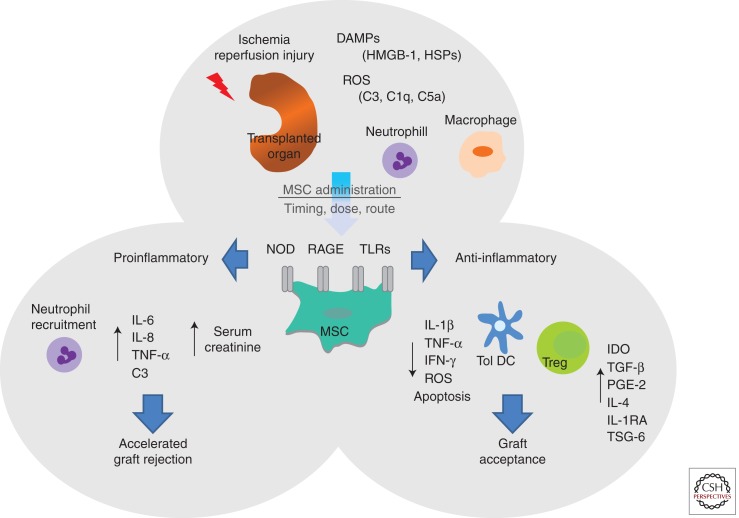
Mesenchymal stromal cells (MSCs) have recently emerged as promising candidates for cell-based immunotherapy in solid organ transplantation (SOT). In addition to immune modulation, MSCs possess proreparative properties and preclinical studies indicate that MSCs have the capacity to prolong graft survival and in some cases induce tolerance. Currently, the application of MSCs in SOT is being evaluated in phase I/II clinical trials. Whereas the mechanisms of action used by MSC immunomodulation have been somewhat elucidated in vitro, the data from preclinical transplant models have been unclear. Furthermore, the optimal timing, dose, and route of administration remain to be elucidated. Importantly, MSCs have the ability to sense their environment, which may influence their function. In this article, we discuss the impact of the local microenvironment on MSCs and the mechanisms of MSC immunomodulation in the setting of SOT.
Figures
References
-
- Augello A, Tasso R, Negrini SM, Amateis A, Indiveri F, Cancedda R, Pennesi G 2005. Bone marrow mesenchymal progenitor cells inhibit lymphocyte proliferation by activation of the programmed death 1 pathway. Eur J Immunol 35: 1482–1490 - PubMed
Publication types
MeSH terms
Grants and funding
LinkOut - more resources
Full Text Sources
Other Literature Sources