


Can progressive resistance training twice a week improve mobility, muscle strength, and quality of life in very elderly nursing-home residents with impaired mobility? A pilot study
- PMID: 23637524
- PMCID: PMC3639017
- DOI: 10.2147/CIA.S42136
Can progressive resistance training twice a week improve mobility, muscle strength, and quality of life in very elderly nursing-home residents with impaired mobility? A pilot study
Abstract
Purpose: To determine the effects of progressive resistance training on mobility, muscle strength, and quality of life in nursing-home residents with impaired mobility.
Methods: Nursing-home residents aged 77 years and older with impaired mobility were recruited in Berlin, Germany. The eight-week exercise program consisted of progressive resistance training twice a week. Mobility (primary outcome) was assessed with the Elderly Mobility Scale (zero = worst, 20 = best) at baseline and after 8 weeks. Muscle strength (secondary outcome) was determined by the eight-repetition maximum. The Short Form-36 Health Survey was used to assess quality of life.
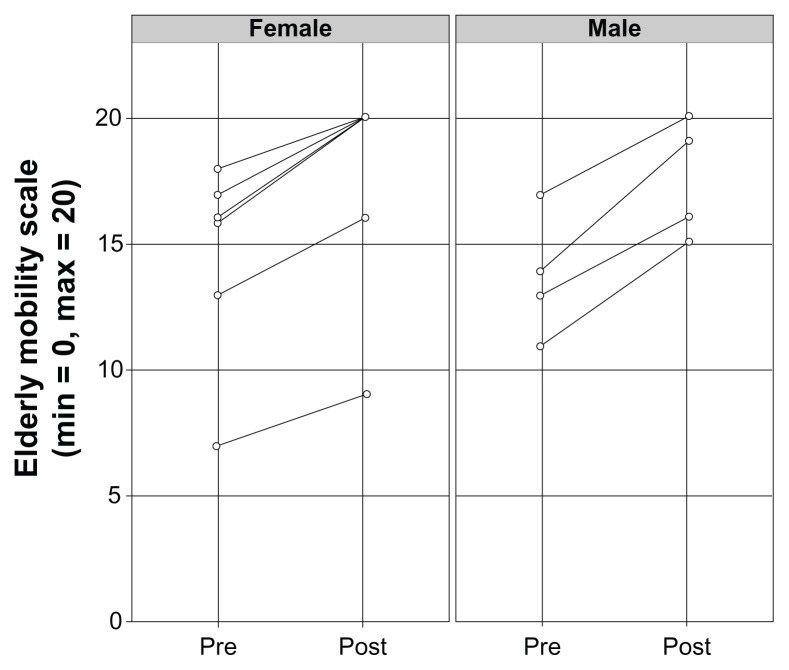
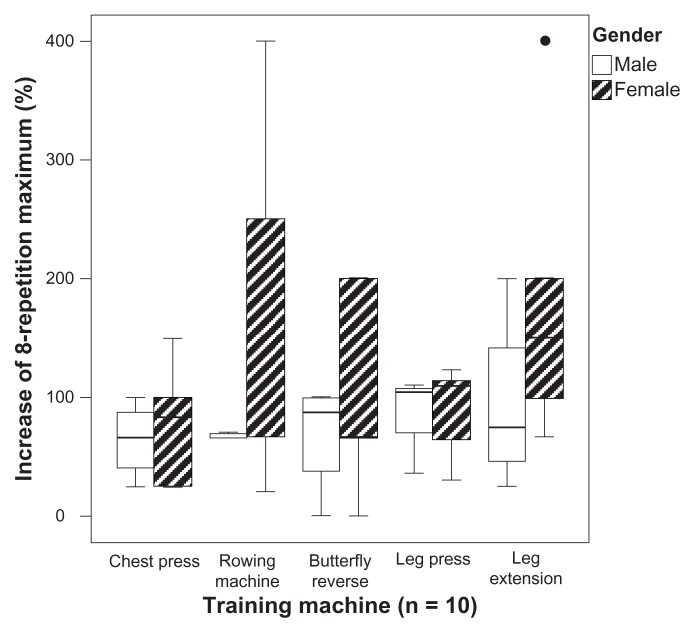
Results: Of the 15 participants (mean age 84 years, range 77-97 years), ten completed the 8-week program. Mobility (Elderly Mobility Scale mean ± standard deviation pre 14.1 ± 3.2 and post 17.5 ± 3.6; P = 0.005) as well as muscle strength of upper and lower limbs improved (from 62% at chest press up to 108% at leg extension machine), whereas most quality of life subscales did not show considerable change.
Conclusion: Resistance training twice a week over 2 months seemed to considerably improve mobility and muscle strength in persons aged 77-97 years with impaired mobility.
Keywords: elderly; mobility; muscle strength; nursing home; resistance training.
Figures
References
-
- Metter EJ, Conwit R, Tobin J, Fozard JL. Age-associated loss of power and strength in the upper extremities in women and men. J Gerontol A Biol Sci Med Sci. 1997;52(5):B267–B276. - PubMed
-
- Vandervoort AA, McComas AJ. Contractile changes in opposing muscles of the human ankle joint with aging. J Appl Physiol. 1986;61(1):361–367. - PubMed
-
- Doherty TJ. Invited review: aging and sarcopenia. J Appl Physiol. 2003;95(4):1717–1727. - PubMed
MeSH terms
LinkOut - more resources
Full Text Sources
Other Literature Sources
Medical
