. 2013 Apr;9(4):e1003482.
doi: 10.1371/journal.pgen.1003482. Epub 2013 Apr 25.

Genome-wide association studies identify two novel BMP15 mutations responsible for an atypical hyperprolificacy phenotype in sheep

Affiliations

Genome-wide association studies identify two novel BMP15 mutations responsible for an atypical hyperprolificacy phenotype in sheep

Julie Demars et al. PLoS Genet. 2013 Apr.

Abstract

Some sheep breeds are naturally prolific, and they are very informative for the studies of reproductive genetics and physiology. Major genes increasing litter size (LS) and ovulation rate (OR) were suspected in the French Grivette and the Polish Olkuska sheep populations, respectively. To identify genetic variants responsible for the highly prolific phenotype in these two breeds, genome-wide association studies (GWAS) followed by complementary genetic and functional analyses were performed. Highly prolific ewes (cases) and normal prolific ewes (controls) from each breed were genotyped using the Illumina OvineSNP50 Genotyping Beadchip. In both populations, an X chromosome region, close to the BMP15 gene, harbored clusters of markers with suggestive evidence of association at significance levels between 1E(-05) and 1E(-07). The BMP15 candidate gene was then sequenced, and two novel non-conservative mutations called FecX(Gr) and FecX(O) were identified in the Grivette and Olkuska breeds, respectively. The two mutations were associated with the highly prolific phenotype (p FecX (Gr) = 5.98E(-06) and p FecX(O) = 2.55E(-08)). Homozygous ewes for the mutated allele showed a significantly increased prolificacy (FecX(Gr)/FecX(Gr), LS = 2.50 ± 0.65 versus FecX(+)/FecX(Gr), LS = 1.93 ± 0.42, p<1E(-03) and FecX(O)/FecX(O), OR = 3.28 ± 0.85 versus FecX(+)/FecX(O), OR = 2.02 ± 0.47, p<1E(-03)). Both mutations are located in very well conserved motifs of the protein and altered the BMP15 signaling activity in vitro using a BMP-responsive luciferase test in COV434 granulosa cells. Thus, we have identified two novel mutations in the BMP15 gene associated with increased LS and OR. Notably, homozygous FecX(Gr)/FecX(Gr) Grivette and homozygous FecX(O)/FecX(O) Olkuska ewes are hyperprolific in striking contrast with the sterility exhibited by all other known homozygous BMP15 mutations. Our results bring new insights into the key role played by the BMP15 protein in ovarian function and could contribute to a better understanding of the pathogenesis of women's fertility disorders.


Conflict of interest statement

The authors have declared that no competing interests exist.

Figures
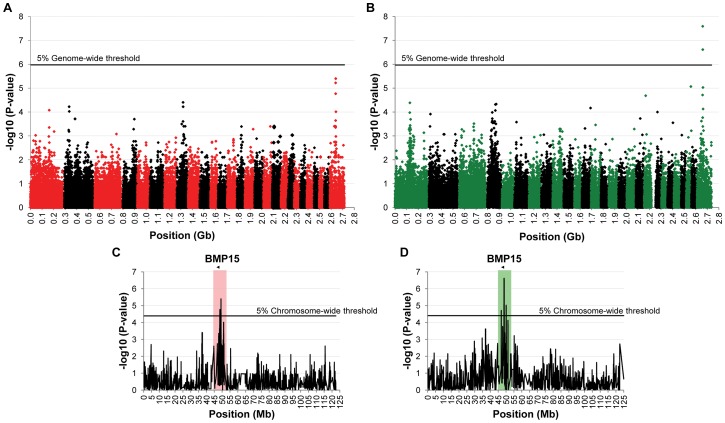
Figure 1
Figure 1. Genome-wide and chromosome-wide association results.
(A) Genome-wide association results for litter size in the French Grivette sheep population. (B) Genome-wide association results for ovulation rate in the Polish Olkuska sheep population. Manhattan plots show the combined association signals (−log10(p)) on the y-axis versus SNPs position in the sheep genome on the x-axis and ordered by chromosome number (OARv2.0 available on http://www.livestockgenomics.csiro.au/sheep/ website). Black lines represent the 5% genome-wide threshold. Chromosomes are ordered from OAR1 to OAR26 and the X chromosome is the last one. (C) OARX chromosome-wide association results for litter size in the French Grivette sheep population. (D) OARX chromosome-wide association results for ovulation rate in the Polish Olkuska sheep population. Manhattan plots show the combined association signals (−log10(p)) on the y-axis versus SNPs position on the X chromosome (OARv2.0 available on http://www.livestockgenomics.csiro.au/sheep/ website). Black lines represent the 5% chromosome-wide threshold. Red and green boxes pinpoint locus where significant association results are obtained for several markers in the Grivette and Olkuska populations, respectively. The location of the BMP15 gene is mentioned by an arrow.
Figure 2
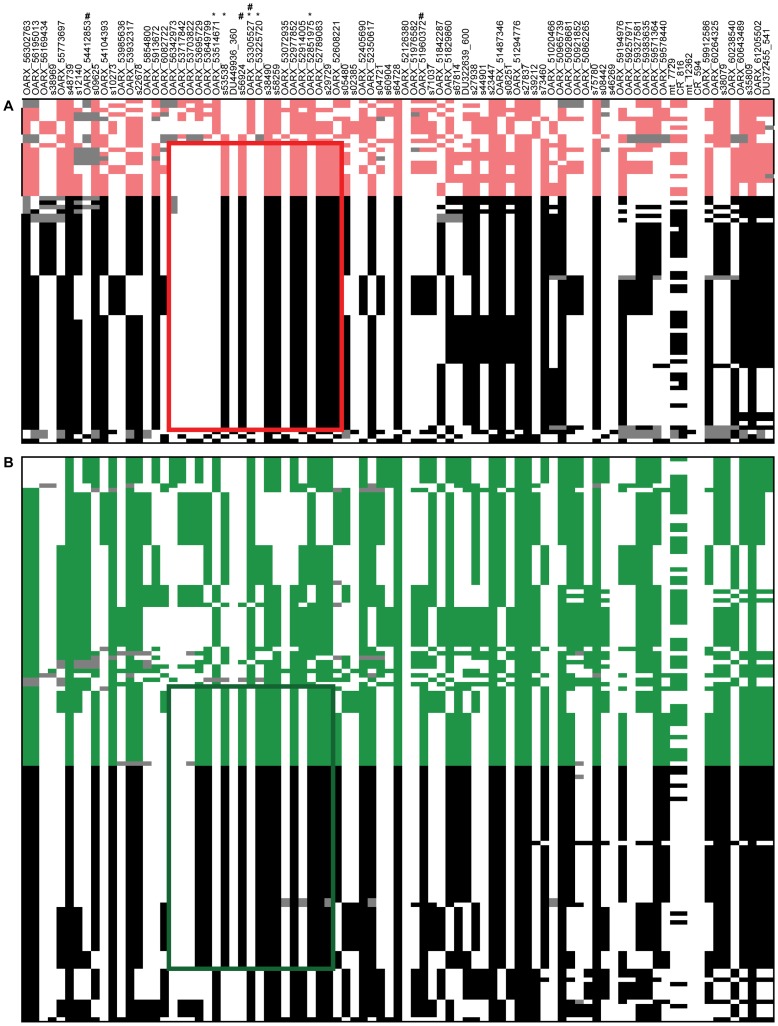
Figure 2. Clusterization of haplotypes reconstructed at the OARX locus.
(A) Haplotypes determined in the French Grivette sheep population. (B) Haplotypes determined in the Polish Olkuska sheep population. 87 markers located in the interest OARX region (45 Mb–55 Mb) were selected to reconstruct haplotypes. Each column represents one SNP and each line represents one haplotype. For one marker (i) allele 1 is in red (Grivette) or green (Olkuska) in controls, respectively or black in cases, (ii) allele 2 is in white when the phase was unambiguous and (iii) dark grey colour represents unphased SNP. Haplotypes were ordered to distinguish controls versus cases and clusterized to classify similar clades of haplotypes. Markers with evidence of association at significance levels are marked with a star or a hash in French Grivette and Polish Olkuska sheep populations, respectively. In both breeds, the specific haplotype preferentially selected in highly prolific ewes (cases) is symbolized by red (Grivette) and green (Olkuska) boxes. The BMP15 gene (48140251 bp–48146740 bp) is located between markers named OARX_6082722 and OARX_56342973.
Figure 3
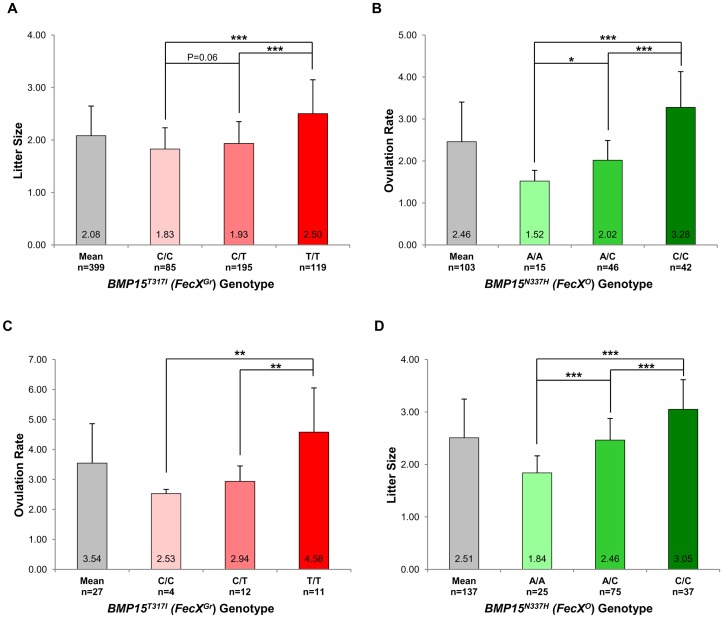
Figure 3. Genotypic distributions of FecXGr and FecXO mutations.
(A) Genotypic distribution of the BMP15T317I (FecXGr) in the French Grivette sheep population for the litter size phenotype. (B) Genotypic distribution of the BMP15N337H (FecXO) in the Polish Olkuska sheep population for the ovulation rate phenotype. (C) Genotypic distribution of the BMP15T317I (FecXGr) in the French Grivette sheep population for the ovulation rate phenotype. (D) Genotypic distribution of the BMP15N337H (FecXO) in the Polish Olkuska sheep population for the litter size phenotype. The means LS or OR in breeds are firstly presented then ewes were ordered according to their genotype at the mutation of interest. Means±SD for prolificacy were calculated for the 3 groups of genotype and are noted into each histogram bar. Number of ewes counted per group of genotype is mentioned (n). Pairwise statistical comparisons using a one-way ANOVA test between means of genotype's clades were performed and results of statistic test are symbolized by stars. p: * = p<5E−02; ** = p<1E−02 and *** = p<1E−03.
Figure 4
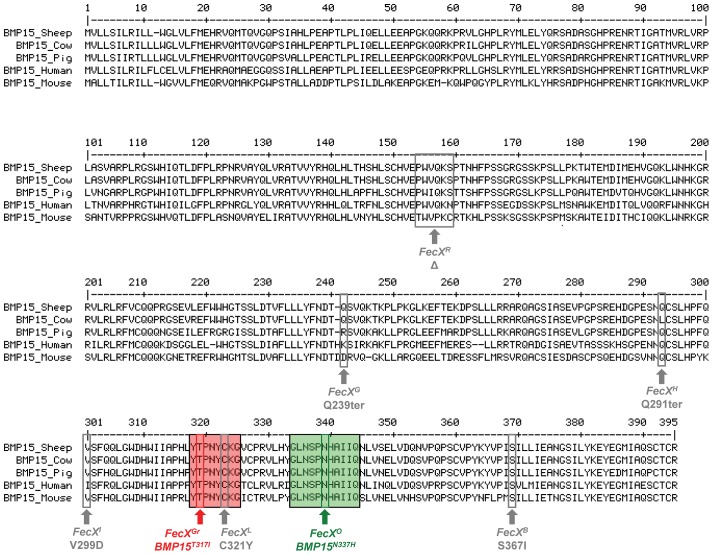
Figure 4. BMP15 multi-species sequences alignment and position of sheep mutations.
The BMP15 protein sequences from Ovis aries (GenBank AAF81688.1), Bos taurus (GenBank DAA12832.1), Sus scrofa (GenBank NP_001005155.1), Mus musculus (GenBank NP_033887.1) and Homo sapiens (GeneBank NP_005439.2) were aligned and compared. Grey boxes and arrows represent known mutations as reviewed in Otsuka et al. . FecXGr and FecXO mutations are in red or green frames, respectively, themselves into bigger frames symbolizing conserved protein motifs.
Figure 5
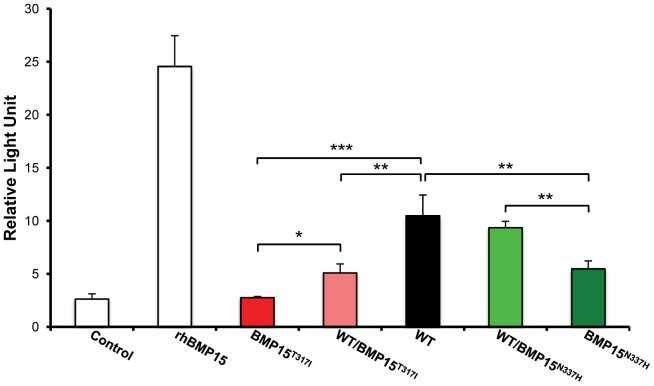
Figure 5. Functional effects of FecXGr and FecXO mutations on the BMP15 activity.
In vitro reporter luciferase assay from COV434 granulosa cells transiently transfected with empty vector +/− 100 ng of recombinant human BMP15 (Control +/− rhBMP15) or wild-type human BMP15 expressing vector (WT) or the 2 different BMP15 variant vectors (BMP15T317I (FecXGr); BMP15N337H (FecXO)) obtained by directed-mutagenesis. Results are expressed as Means±SD of the relative light unit (RLU) from 3 independent experiments in triplicate for each condition. Pairwise statistical comparisons using a one-way ANOVA test between means were performed and results of statistic test are symbolized by stars: * = p<5E−02; ** = p<1E−02 and *** = p<1E−03.
Figure 6
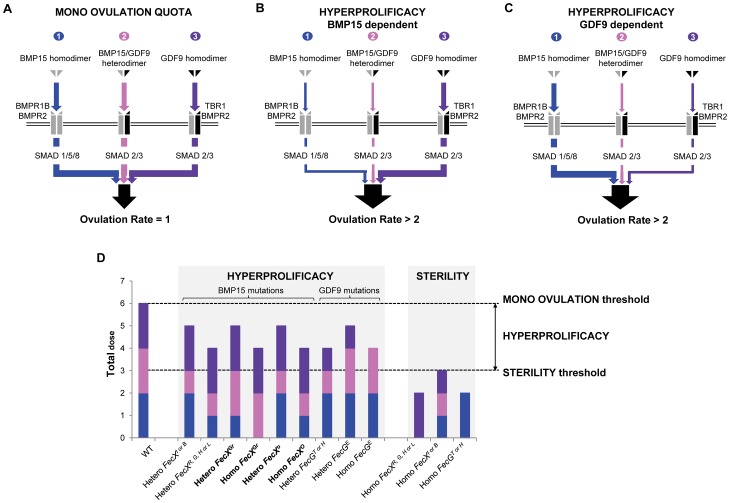
Figure 6. Hypothesized overview of ovulation quota control by the various Fecundity mutations.
(A) The mono ovulation quota is tightly controlled by the integrative action of i) BMP15 homodimer through BMPR1B, BMPR2 and SMAD1/5/8, ii) BMP15/GDF9 heterodimer through SMAD2/3 and iii) GDF9 homodimer through TBR1, BMPR2 and SMAD2/3. (B) Increased of ovulation rate due to FecX mutations. This drawing represents an overview of hyperprolificacy dependent of BMP15 variants. Heterozygous or homozygous FecX mutations leading to an increased OR affect either the signaling pathways of BMP15 homodimer, BMP15/GDF9 heterodimer or both whereas the GDF9 homodimer signaling pathway remains stable. (C) Increased of ovulation rate due to FecG mutations. This drawing represents an overview of hyperprolificacy dependent of GDF9 variants. Heterozygous or homozygous FecG mutations leading to an increased OR impair either the signaling pathways of GDF9 homodimer, BMP15/GDF9 heterodimer or both whereas the BMP15 homodimer signaling pathway remains stable. (D) Dose sensitive effect of each FecX and FecG mutations on the BMP15, GDF9 homodimers and BMP15/GDF9 heterodimer signaling pathways. Based on the various in vitro tests performed, we assigned a dose (n = 0, 1 or 2) to each signaling pathway in an attempt to explain the prolificacy phenotype observed for all the FecX and FecG mutations. When the ovulation rate is normal ( = 1), i.e. the WT situation, 2 doses of BMP15 homodimer (blue), GDF9 homodimer (purple) and BMP15/GDF9 heterodimer (pink) were considered. As example, in the case of the FecXGr mutation where the BMP15 homodimer signaling pathway seemed clearly affected at homozygous and heterozygous status (as shown on Figure 5), we assumed that the BMP15/GDF9 heterodimer signaling pathway remained totally active.

References

    1. Matzuk MM, Burns KH, Viveiros MM, Eppig JJ (2002) Intercellular communication in the mammalian ovary: oocytes carry the conversation. Science 296: 2178–2180. - PubMed
    1. Gilchrist RB, Lane M, Thompson JG (2008) Oocyte-secreted factors: regulators of cumulus cell function and oocyte quality. Hum Reprod Update 14: 159–177. - PubMed
    1. Su YQ, Sugiura K, Eppig JJ (2009) Mouse oocyte control of granulosa cell development and function: paracrine regulation of cumulus cell metabolism. Semin Reprod Med 27: 32–42. - PMC - PubMed
    1. Dong J, Albertini DF, Nishimori K, Kumar TR, Lu N, et al. (1996) Growth differentiation factor-9 is required during early ovarian folliculogenesis. Nature 383: 531–535. - PubMed
    1. Nilsson EE, Skinner MK (2002) Growth and differentiation factor-9 stimulates progression of early primary but not primordial rat ovarian follicle development. Biol Reprod 67: 1018–1024. - PubMed

Publication types

Substances