


Menstrual cycle phase modulates emotional conflict processing in women with and without premenstrual syndrome (PMS)--a pilot study
- PMID: 23637739
- PMCID: PMC3634788
- DOI: 10.1371/journal.pone.0059780
Menstrual cycle phase modulates emotional conflict processing in women with and without premenstrual syndrome (PMS)--a pilot study
Abstract
Background: Premenstrual syndrome (PMS) is characterized by a cluster of psychological and somatic symptoms during the late luteal phase of the menstrual cycle that disappear after the onset of menses. Behavioral differences in emotional and cognitive processing have been reported in women with PMS, and it is of particular interest whether PMS affects the parallel execution of emotional and cognitive processing. Related to this is the question of how the performance of women with PMS relates to stress levels compared to women without PMS. Cortisol has been shown to affect emotional processing in general and it has also been shown that women with severe PMS have a particular cortisol profile.
Methods: We measured performance in an emotional conflict task and stress levels in women with PMS (n = 15) and women without PMS (n = 15) throughout their menstrual cycle.
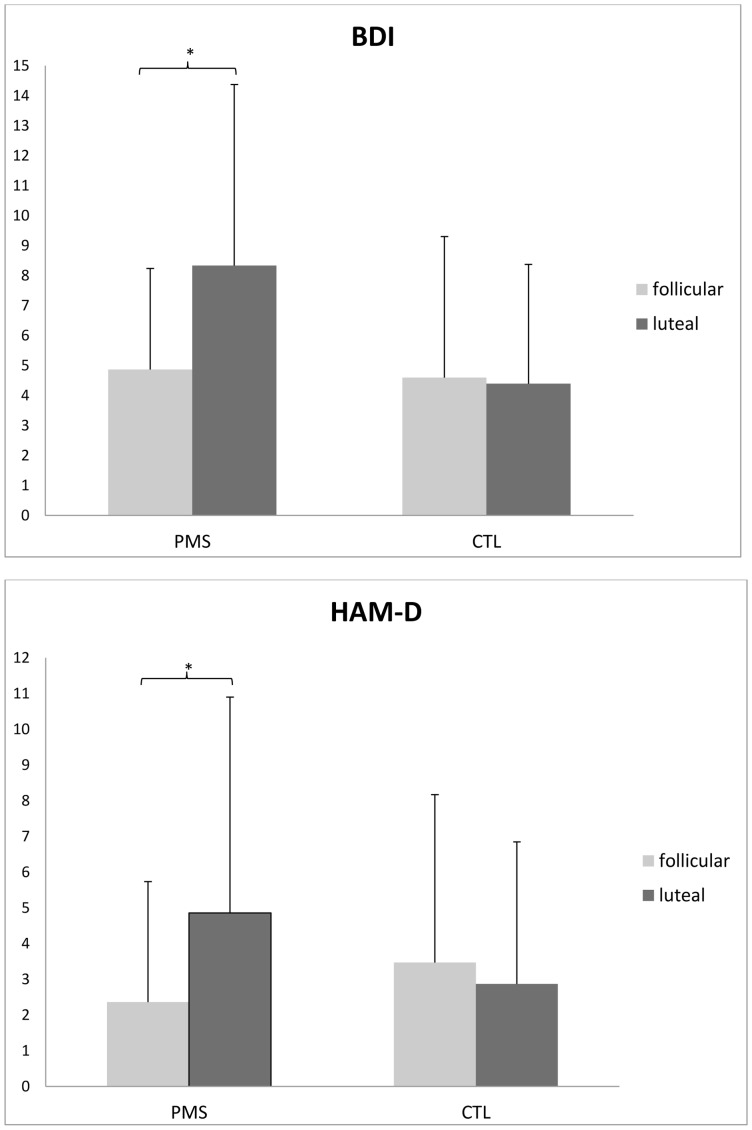
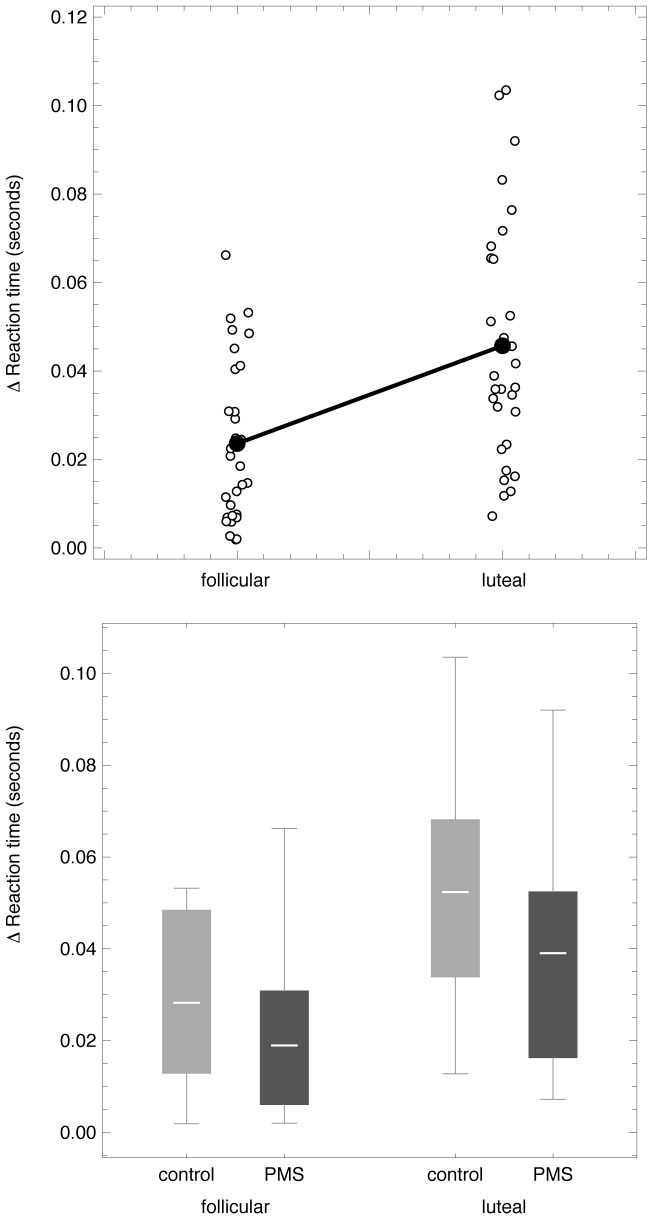
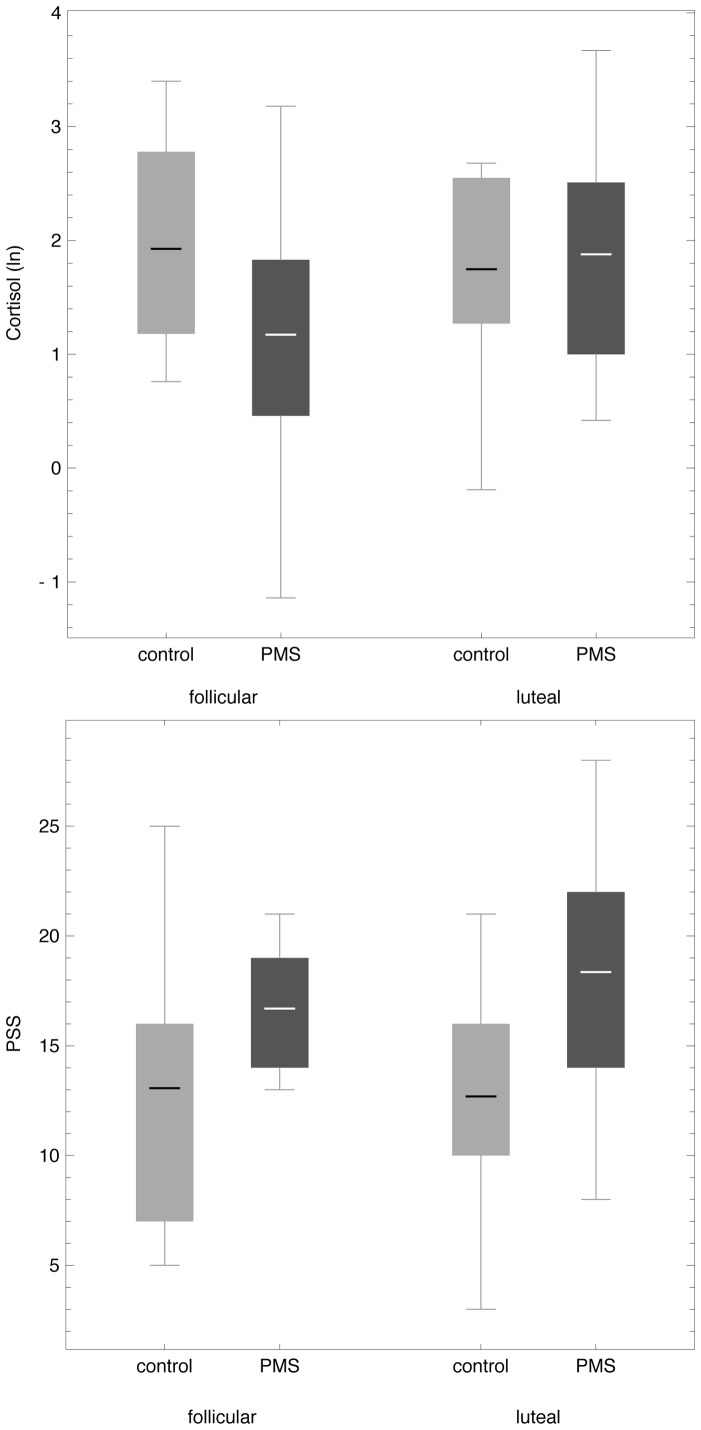
Results: We found a significant increase (p = 0.001) in the mean reaction time for resolving emotional conflict from the follicular to the luteal cycle phase in all subjects. Only women with PMS demonstrated an increase in physiological and subjective stress measures during the luteal menstrual cycle phase.
Conclusions: Our findings suggest that the menstrual cycle modulates the integration of emotional and cognitive processing in all women. Preliminary data are supportive of the secondary hypothesis that stress levels are mediated by the menstrual cycle phase only in women with PMS. The presented evidence for menstrual cycle-specific differences in integrating emotional and cognitive information highlights the importance of controlling for menstrual cycle phase in studies that aim to elucidate the interplay of emotion and cognition.
Conflict of interest statement
Figures
References
-
- Johnson SR (1987) The epidemiology and social impact of premenstrual symptoms. Clin Obstet Gynecol 30: 367–376. - PubMed
-
- Steiner M (1997) Premenstrual syndromes. Annu Rev Med 48: 447–455. - PubMed
-
- Dickerson LM, Mazyck PJ, Hunter MH (2003) Premenstrual syndrome. Am Fam Physician 67: 1743–1752. - PubMed
-
- Steiner M, Macdougall M, Brown E (2003) The premenstrual symptoms screening tool (PSST) for clinicians. Arch Womens Ment Health 6: 203–209. - PubMed
Publication types
MeSH terms
LinkOut - more resources
Full Text Sources
Other Literature Sources
Medical
