


The ocular conjunctiva as a mucosal immunization route: a profile of the immune response to the model antigen tetanus toxoid
- PMID: 23637758
- PMCID: PMC3637207
- DOI: 10.1371/journal.pone.0060682
The ocular conjunctiva as a mucosal immunization route: a profile of the immune response to the model antigen tetanus toxoid
Abstract
Background: In a quest for a needle-free vaccine administration strategy, we evaluated the ocular conjunctiva as an alternative mucosal immunization route by profiling and comparing the local and systemic immune responses to the subcutaneous or conjunctival administration of tetanus toxoid (TTd), a model antigen.
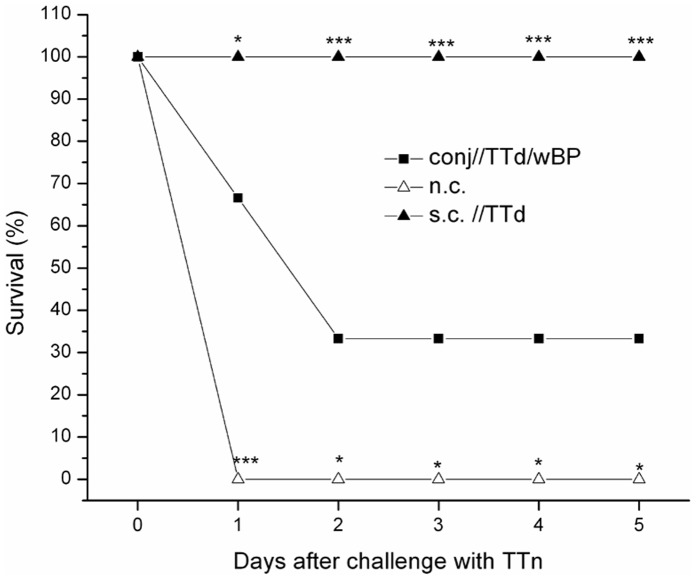
Materials and methods: BALB/c and C57BL/6 mice were immunized either subcutaneously with TTd alone or via the conjunctiva with TTd alone, TTd mixed with 2% glycerol or TTd with merthiolate-inactivated whole-cell B. pertussis (wBP) as adjuvants. Mice were immunized on days 0, 7 and 14 via both routes, and an evaluation of the local and systemic immune responses was performed two weeks after the last immunization. Four weeks after the last immunization, the mice were challenged with a lethal dose (2 × LD50) of tetanus toxin.
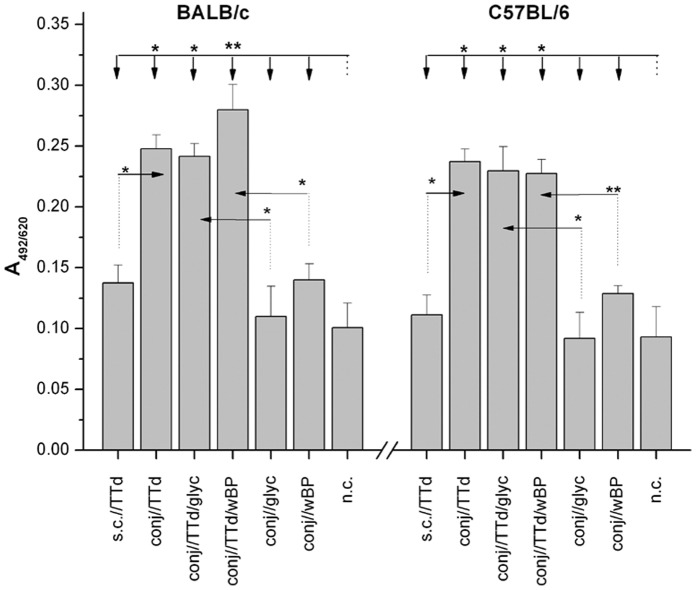
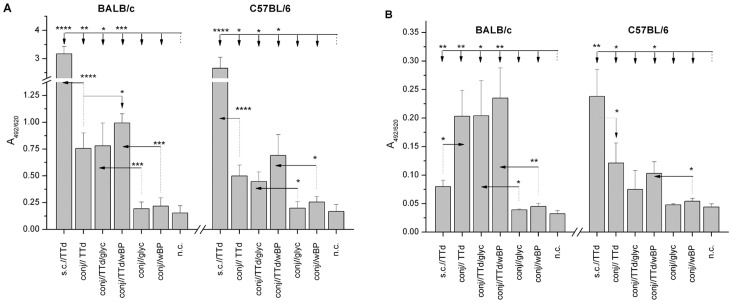
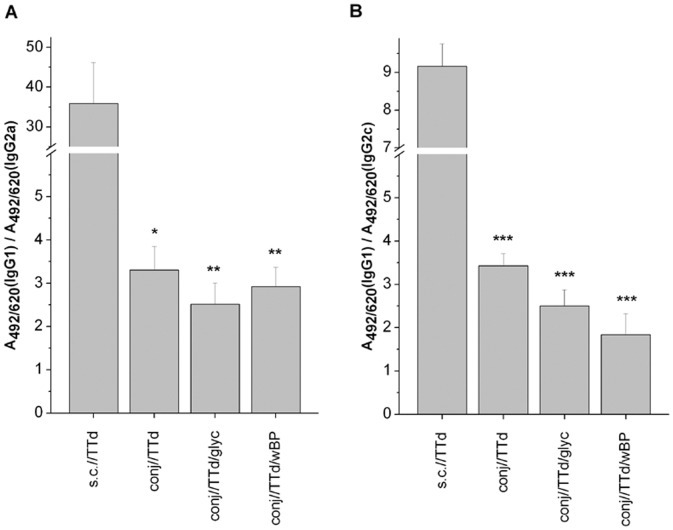
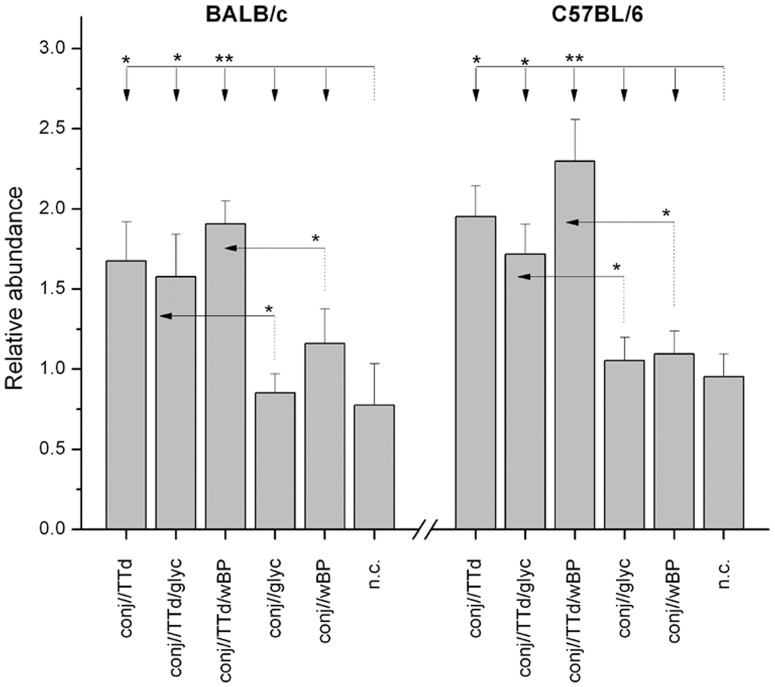
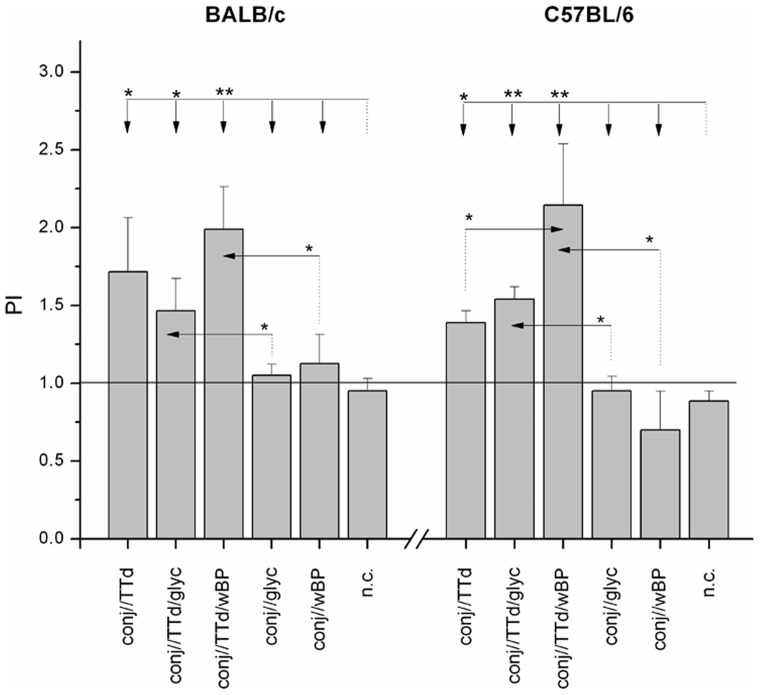
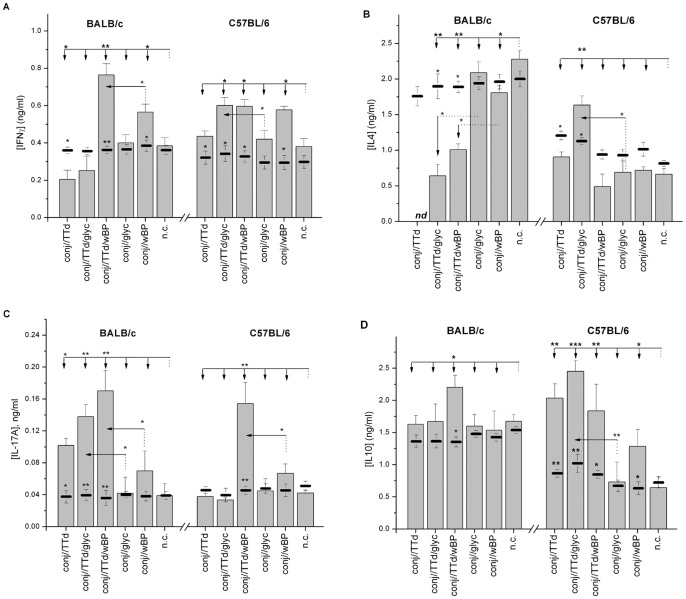
Results: The conjunctival application of TTd in BALB/c mice induced TTd-specific secretory IgA production and skewed the TTd-specific immune response toward a Th1/Th17 profile, as determined by the stimulation of IFNγ and IL-17A secretion and/or the concurrent pronounced reduction of IL-4 secretion, irrespective of the adjuvant. In conjunctivaly immunized C57BL/6 mice, only TTd administered with wBP promoted the establishment of a mixed Th1/Th17 TTd-specific immune response, whereas TTd alone or TTd in conjunction with glycerol initiated a dominant Th1 response against TTd. Immunization via the conjunctiva with TTd plus wBP adjuvant resulted in a 33% survival rate of challenged mice compared to a 0% survival rate in non-immunized animals (p<0.05).
Conclusion: Conjunctival immunization with TTd alone or with various adjuvants induced TTd-specific local and systemic immune responses, predominantly of the Th1 type. The strongest immune responses developed in mice that received TTd together with wBP, which implies that this alternative route might tailor the immune response to fight intracellular bacteria or viruses more effectively.
Conflict of interest statement
Figures
References
-
- Daniel Nelson J, Douglas Cameron J (2010) The conjunctiva: anatomy and physiology. In: Krachmer JH, Mannis MJ, EJ H, editors. Cornea. 3 ed: Mosby, Elsevier. pp. 25–32.
-
- Gukasyan HJ, Kim K-J, Lee VHL (2008) The Conjunctival Barrier in Ocular Drug Delivery. In: Ehrhardt C, Kim K-J, editors. Drug Absorption Studies In situ, In vitro, In Silico Models: Springer US. pp. 310–312.
-
- Steven P, Gebert A (2009) Conjunctiva-associated lymphoid tissue - current knowledge, animal models and experimental prospects. Ophthalmic research 42: 2–8. - PubMed
-
- Kageyama M, Nakatsuka K, Yamaguchi T, Owen RL, Shimada T (2006) Ocular defense mechanisms with special reference to the demonstration and functional morphology of the conjunctiva-associated lymphoid tissue in Japanese monkeys. Arch Histol Cytol 69: 311–322. - PubMed
Publication types
MeSH terms
Substances
LinkOut - more resources
Full Text Sources
Other Literature Sources
Medical
Research Materials
Miscellaneous
