


In vitro drug response and efflux transporters associated with drug resistance in pediatric high grade glioma and diffuse intrinsic pontine glioma
- PMID: 23637844
- PMCID: PMC3639279
- DOI: 10.1371/journal.pone.0061512
In vitro drug response and efflux transporters associated with drug resistance in pediatric high grade glioma and diffuse intrinsic pontine glioma
Abstract
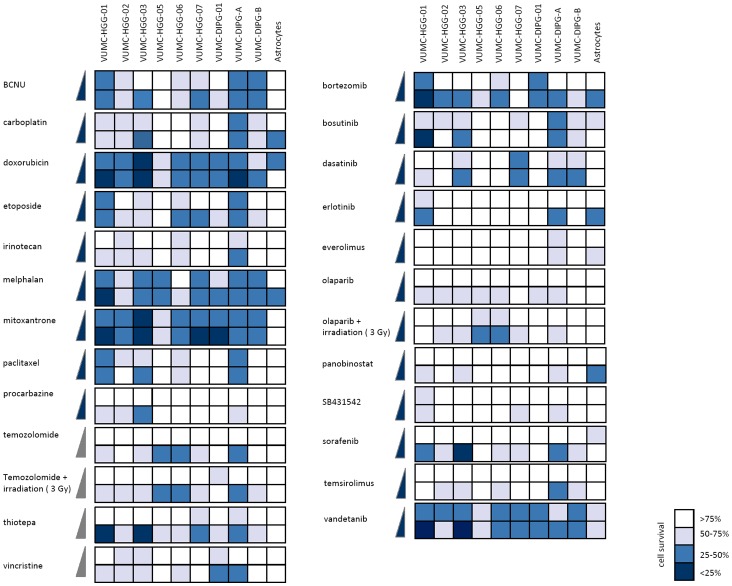
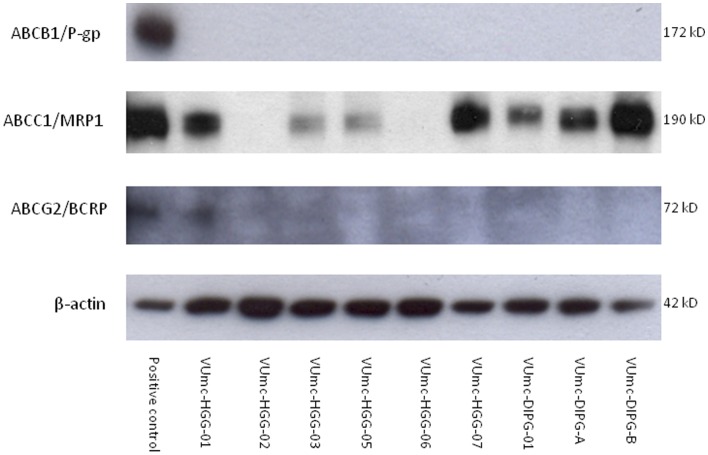
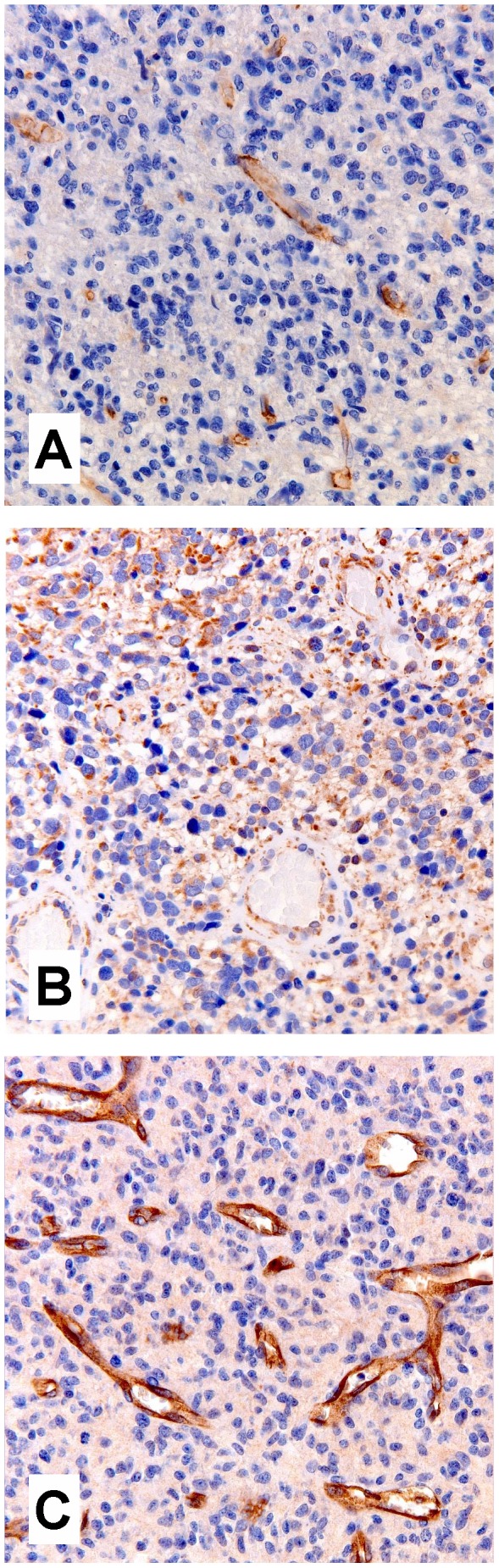
Pediatric high-grade gliomas (pHGG), including diffuse intrinsic pontine gliomas (DIPG), are the leading cause of cancer-related death in children. While it is clear that surgery (if possible), and radiotherapy are beneficial for treatment, the role of chemotherapy for these tumors is still unclear. Therefore, we performed an in vitro drug screen on primary glioma cells, including three DIPG cultures, to determine drug sensitivity of these tumours, without the possible confounding effect of insufficient drug delivery. This screen revealed a high in vitro cytotoxicity for melphalan, doxorubicine, mitoxantrone, and BCNU, and for the novel, targeted agents vandetanib and bortezomib in pHGG and DIPG cells. We subsequently determined the expression of the drug efflux transporters P-gp, BCRP1, and MRP1 in glioma cultures and their corresponding tumor tissues. Results indicate the presence of P-gp, MRP1 and BCRP1 in the tumor vasculature, and expression of MRP1 in the glioma cells themselves. Our results show that pediatric glioma and DIPG tumors per se are not resistant to chemotherapy. Treatment failure observed in clinical trials, may rather be contributed to the presence of drug efflux transporters that constitute a first line of drug resistance located at the blood-brain barrier or other resistance mechanism. As such, we suggest that alternative ways of drug delivery may offer new possibilities for the treatment of pediatric high-grade glioma patients, and DIPG in particular.
Conflict of interest statement
Figures
References
-
- Broniscer A, Gajjar A (2004) Supratentorial high-grade astrocytoma and diffuse brainstem glioma: two challenges for the pediatric oncologist. Oncologist 9: 197–206. - PubMed
-
- Tamber MS, Rutka JT (2003) Pediatric supratentorial high-grade gliomas. Neurosurg Focus 14: e1. - PubMed
-
- Jansen MHA, van Vuurden DG, Vandertop WP, Kaspers GJL (2012) Diffuse intrinsic pontine gliomas: a systematic update on clinical trials and biology. Cancer Treat Rev 38: 27–35. - PubMed
-
- Hargrave D, Bartels U, Bouffet E (2006) Diffuse brainstem glioma in children: critical review of clinical trials. Lancet Oncol 7: 241–248. - PubMed
-
- Broniscer A (2006) Past, present, and future strategies in the treatment of high-grade glioma in children. Cancer Invest 24: 77–81. - PubMed
Publication types
MeSH terms
Substances
LinkOut - more resources
Full Text Sources
Other Literature Sources
Medical
Research Materials
Miscellaneous
