


Pharmacokinetics and interspecies allometric scaling of ST-246, an oral antiviral therapeutic for treatment of orthopoxvirus infection
- PMID: 23637845
- PMCID: PMC3630197
- DOI: 10.1371/journal.pone.0061514
Pharmacokinetics and interspecies allometric scaling of ST-246, an oral antiviral therapeutic for treatment of orthopoxvirus infection
Abstract
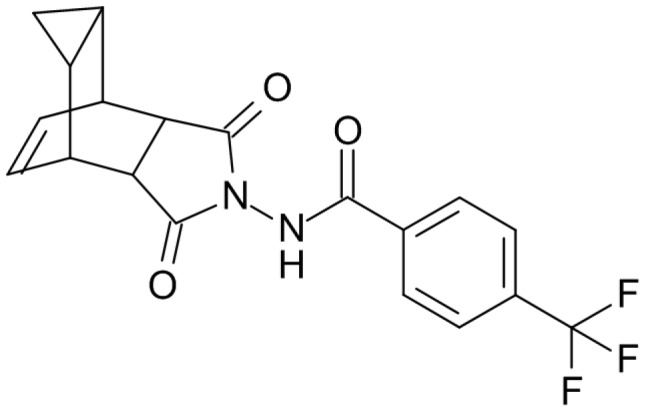
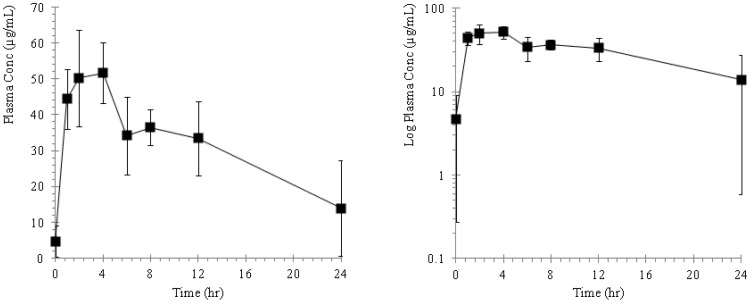
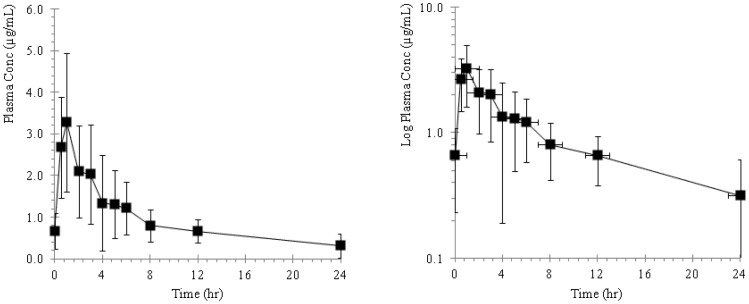
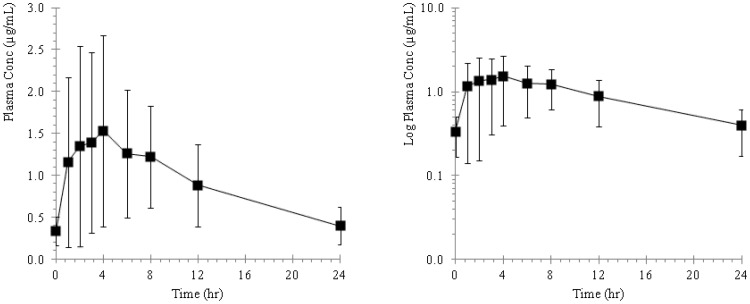
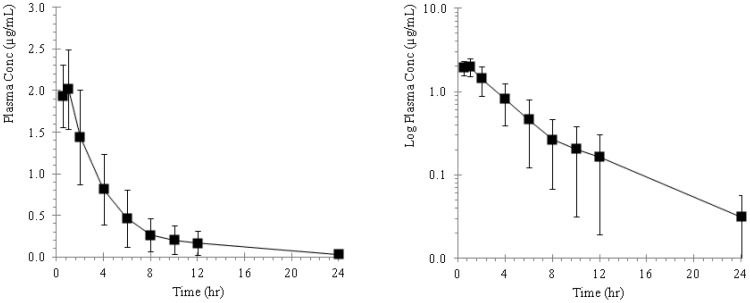
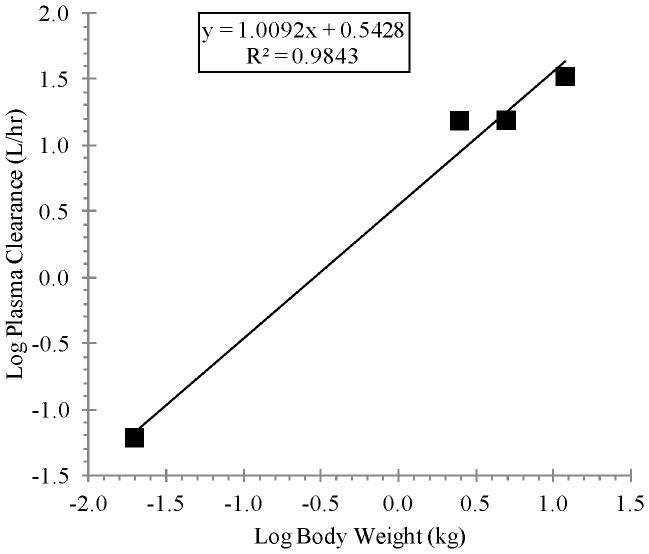
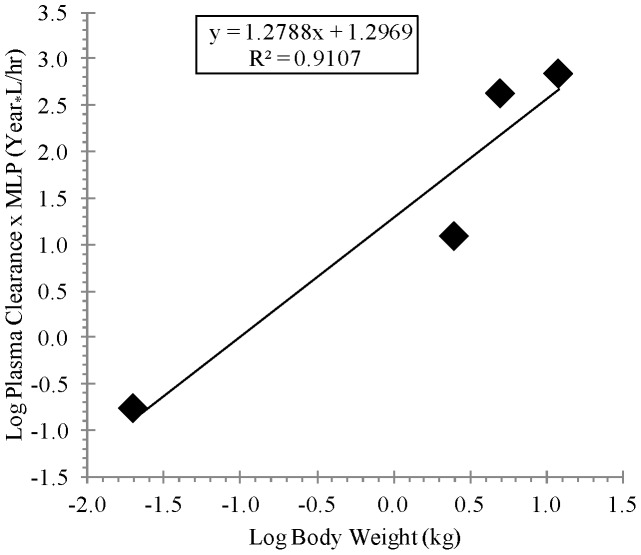
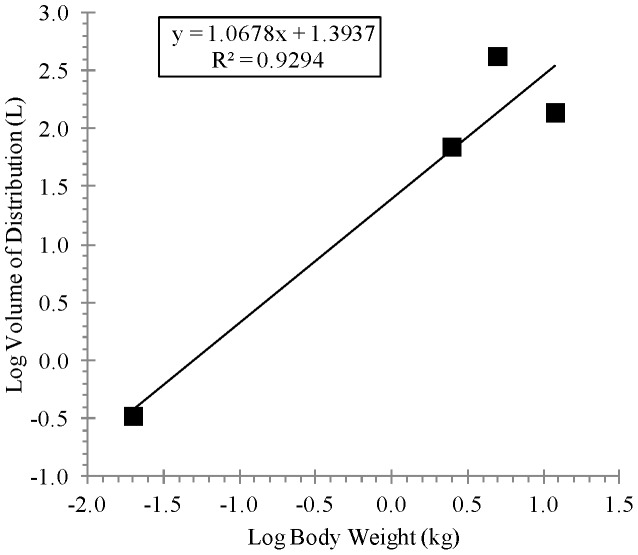
Plasma pharmacokinetics of ST-246, smallpox therapeutic, was evaluated in mice, rabbits, monkeys and dogs following repeat oral administrations by gavage. The dog showed the lowest Tmax of 0.83 h and the monkey, the highest value of 3.25 h. A 2- to 4-fold greater dose-normalized Cmax was observed for the dog compared to the other species. The mouse showed the highest dose-normalized AUC, which was 2-fold greater than that for the rabbit and monkey both of which by approximation, recorded the lowest value. The Cl/F increased across species from 0.05 L/h for mouse to 42.52 L/h for dog. The mouse showed the lowest VD/F of 0.41 L and the monkey, the highest VD/F of 392.95 L. The calculated extraction ratios were 0.104, 0.363, 0.231 and 0.591 for mouse, rabbit, monkey and dog, respectively. The dog showed the lowest terminal half-life of 3.10 h and the monkey, the highest value of 9.94 h. The simple allometric human VD/F and MLP-corrected Cl/F were 2311.51 L and 51.35 L/h, respectively, with calculated human extraction ratio of 0.153 and terminal half-life of 31.20 h. Overall, a species-specific difference was observed for Cl/F with this parameter increasing across species from mouse to dog. The human MLP-corrected Cl/F, terminal half-life, extraction ratios were in close proximity to the observed estimates. In addition, the first-in-humans (FIH) dose of 485 mg, determined from the MLP-corrected allometry Cl/F, was well within the dose range of 400 mg and 600 mg administered in healthy adult human volunteers.
Conflict of interest statement
Figures
References
-
- Duraffour S, Snoeck R, de Vos R, van Den Oord JJ, Crance J-M, et al. (2007) Activity of the anti-orthopoxvirus compound ST-246 against vaccinia, cowpox and camelpox viruses in cell monolayers and organotypic raft cultures. Antiviral Ther 12: 1205–1216. - PubMed
-
- Sbrana E, Jordan R, Hruby DE, Mateo RI, Xiao SY, et al. (2007) Efficacy of the antipoxvirus compound ST-246 for treatment of severe orthopoxvirus infection. Am J Tropical Med and Hyg 76: 768–773. - PubMed
-
- Nalca A, Hatkin JM, Garza NL, Nichols DK, Norris SW, et al. (2008) Evaluation of orally delivered ST-246 as postexposure prophylactic and antiviral therapeutic in an aerosolized rabbitpox rabbit model. Antiviral Res 79: 121–127. - PubMed
Publication types
MeSH terms
Substances
Grants and funding
LinkOut - more resources
Full Text Sources
Other Literature Sources
