. 2013 Apr 25;8(4):e62418.
doi: 10.1371/journal.pone.0062418. Print 2013.

Natural killer cell function, an important target for infection and tumor protection, is impaired in type 2 diabetes

Affiliations

Natural killer cell function, an important target for infection and tumor protection, is impaired in type 2 diabetes

Jeannig Berrou et al. PLoS One. .

Abstract

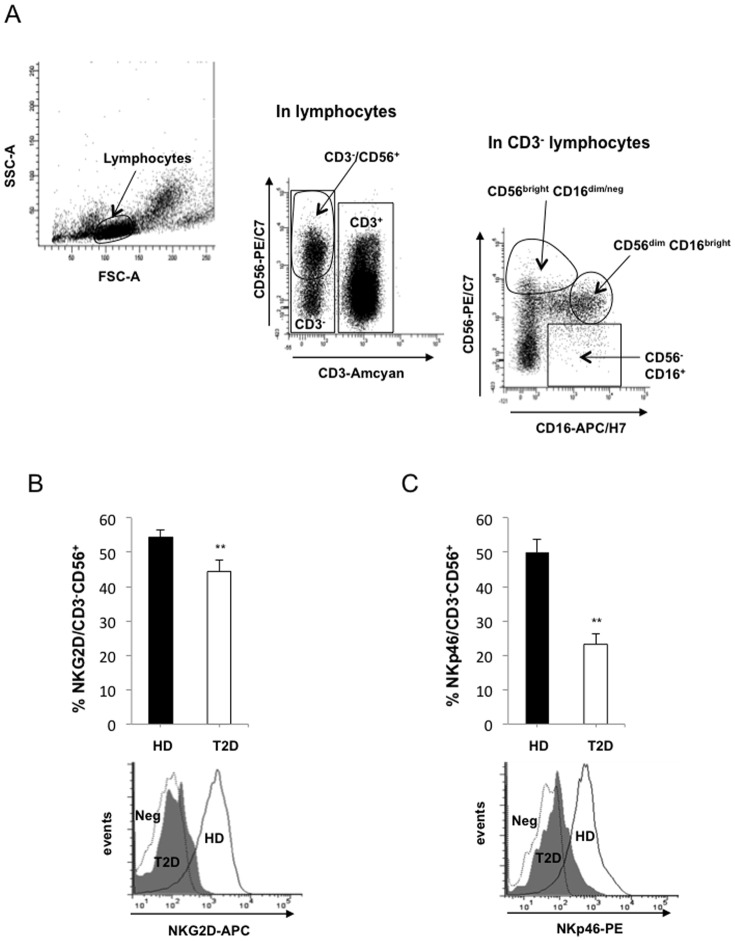
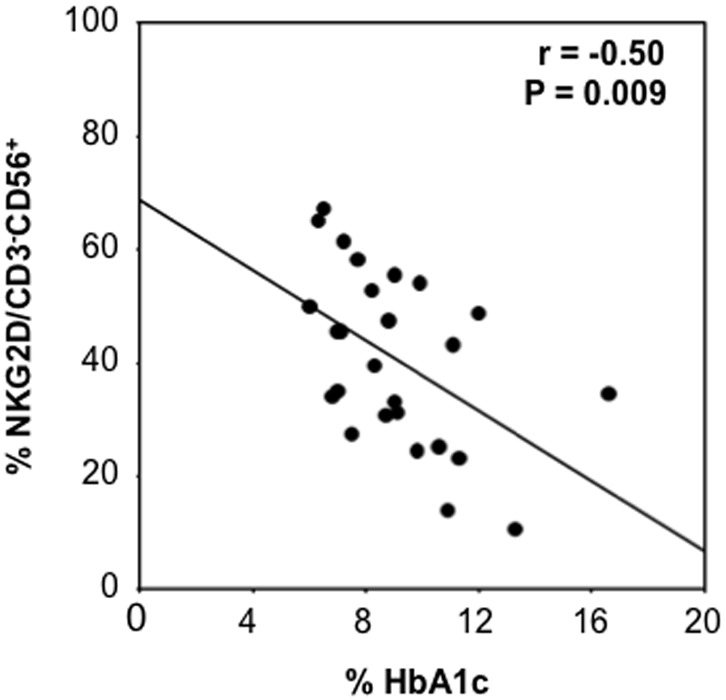
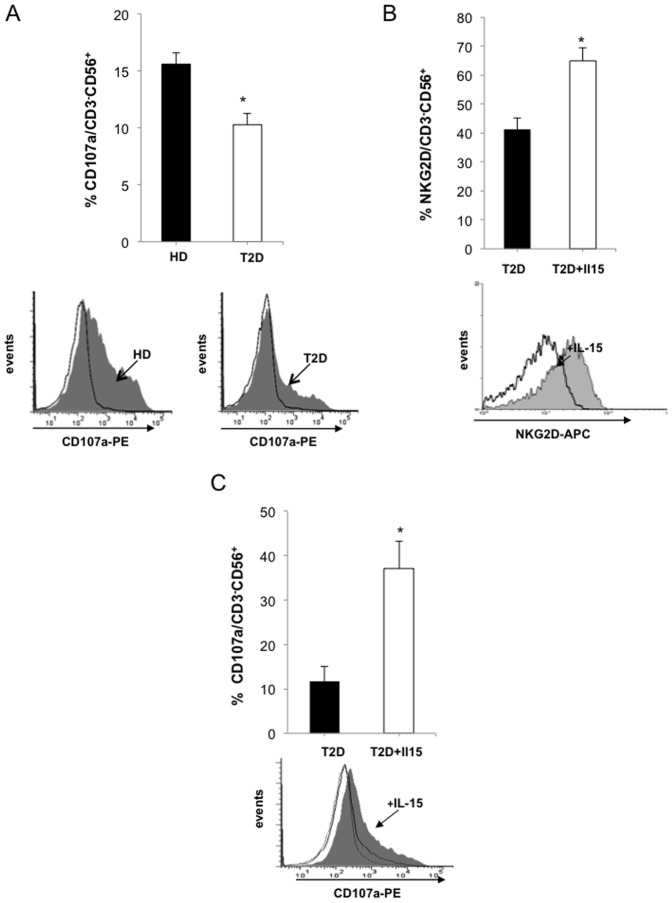
Patients with Type 2 diabetes (T2D) are highly susceptible to infection and have an increased incidence of some tumors, possibly due to immune system dysfunction. In the innate cellular immune system, Natural Killer (NK) lymphocytes are important effectors responsible for controlling infections and combating tumor development. We analyzed NK cell subsets in 51 patients with long-standing T2D. Compared with healthy blood donors, diabetic patients showed a profound decrease in both NKG2D-positive NK cells (44% vs. 55.5%, P<0.01) and NKp46-positive cells (26% vs. 50%, P<0.01). Decreased expression of these receptors was associated with functional defects, such as reduced NK degranulation capacity when challenged with the tumor target cell line K562 (10.3 vs. 15.8%, P<0.05). This defect could be restored in vitro by stimulating NK cells from T2D patients with IL-15 (P<0.05). NKG2D expression was found to be negatively correlated with HBA1c level (r=-0.50; P=0.009), suggesting that sustained hyperglycemia could directly influence NK cell defects. We demonstrated that endoplasmic reticulum (ER) stress, an important mediator in diabetes-associated complications, was inducible in vitro in normal NK cells and that tunicamycin treatment resulted in a significant decrease in NKG2D expression (P<0.05). Furthermore, markers of the Unfolded Protein Response (UPR) BiP, PDI and sXBP1 mRNAs were significantly increased in NK cells from T2D patients (P<0.05, P<0.01, P<0.05, respectively), indicating that ER stress is activated in vivo through both PERK and IRE1 sensors. These results demonstrate for the first time defects in NK cell-activating receptors NKG2D and NKp46 in T2D patients, and implicate the UPR pathway as a potential mechanism. These defects may contribute to susceptibility to infections and malignancies and could be targetted therapeutically.


Conflict of interest statement

Competing Interests: The authors have declared that no competing interests exist.

Figures

Figure 1
Figure 1. Decreased expression of NKG2D and NKp46 on NK cells from type 2 diabetes patients.
(A) Representative gating on CD3−/CD56+, CD56bright CD16dim/ne, CD56dim CD16bright and CD56 CD16+ cells. (B) NKG2D expression on NK cells from 25 healthy donors (HD) and 35 type 2 diabetic patients (T2D) as assessed by flow cytometry. One representative flow cytometry experiment is shown. (C) NKp46 expression quantified by FACS (n = 25); a representative analysis is shown. (**: P<0.01).
Figure 2
Figure 2. Correlation between plasma HbA1c levels and NKG2D expression on NK cells assesed by Spearman’s correlation.
A significant inverse correlation (n = 32, r = −0.5; P = 0.009) is revealed between the main marker of diabetic metabolic control and NKG2D expression on NK cells.
Figure 3
Figure 3. Decreased functional properties of diabetic NK cells and effects of IL-15.
(A) CD107a degranulation assay using PBMCs from diabetic (n = 18) or control subjects (n = 16) challenged with K562 cells. Representative flow cytometry experiments are shown. (B) Overnight incubation in the presence of IL-15 (10 ng/mL) significantly increases NKG2D expression on NK cells from T2D patients (n = 7), as assessed by flow cytometry. A representative flow cytometry experiment is shown. (C) Stimulation with IL-15 (10 ng/mL) restores CD107a degranulation for PBMCs from diabetic patients (n = 7) challenged with K562 target cells. A representative flow cytometry experiment is shown *: P<0.05.
Figure 4
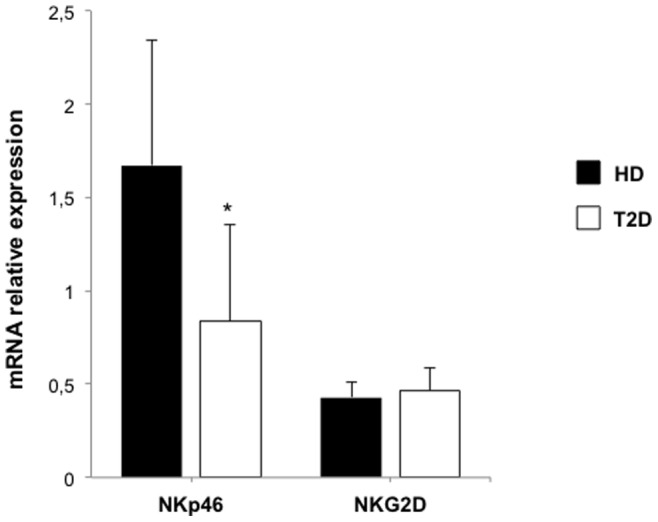
Figure 4. Decreased NKp46 mRNA expression in NK cells from type 2 diabetic patients.
Quantitative RT-PCR was used to assess expression of NKp46 and NKG2D mRNAs in NK cells from healthy donors (n = 7) and diabetic patients (n = 7). Transcript levels are presented as mean±SEM. Only NKp46 mRNA is down-regulated. *:P<0.05.
Figure 5
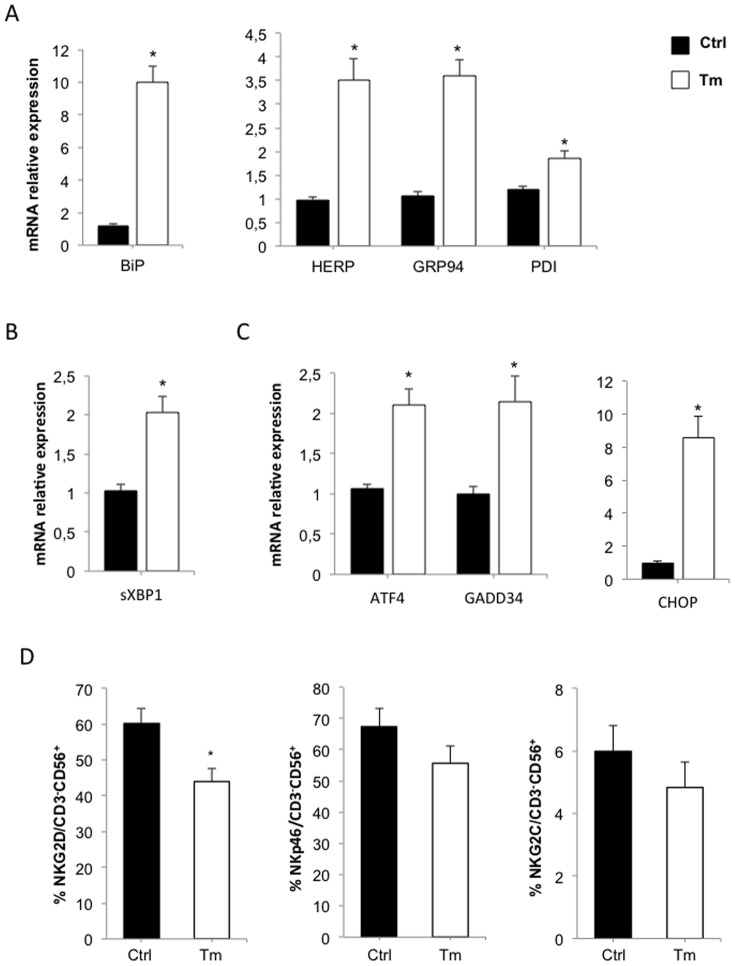
Figure 5. Tunicamycin induces ER stress and UPR activation, and decreases NKG2D expression in normal PBMCs in vitro .
PBMCs from healthy donors were incubated in the absence (Ctrl) or in the presence (Tm) of 1.25 µg/mL tunicamycin for 6 hours. (A) ER stress markers BiP, HERP, GRP94 and PDI, (B) IRE1α pathway marker spliced XBP1 (sXBP1) and (C) PERK pathway markers ATF4, GADD34 and CHOP mRNA amounts were determined by quantitative RT-PCR in normal PBMCs. Transcript levels are presented as mean±SEM (n = 6). *:P<0.05. (D) NKG2D, NKp46 and NKG2C expressions were quantified by flow cytometry (n = 12). *:P<0.05.
Figure 6
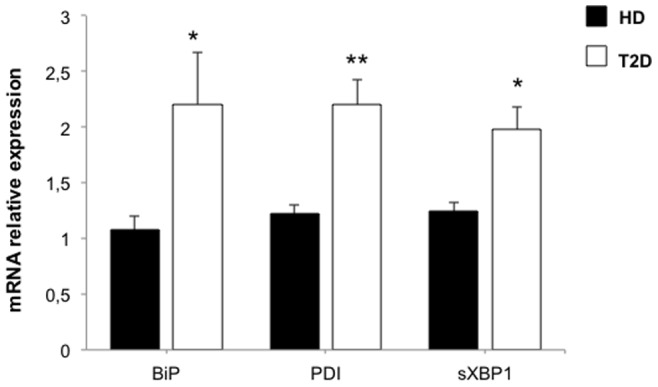
Figure 6. Assessing ER stress and UPR activation in NK cells from diabetic patients.
mRNA levels for BiP, PDI and sXBP1 were quantified by quantitative RT-PCR in NK cells from healthy donors (n = 17) and type 2 diabetic patients (n = 18). Transcript levels are presented as mean±SEM. *:P<0.05; **: P<0.01.

References

    1. Joshi N, Caputo GM, Weitekamp MR, Karchmer AW (1999) Infections in patients with diabetes mellitus. N Engl J Med. 341: 1906–1912. - PubMed
    1. Giovannucci E, Harlan DM, Archer MC, Bergenstal RM, Gapstur SM, et al. (2010) Diabetes and cancer: a consensus report. Diabetes Care. 33: 1674–1685. - PMC - PubMed
    1. Morgan CL, Peters JR, Currie CJ (2010) The changing prevalence of diagnosed diabetes and its associated vascular complications in a large region of the UK. Diabet. Med. 27: 673–678. - PubMed
    1. Stegenga ME, van der Crabben SN, Blümer RM, Levi M, Meijers JC, et al. (2008) Hyperglycemia enhances coagulation and reduces neutrophil degranulation, whereas hyperinsulinemia inhibits fibrinolysis during human endotoxemia. Blood. 112: 82–89. - PMC - PubMed
    1. Stegenga ME, van der Crabben SN, Dessing MC, Pater JM, van den Pangaart PS, et al. (2008) Effect of acute hyperglycaemia and/or hyperinsulinaemia on proinflammatory gene expression, cytokine production and neutrophil function in humans. Diabet Med. 25: 157–164. - PMC - PubMed

Publication types

MeSH terms

Substances