


Differential susceptibility and response of primary human myeloid BDCA1(+) dendritic cells to infection with different Enteroviruses
- PMID: 23638101
- PMCID: PMC3634769
- DOI: 10.1371/journal.pone.0062502
Differential susceptibility and response of primary human myeloid BDCA1(+) dendritic cells to infection with different Enteroviruses
Abstract
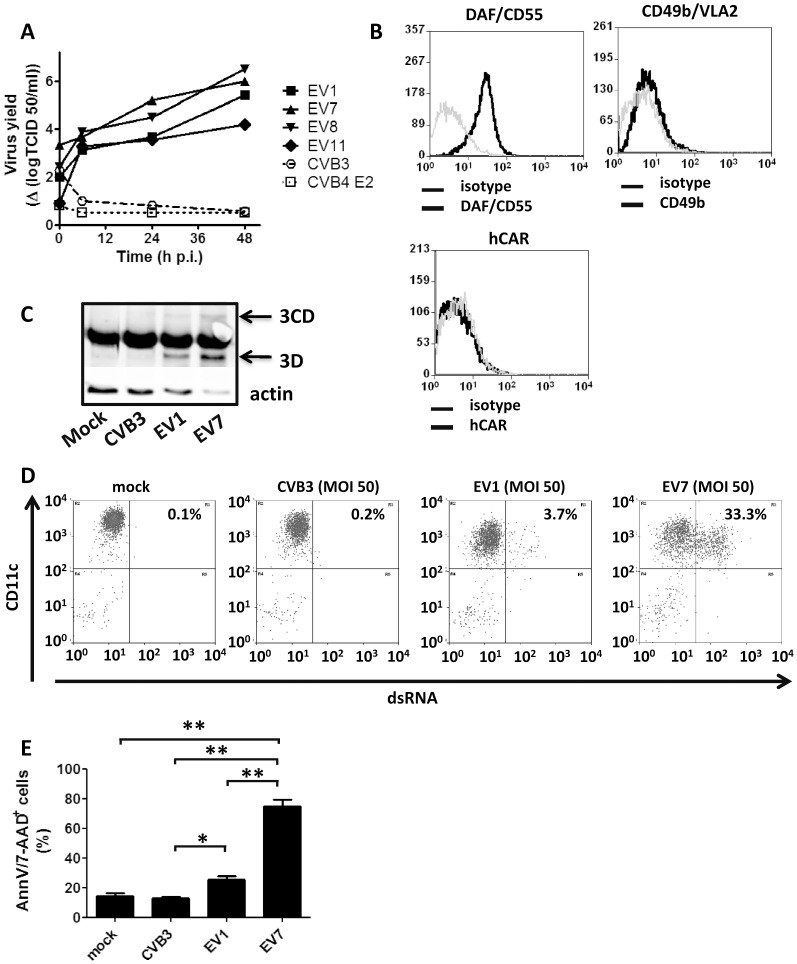
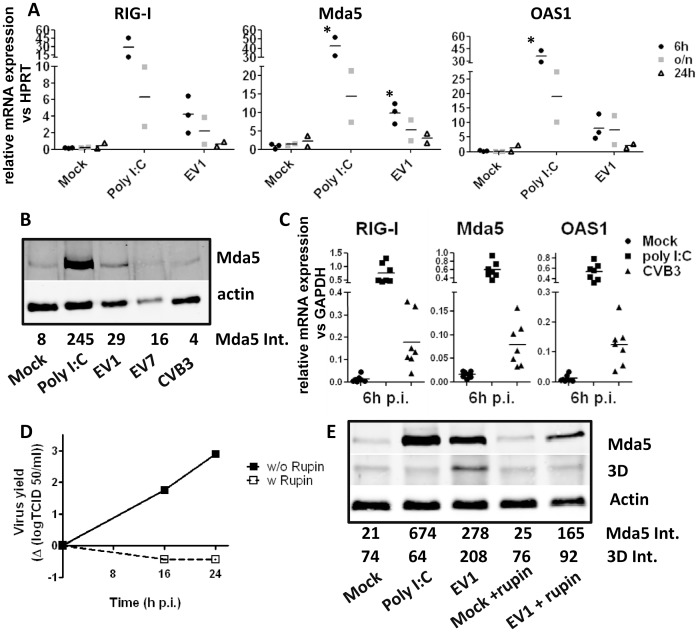
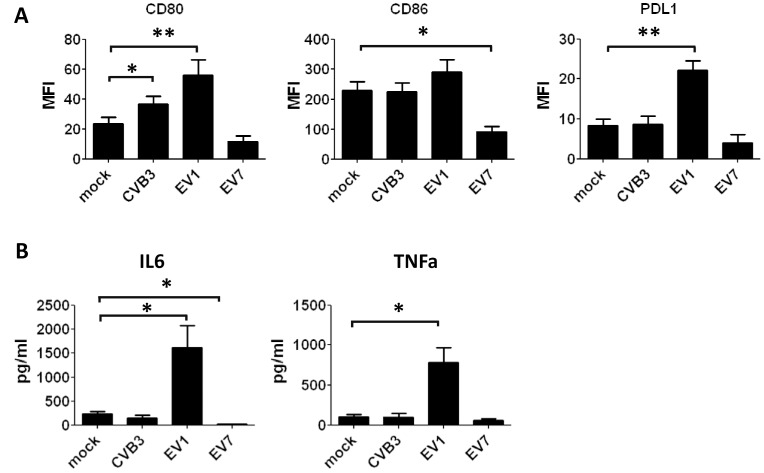
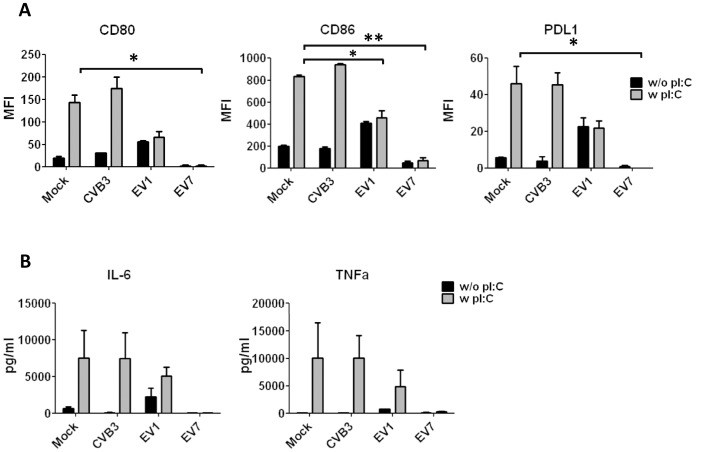
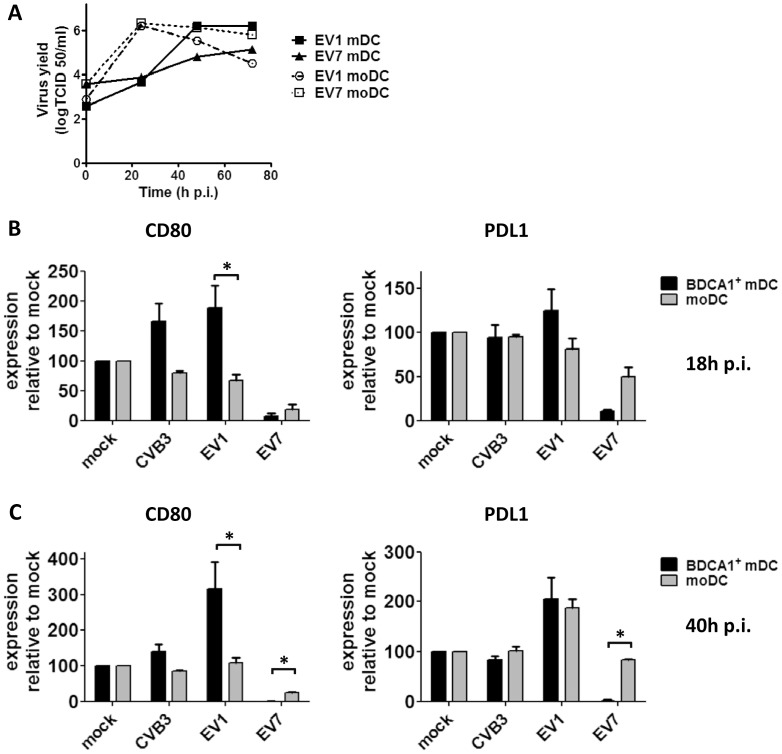
Coxsackie B viruses (CVBs) and echoviruses (EVs) form the Human Enterovirus-B (HEV-B) species within the family Picornaviridae. HEV-B infections are widespread and generally cause mild disease; however, severe infections occur and HEV-B are associated with various chronic diseases such as cardiomyopathy and type 1 diabetes. Dendritic cells (DCs) are the professional antigen-presenting cells of our immune system and initiate and control immune responses to invading pathogens, yet also maintain tolerance to self-antigens. We previously reported that EVs, but not CVBs, can productively infect in vitro generated monocyte-derived DCs. The interactions between HEV-B and human myeloid DCs (mDCs) freshly isolated from blood, however, remain unknown. Here, we studied the susceptibility and responses of BDCA1(+) mDC to HEV-B species and found that these mDC are susceptible to EV, but not CVB infection. Productive EV7 infection resulted in massive, rapid cell death without DC activation. Contrary, EV1 infection, which resulted in lower virus input at the same MOI, resulted in DC activation as observed by production of type I interferon-stimulated genes (ISGs), upregulation of co-stimulatory and co-inhibitory molecules (CD80, CD86, PDL1) and production of IL-6 and TNF-α, with a relative moderate decrease in cell viability. EV1-induced ISG expression depended on virus replication. CVB infection did not affect DC viability and resulted in poor induction of ISGs and CD80 induction in part of the donors. These data show for the first time the interaction between HEV-B species and BDCA1(+) mDCs isolated freshly from blood. Our data indicate that different HEV-B species can influence DC homeostasis in various ways, possibly contributing to HEV-B associated pathology.
Conflict of interest statement
Figures
References
-
- Sporri R, Reis e Sousa C (2005) Inflammatory mediators are insufficient for full dendritic cell activation and promote expansion of CD4+ T cell populations lacking helper function. Nat Immunol 6: 163–170. - PubMed
-
- Arrode G, Davrinche C (2003) Dendritic cells and HCMV cross-presentation. Curr Top Microbiol Immunol 276: 277–294. - PubMed
-
- Ruedl C, Storni T, Lechner F, Bachi T, Bachmann MF (2002) Cross-presentation of virus-like particles by skin-derived CD8(-) dendritic cells: a dispensable role for TAP. Eur J Immunol 32: 818–825. - PubMed
Publication types
MeSH terms
Substances
LinkOut - more resources
Full Text Sources
Other Literature Sources
Research Materials
