


Exploring differentially expressed genes by RNA-Seq in cashmere goat (Capra hircus) skin during hair follicle development and cycling
- PMID: 23638136
- PMCID: PMC3640091
- DOI: 10.1371/journal.pone.0062704
Exploring differentially expressed genes by RNA-Seq in cashmere goat (Capra hircus) skin during hair follicle development and cycling
Abstract
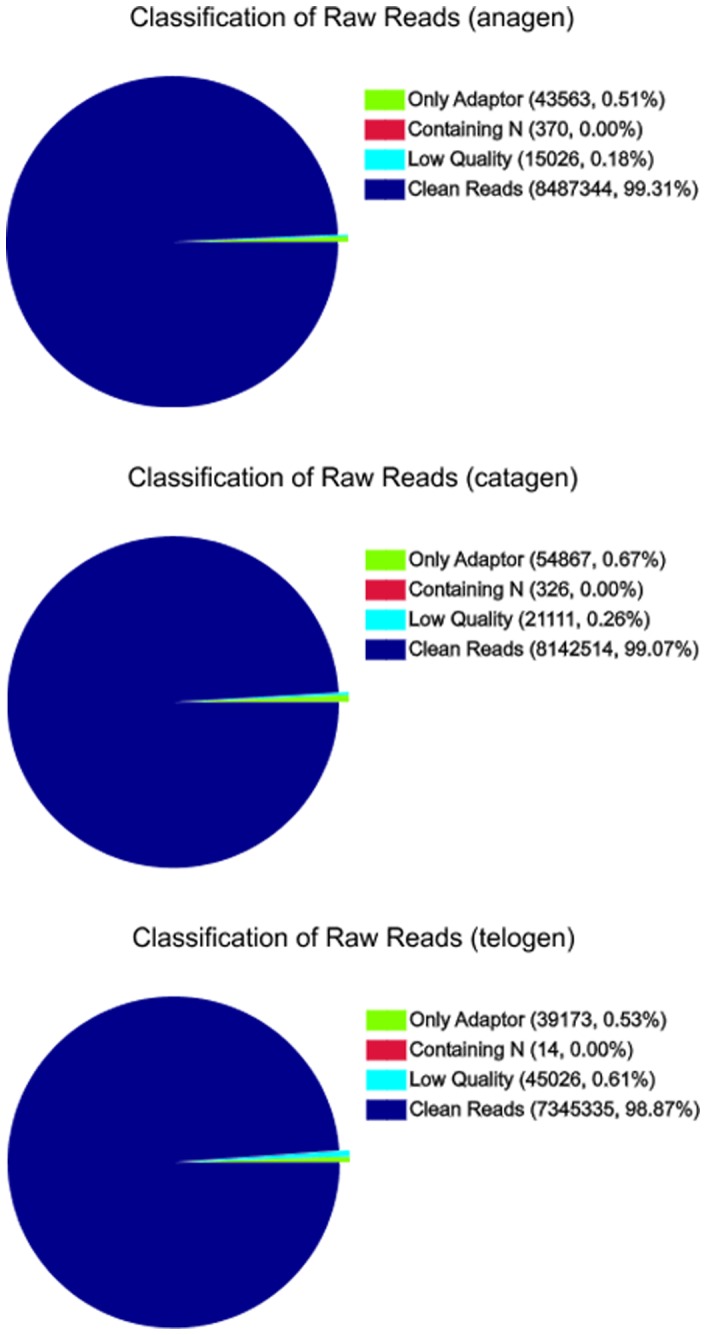
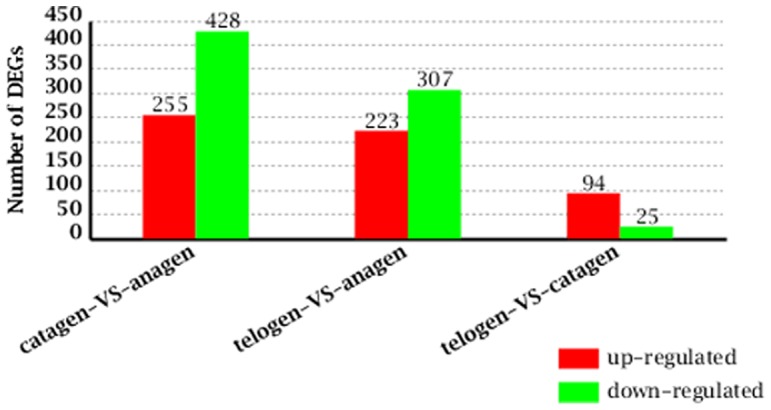
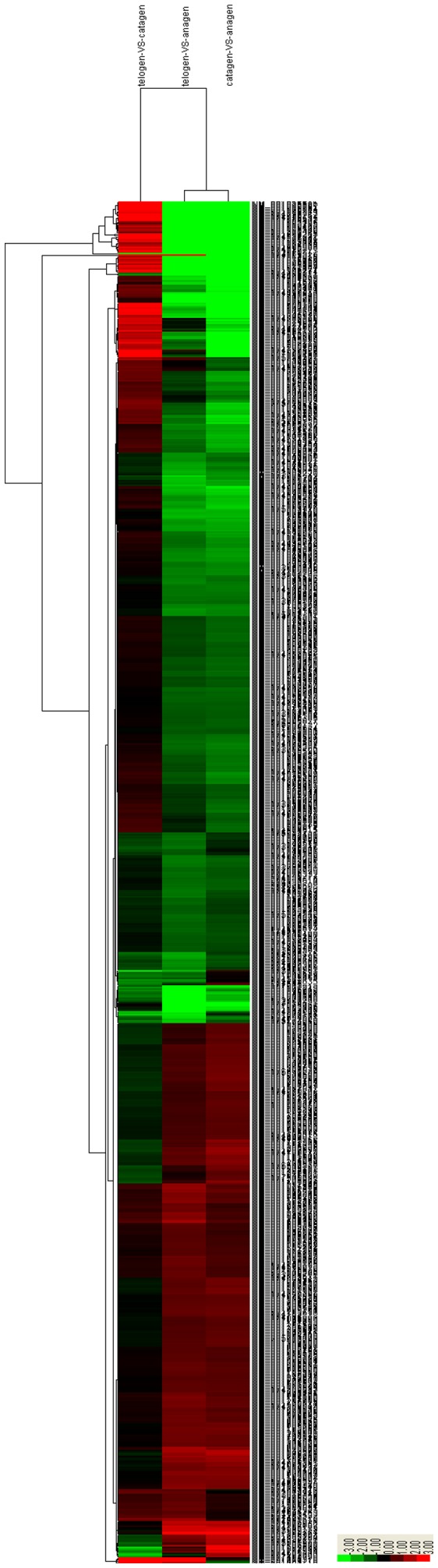
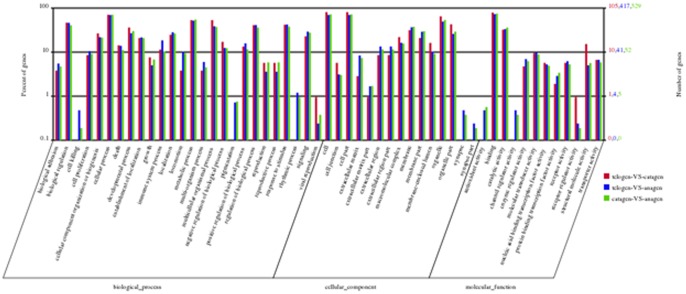
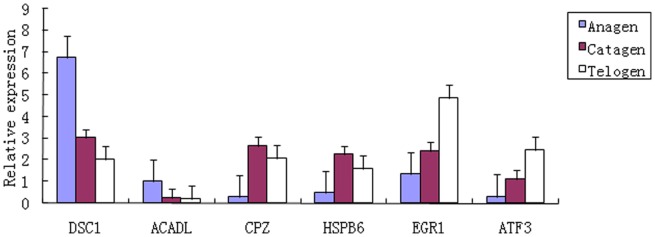
Cashmere goat (Capra hircus) hair follicle development and cycling can be divided into three stages: anagen, catagen and telogen. To elucidate the genes involved in hair follicle development and cycling in cashmere goats, transcriptome profiling of skin was carried out by analysing samples from three hair follicle developmental stages using RNA-Seq. The RNA-Seq analysis generated 8487344, 8142514 and 7345335 clean reads in anagen, catagen and telogen stages, respectively, which provided abundant data for further analysis. A total of 1332 differentially expressed genes (DEGs) were identified, providing evidence that the development of hair follicles among the three distinct stages changed considerably. A total of 683 genes with significant differential expression were detected between anagen and catagen, 530 DEGs were identified between anagen and telogen, and 119 DEGs were identified between catagen and telogen. A large number of DEGs were predominantly related to cellular process, cell & cell part, binding, biological regulation and metabolic process among the different stages of hair follicle development. In addition, the Wnt, Shh, TGF-β and Notch signaling pathways may be involved in hair follicle development and the identified DEGs may play important roles in these signaling pathways. These results will expand our understanding of the complex molecular mechanisms of hair follicle development and cycling in cashmere goats and provide a foundation for future studies.
Conflict of interest statement
Figures
References
-
- Ryder ML (1966) Coat structure and seasonal shedding in goats. Animal Production 8: 289–302.
-
- Nixon AJ, Gurnsey MP, Betteridge K, Mitchell RJ, Welch RAS (1991) Seasonal hair follicle activity and fibre growth in some New Zealand cashmere-bearing goats&LPKT Capra hircus&RPKT. Journal of Zoology 224: 589–598.
-
- Ansari-Renani HR, Ebadi Z, Moradi S, Baghershah HR, Ansari-Renani MY, et al. (2011) Determination of hair follicle characteristics, density and activity of Iranian cashmere goat breeds. Small Ruminant Research 95(2–3): 128–132.
-
- Hardy MH (1992) The secret life of the hair follicle. Trends Genet 8: 55–61. - PubMed
-
- Stenn KS, Paus R (2001) Controls of hair follicle cycling. Physiol Rev 81: 449–494. - PubMed
Publication types
MeSH terms
Substances
LinkOut - more resources
Full Text Sources
Other Literature Sources
