


Aquaculture can promote the presence and spread of antibiotic-resistant Enterococci in marine sediments
- PMID: 23638152
- PMCID: PMC3637307
- DOI: 10.1371/journal.pone.0062838
Aquaculture can promote the presence and spread of antibiotic-resistant Enterococci in marine sediments
Abstract
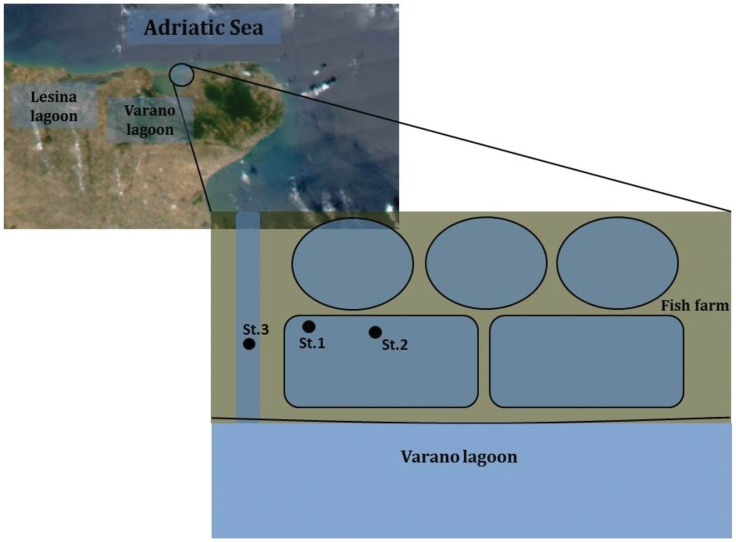
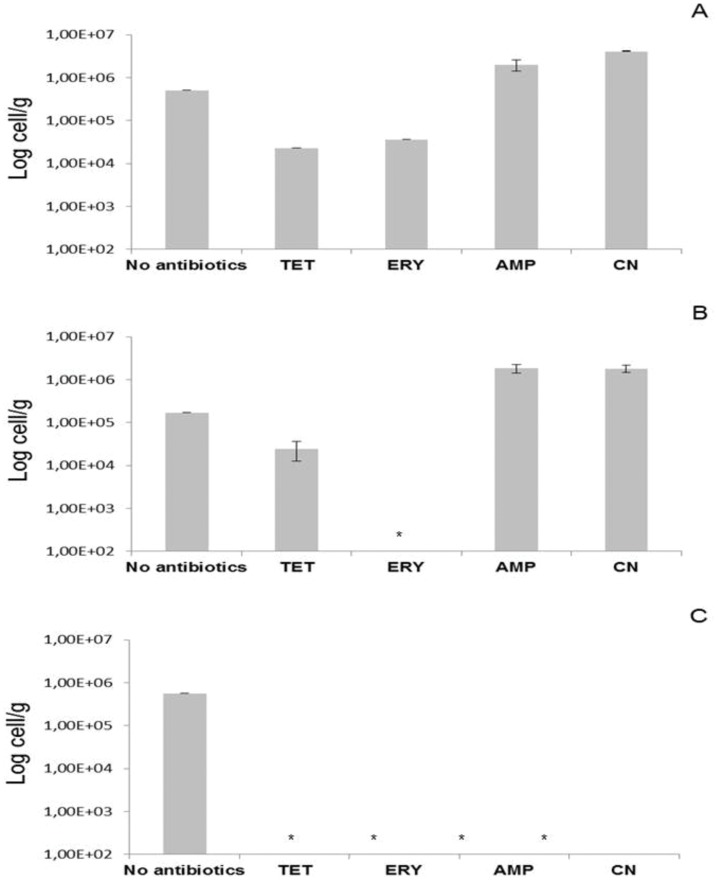
Aquaculture is an expanding activity worldwide. However its rapid growth can affect the aquatic environment through release of large amounts of chemicals, including antibiotics. Moreover, the presence of organic matter and bacteria of different origin can favor gene transfer and recombination. Whereas the consequences of such activities on environmental microbiota are well explored, little is known of their effects on allochthonous and potentially pathogenic bacteria, such as enterococci. Sediments from three sampling stations (two inside and one outside) collected in a fish farm in the Adriatic Sea were examined for enterococcal abundance and antibiotic resistance traits using the membrane filter technique and an improved quantitative PCR. Strains were tested for susceptibility to tetracycline, erythromycin, ampicillin and gentamicin; samples were directly screened for selected tetracycline [tet(M), tet(L), tet(O)] and macrolide [erm(A), erm(B) and mef] resistance genes by newly-developed multiplex PCRs. The abundance of benthic enterococci was higher inside than outside the farm. All isolates were susceptible to the four antimicrobials tested, although direct PCR evidenced tet(M) and tet(L) in sediment samples from all stations. Direct multiplex PCR of sediment samples cultured in rich broth supplemented with antibiotic (tetracycline, erythromycin, ampicillin or gentamicin) highlighted changes in resistance gene profiles, with amplification of previously undetected tet(O), erm(B) and mef genes and an increase in benthic enterococcal abundance after incubation in the presence of ampicillin and gentamicin. Despite being limited to a single farm, these data indicate that aquaculture may influence the abundance and spread of benthic enterococci and that farm sediments can be reservoirs of dormant antibiotic-resistant bacteria, including enterococci, which can rapidly revive in presence of new inputs of organic matter. This reservoir may constitute an underestimated health risk and deserves further investigation.
Conflict of interest statement
Figures
References
-
- Di Cesare A, Vignaroli C, Luna GM, Pasquaroli S, Biavasco F (2012) Antibiotic-resistant enterococci in seawater and sediments from a coastal fish farm. Microb Drug Resist 18: 502–509. - PubMed
-
- Cabello FC (2006) Heavy use of prophylactic antibiotics in aquaculture: a growing problem for human and animal health and for the environment. Environ Microbiol 8: 1137–1144. - PubMed
Publication types
MeSH terms
Substances
LinkOut - more resources
Full Text Sources
Other Literature Sources
Medical
