Phage therapy is effective against infection by Mycobacterium ulcerans in a murine footpad model
- PMID: 23638204
- PMCID: PMC3636042
- DOI: 10.1371/journal.pntd.0002183
Phage therapy is effective against infection by Mycobacterium ulcerans in a murine footpad model
Abstract
Background: Buruli Ulcer (BU) is a neglected, necrotizing skin disease caused by Mycobacterium ulcerans. Currently, there is no vaccine against M. ulcerans infection. Although the World Health Organization recommends a combination of rifampicin and streptomycin for the treatment of BU, clinical management of advanced stages is still based on the surgical resection of infected skin. The use of bacteriophages for the control of bacterial infections has been considered as an alternative or to be used in association with antibiotherapy. Additionally, the mycobacteriophage D29 has previously been shown to display lytic activity against M. ulcerans isolates.
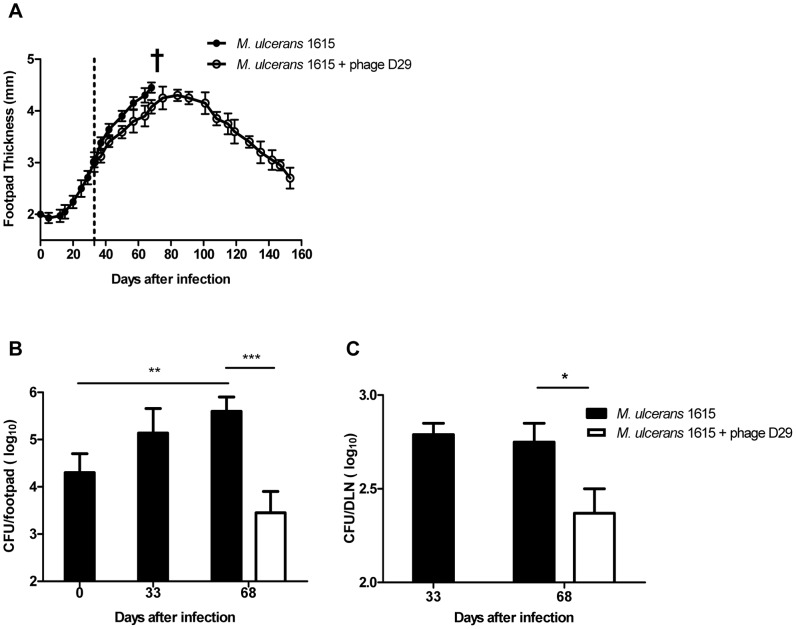
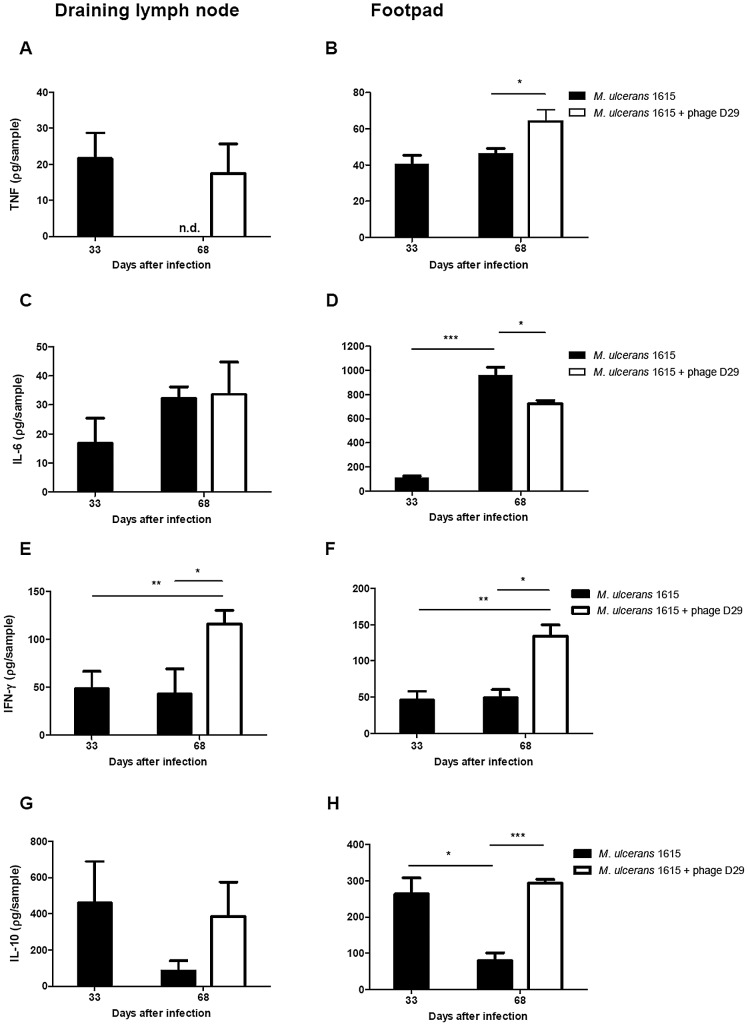
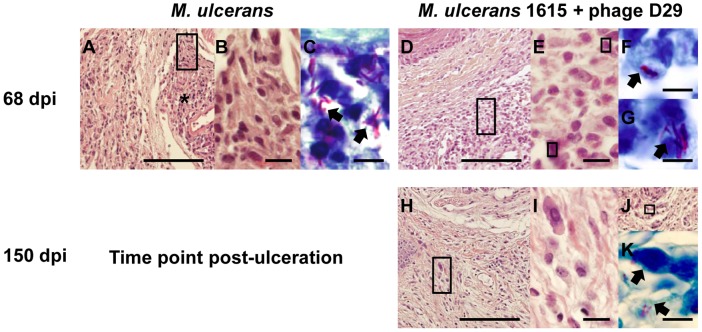
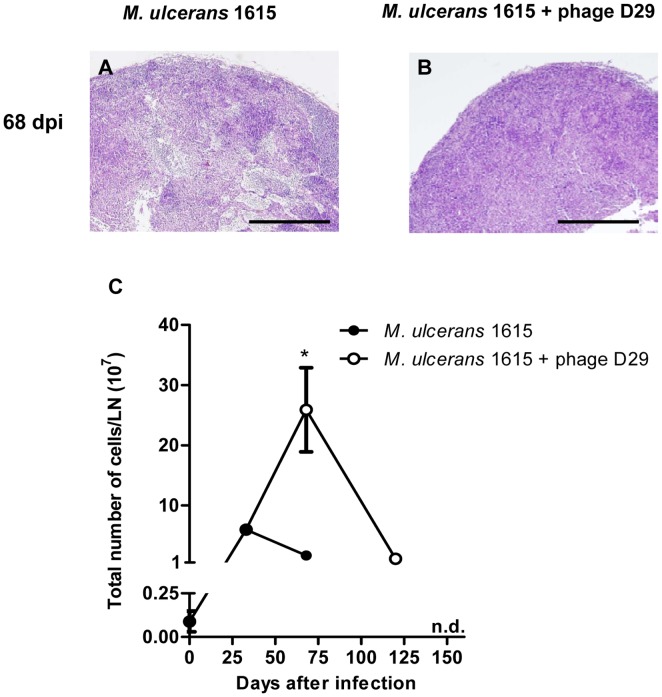
Methodology/principal findings: We used the mouse footpad model of M. ulcerans infection to evaluate the therapeutic efficacy of treatment with mycobacteriophage D29. Analyses of macroscopic lesions, bacterial burdens, histology and cytokine production were performed in both M. ulcerans-infected footpads and draining lymph nodes (DLN). We have demonstrated that a single subcutaneous injection of the mycobacteriophage D29, administered 33 days after bacterial challenge, was sufficient to decrease pathology and to prevent ulceration. This protection resulted in a significant reduction of M. ulcerans numbers accompanied by an increase of cytokine levels (including IFN-γ), both in footpads and DLN. Additionally, mycobacteriophage D29 treatment induced a cellular infiltrate of a lymphocytic/macrophagic profile.
Conclusions/significance: Our observations demonstrate the potential of phage therapy against M. ulcerans infection, paving the way for future studies aiming at the development of novel phage-related therapeutic approaches against BU.
Conflict of interest statement
The authors have declared that no competing interests exist.
Figures
References
-
- Portaels F, Silva MT, Meyers WM (2009) Buruli ulcer. Clin Dermatol 27: 291–305. - PubMed
-
- Walsh DS, Portaels F, Meyers WM (2011) Buruli ulcer: Advances in understanding Mycobacterium ulcerans infection. Dermatol Clin 29: 1–8. - PubMed
-
- Hong H, Spencer JB, Porter JL, Leadlay PF, Stinear T (2005) A novel mycolactone from a clinical isolate of Mycobacterium ulcerans provides evidence for additional toxin heterogeneity as a result of specific changes in the modular polyketide synthase. Chem Bio Chem 6: 643–648. - PubMed
-
- George KM, Chatterjee D, Gunawardana G, Welty D, Hayman J, et al. (1999) Mycolactone: a polyketide toxin from Mycobacterium ulcerans required for virulence. Science 283: 854–857. - PubMed
Publication types
MeSH terms
LinkOut - more resources
Full Text Sources
Other Literature Sources