


Effects of glycyl-glutamine dipeptide supplementation on myocardial damage and cardiac function in rats after severe burn injury
- PMID: 23638213
- PMCID: PMC3638092
Effects of glycyl-glutamine dipeptide supplementation on myocardial damage and cardiac function in rats after severe burn injury
Abstract
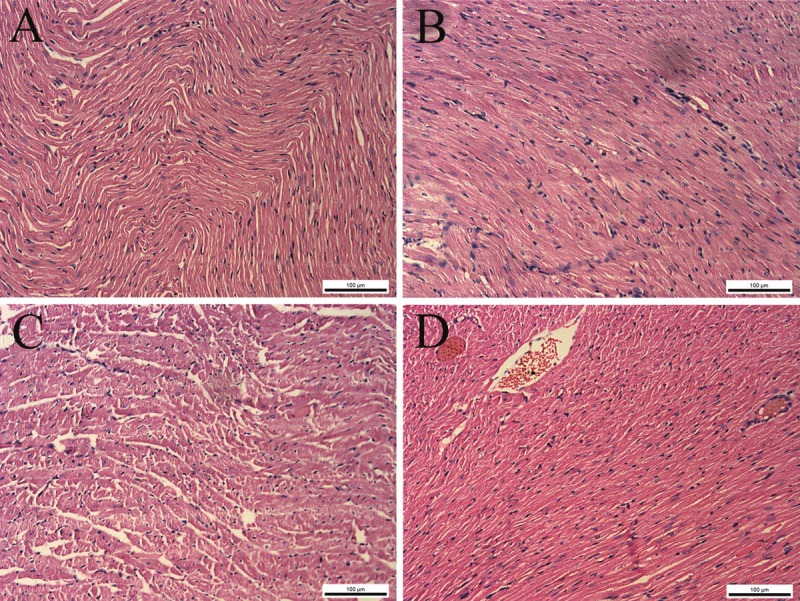
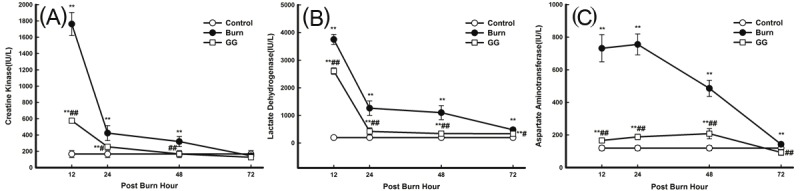
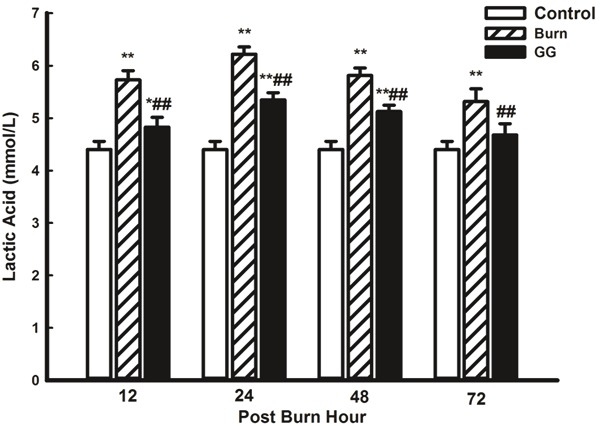
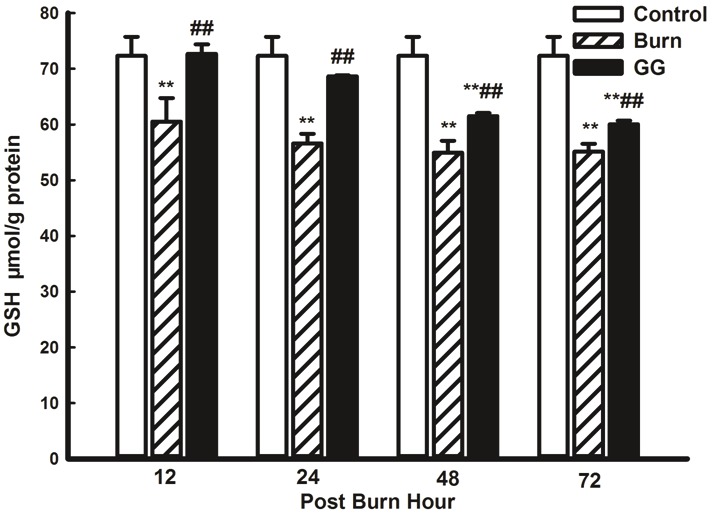
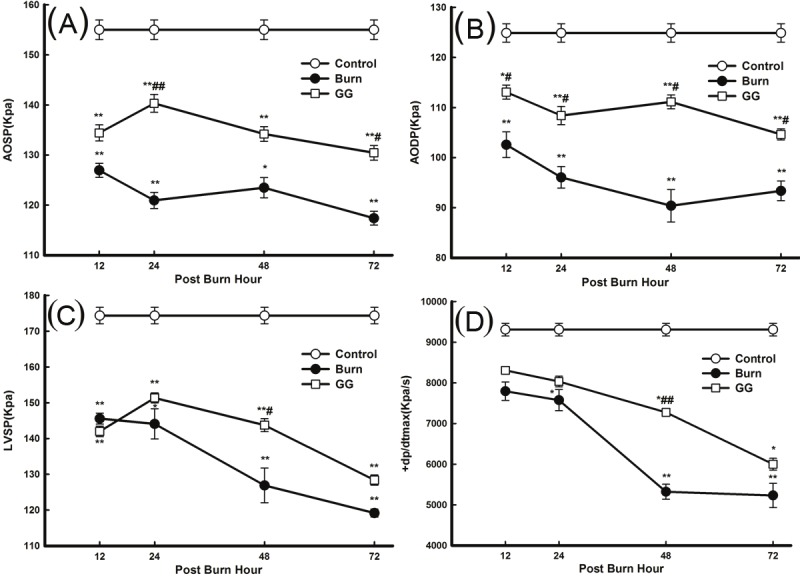
Glutamine decreases myocardial damage in ischemia/reperfusion injury. However, the cardioprotective effect of glutamine after burn injury remains unclear. Present study was to explore the protective effect of glycyl-glutamine dipeptide on myocardial damage in severe burn rats. Seventy-two Wistar rats were randomly divided into three groups: normal control (C), burned control (B) and glycyl-glutamine dipeptide-treated (GG) groups. B and GG groups were inflicted with 30% total body surface area of full thickness burn. The GG group was given 1.5 g/kg glycyl-glutamine dipeptide per day and the B group was given the same dose of alanine via intraperitoneal injection for 3 days. The serum CK, LDH, AST, and, blood lactic acid levels, as well as the myocardium ATP and GSH contents, were measured. The indices of cardiac contractile function and histopathological change were analyzed at 12, 24, 48, and 72 post-burn hours (PBH). The serum CK, LDH, AST and blood lactic acid levels increased, and the myocardium ATP and GSH content decreased in both burned groups. Compared with B group, the CK, LDH, AST and blood lactic acid levels reduced, myocardium ATP and GSH content increased in GG group. Moreover, the inhibition of cardiac contractile function and myocardial histopathological damage were reduced significantly in GG group. We conclude that myocardial histological structure and function were damaged significantly after burn injury, glycyl-glutamine dipeptide supplementation is beneficial to myocardial preservation by improving cardiocyte energy metabolism, increasing ATP and glutathione synthesis.
Keywords: GSH; Glycyl-glutamine dipeptide; burns; energy metabolism; myocardial damage; rat.
Figures


References
-
- Latenser BA. Critical care of the burn patient: the first 48 hours. Crit Care Med. 2009;37:2819–2826. - PubMed
-
- Huang Y, Li Z, Yang Z. Roles of ischemia and hypoxia and the molecular pathogenesis of post-burn cardiac shock. Burns. 2003;29:828–833. - PubMed
-
- Huang YS, Yang ZC, Yan BG, Yang JM, Chen FM, Crowther RS, Li A. Pathogenesis of early cardiac myocyte damage after severe burns. J Trauma. 1999;46:428–432. - PubMed
-
- Jiang L, Qin X, Zhong X, Liu L, Lu Y, Fan L, He Z, Chen Q. Glycine-induced cytoprotection is mediated by ERK1/2 and AKT in renal cells with ATP depletion. Eur J Cell Biol. 2011;90:333–341. - PubMed
Publication types
MeSH terms
Substances
LinkOut - more resources
Full Text Sources
Other Literature Sources
Medical
Research Materials