


Protective Effect of Safranal, a Constituent of Crocus sativus, on Quinolinic Acid-induced Oxidative Damage in Rat Hippocampus
- PMID: 23638295
- PMCID: PMC3637907
Protective Effect of Safranal, a Constituent of Crocus sativus, on Quinolinic Acid-induced Oxidative Damage in Rat Hippocampus
Abstract
Objective(s): Quinolinic acid (QA)-mediated excitotoxicity has been widely used as a model for studying neurodegenerative disorders. Recent studies suggested that saffron (Crocus sativus) or its active metabolite, i.e. safranal, exerts pharmacological actions on central nervous system including anxiolytic, anticonvulsant, and neuroprotective properties. The present study aimed to investigate the effect safranal pretreatment on QA-induced oxidative damage in rat hippocampus.
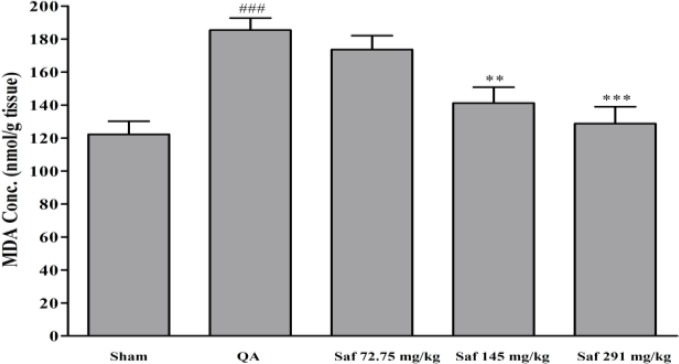
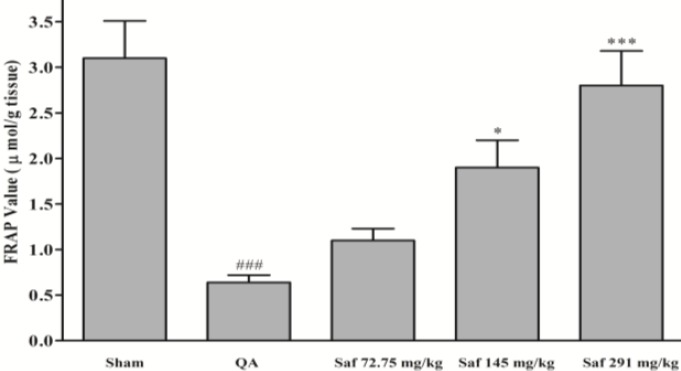
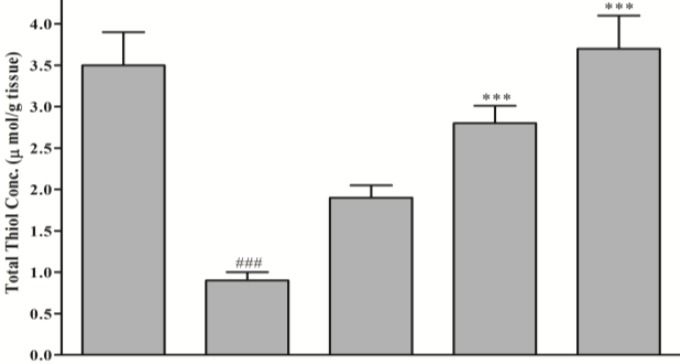
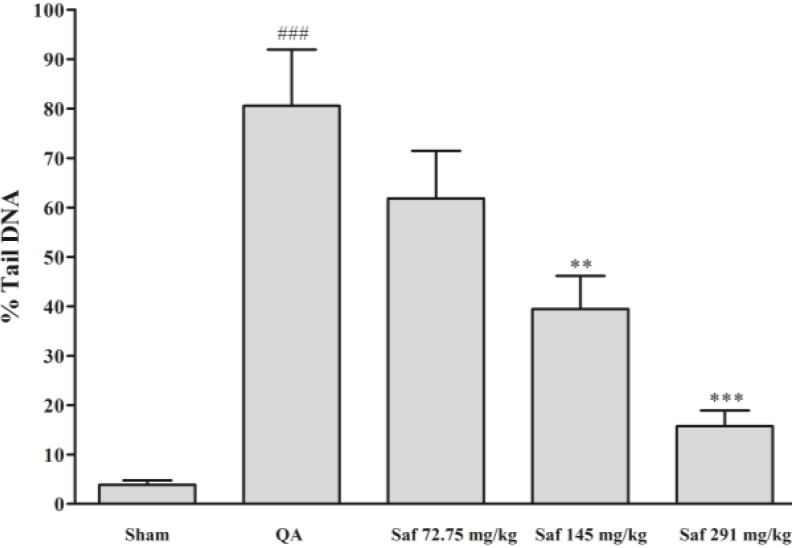
Materials and methods: Under anesthesia, a guide cannula was stereotaxically inserted into left ventral hippocampus of rats. The rats were then given either saline or safranal (72.75, 145.5, and 291 mg/kg, IP) 30 min before administration of QA (300 nmol, intrahippocampal injection). The markers of oxidative stress including thiobarbituric acid reactive substances (TBARS, as an index of lipid preoxidation), total sulfhydryl groups, antioxidant capacity of hippocampus (using FRAP assay), and oxidative DNA damage (%tail DNA, using comet assay) were measured in hippocampus.
Results: The QA induced a significant increase in TBARS levels and %tail DNA and remarkable decrease in antioxidant power (FRAP value) and total sulfhydryl content of hippocampus, in comparison with control animals. Systemic administration of safranal (291 mg/kg, IP), effectively and dose-dependently decreased the QA-induced lipid peroxidation (P<0.001) and oxidative DNA damage (P<0.001). Safranal also prevented the decrease of hippocampal thiol redox and antioxidant status (P<0.001) produced by QA.
Conclusion: Safranal have protective effects on different markers of oxidative damage in hippocampal tissue following QA administration. Our findings might raise a possibility of potential therapeutic application of safranal for preventing and treating neurodegenerative disorders such as Alzheimer's disease.
Keywords: Crocus sativus; Hippocampus; Neurodegenerative disorders; Oxidative stress; Quinolinic acid; Safranal.
Figures
References
-
- Gilgun-Sherki Y, Melamed E, Offen D. Oxidative stress induced-neurodegenerative diseases: the need for antioxidants that penetrate the blood brain barrier. Neuropharmacol. 2001;40:959–975. - PubMed
-
- Lau A, Tymianski M. Glutamate receptors, neurotoxicity and neurodegeneration. Eur J Physiol . 2010;460:525–542. - PubMed
-
- Heyes MP, Saito K, Crowley JS, Davis LE, Demitrack MA, Der M, et al. Quinolinic acid and kynurenine pathway metabolism in inflammatory and non-inflammatory neurological disease. Brain. 1992;115:1249–1273. - PubMed
-
- Myint AM. Kynurenines: from the perspective of major psychiatric disorders. FEBS J. 2012;279:1375–1385. - PubMed
-
- Stone TW. Neuropharmacology of quinolinic and kynurenic acids. Pharmacol Rev. 1993;45:309–379. - PubMed
LinkOut - more resources
Full Text Sources
Miscellaneous