. 2013 Feb 19:1:e24.
doi: 10.7717/peerj.24. Print 2013.

Development and evolution of the unique cetacean dentition

Affiliations

Development and evolution of the unique cetacean dentition

Brooke A Armfield et al. PeerJ. .

Abstract

The evolutionary success of mammals is rooted in their high metabolic rate. A high metabolic rate is sustainable thanks to efficient food processing and that in turn is facilitated by precise occlusion of the teeth and the acquisition of rhythmic mastication. These major evolutionary innovations characterize most members of the Class Mammalia. Cetaceans are one of the few groups of mammals in which precise occlusion has been secondarily lost. Most toothed whales have an increased number of simple crowned teeth that are similar along the tooth row. Evolution toward these specializations began immediately after the time cetaceans transitioned from terrestrial-to-marine environments. The fossil record documents the critical aspects of occlusal evolution of cetaceans, and allows us to pinpoint the evolutionary timing of the macroevolutionary events leading to their unusual dental morphology among mammals. The developmental controls of tooth differentiation and tooth number have been studied in a few mammalian clades, but nothing is known about how these controls differ between cetaceans and mammals that retain functional occlusion. Here we show that pigs, a cetacean relative with regionalized tooth morphology and complex tooth crowns, retain the typical mammalian gene expression patterns that control early tooth differentiation, expressing Bmp4 in the rostral (mesial, anterior) domain of the jaw, and Fgf8 caudally (distal, posterior). By contrast, dolphins have lost these regional differences in dental morphology and the Bmp4 domain is extended into the caudal region of the developing jaw. We hypothesize that the functional constraints underlying mammalian occlusion have been released in cetaceans, facilitating changes in the genetic control of early dental development. Such major developmental changes drive morphological evolution and are correlated with major shifts in diet and food processing during cetacean evolution.

Keywords: Cetacea; Cetacean; Evo-devo; Paleontology; Teeth.


Figures
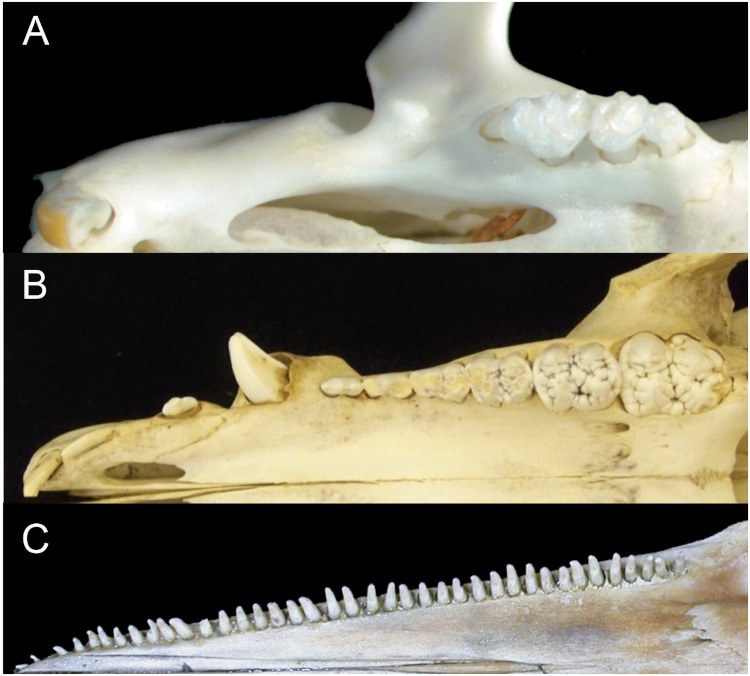
Figure 1
Figure 1. Comparison of mammalian dental patterns showing the differences in regionalization of tooth morphology.
(A) Mus musculus (B) Sus scrofa (picture is of an immature pig with an unerupted M3) and (C) Stenella attenuata.
Figure 2
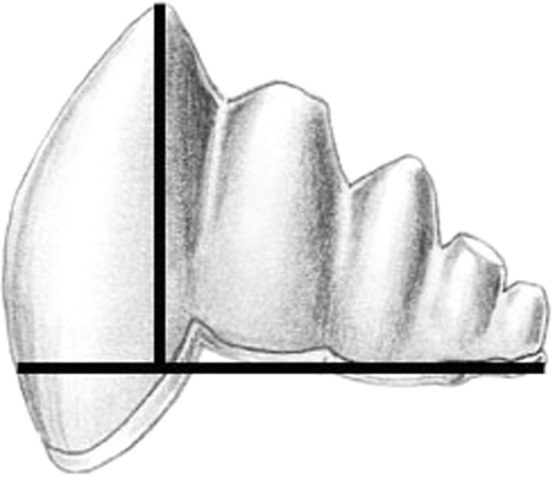
Figure 2. Cusp pointedness measurement.
This value was quantified as cusp height divided by tooth length as shown on a basilosaurid lower molar.
Figure 3
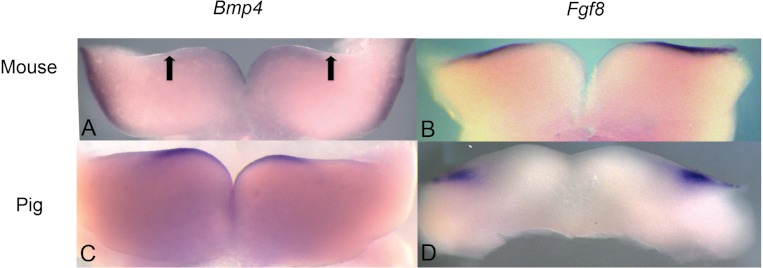
Figure 3. Comparison of Bmp4 and Fgf8 expression in mouse and pig using in situ hybridization.
(A) Bmp4 expression in E11.5 lower mouse developing jaw. Expression is found in the anterior portion of the oral epithelium, between the arrows. (B) Fgf8 expression in E11.5 lower mouse developing jaw. Expression is found in the posterior portion of the oral epithelium (C) Bmp4 expression in E21 lower pig developing jaw (NEOMED P206). Expression is found in the anterior portion of the oral epithelium similar to that seen in the mouse (D) Fgf8 expression in E21 lower pig developing jaw (NEOMED P214). Expression is found in the posterior portion of the oral epithelium similar to that seen in the mouse.
Figure 4
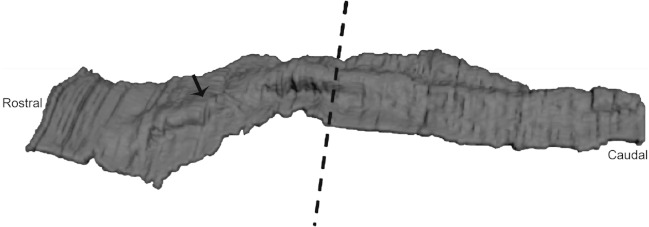
Figure 4. Three-dimensional reconstruction of histological sections of the developing dolphin maxillary arch (LACM 94750).
We found that the oral epithelium was thickened but no individual teeth were distinguishable at Carnegie stage 17 suggesting that this stage is comparable in dental development to mouse E10.5-11.5. The arrow points to the thickened ridge. The dashed line indicates the separation of the anterior and posterior part of the jaw into equal portions. 3D reconstruction was generated by taking high resolution photographs of unprocessed serial sections (approximately 737 sections), tracing the oral epithelium, followed by aligning and stacking each tracing in Amira (Amira 4.0, Visage Imaging).
Figure 5
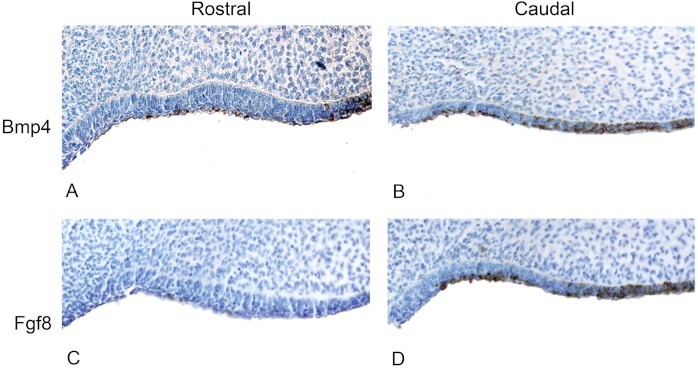
Figure 5. The presence of BMP4 and FGF8 protein during the oral epithelial thickening stage using immunohistochemistry on dolphin embryos (LACM 95670).
(A) The anterior (rostral) oral epithelium showing BMPp4 presence. (B) The posterior (caudal) oral epithelium also showing BMP4 presence. (C) The anterior (rostral) oral epithelium showing no FGF8 presence. (D) The posterior (caudal) oral epithelium showing FGF8 presence.
Figure 6
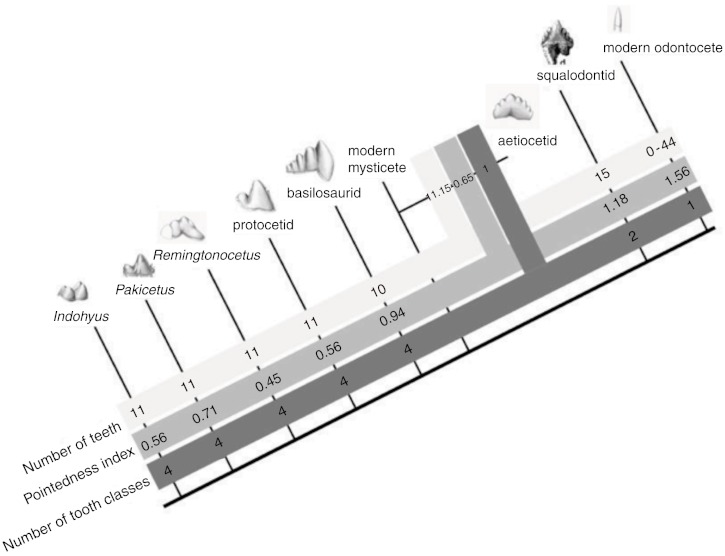
Figure 6. The evolution of cetacean tooth morphology.
Grey bars indicate, respectively, number of teeth per jaw quadrant, pointedness and number of tooth classes. Modern mysticete dental patterns are unknown due to their tooth buds resorbing before eruption.
Figure 7
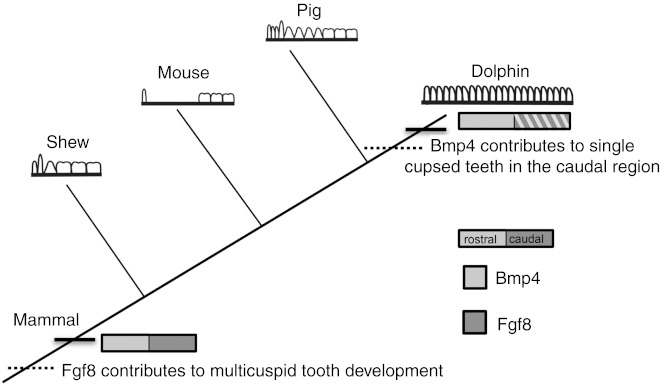
Figure 7. Mammalian tooth class development.
Cladogram showing known expression patterns of Bmp4 and Fgf8 across investigated mammals. Dotted lines indicate hypothesized major changes in dental patterning.

References

    1. Acloque H, Wilkinson DG, Nieto MA. In situ hybridization of chick embryos in whole-mount and tissue sections. Methods in Cell Biology. 2008;87:169–185. doi: 10.1016/S0091-679X(08)00209-4. - DOI - PubMed
    1. Adam P, Berta A. Evolution of prey capture strategies and diet in the Pinnipediamorpha (Mammalia, Carnivora) Oryctos. 2002;4:83–107.
    1. Albertson RC, Kocher TD. Genetic and developmental basis of cichlid trophic diversity. Heredity. 2006;97:211–221. doi: 10.1038/sj.hdy.6800864. - DOI - PubMed
    1. Barnes LG, Inuzuka N, Hasegawa Y. Evolution and biogeography of fossil marine vertebrates in the Pacific realm. The Island Arc. 1995;3:243–537.
    1. Catón J, Tucker AS. Current knowledge of tooth development: patterning and mineralization of the murine dentition. Journal of Anatomy. 2009;214:502–15. doi: 10.1111/j.1469-7580.2008.01014.x. - DOI - PMC - PubMed

LinkOut - more resources