


A disintegrin and metalloproteinase 17 regulates TNF and TNFR1 levels in inflammation and liver regeneration in mice
- PMID: 23639813
- PMCID: PMC3725689
- DOI: 10.1152/ajpgi.00326.2012
A disintegrin and metalloproteinase 17 regulates TNF and TNFR1 levels in inflammation and liver regeneration in mice
Abstract
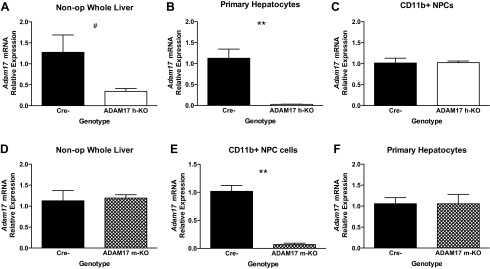
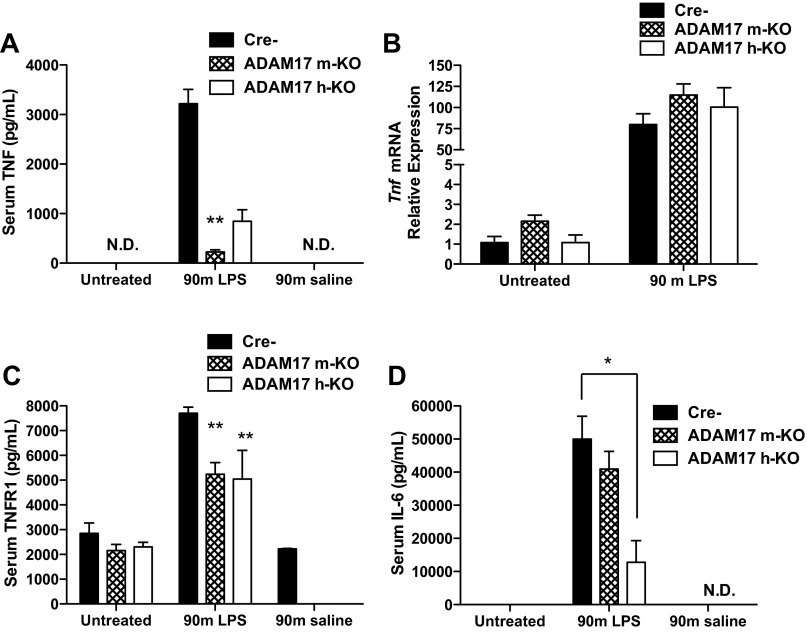
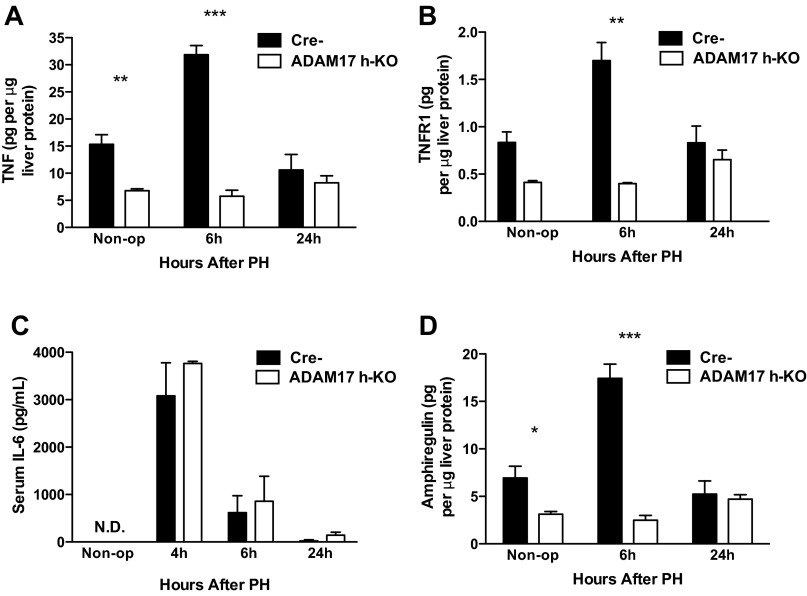
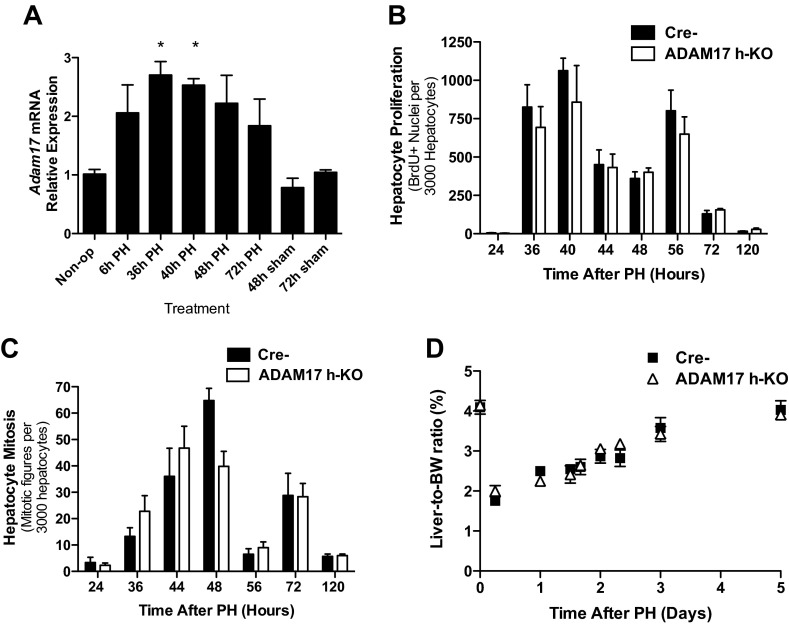
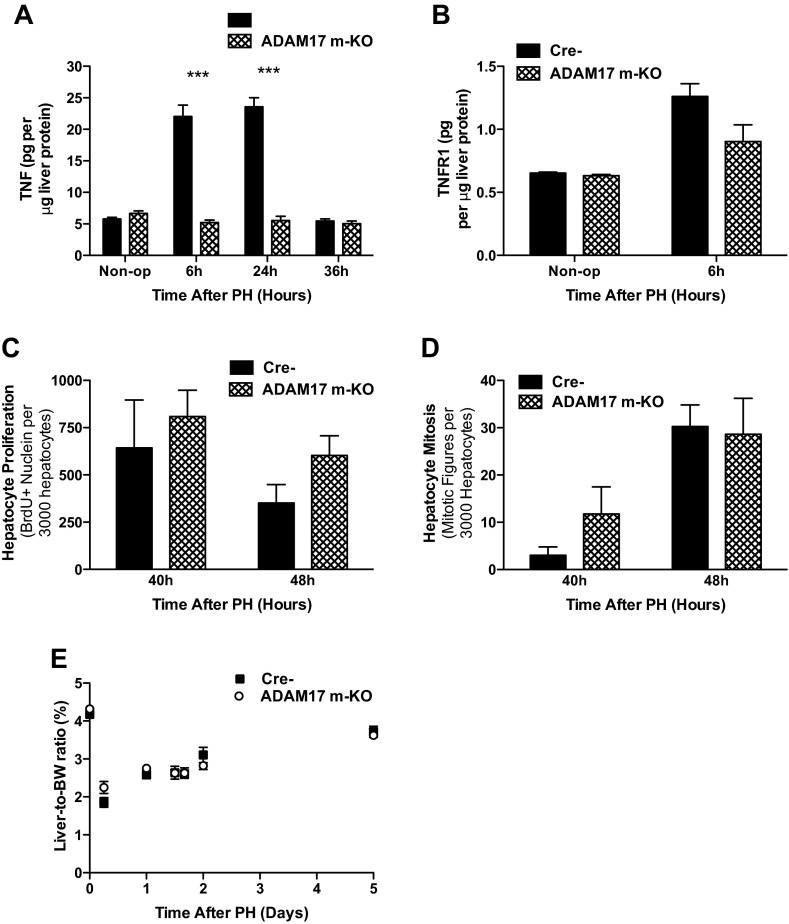
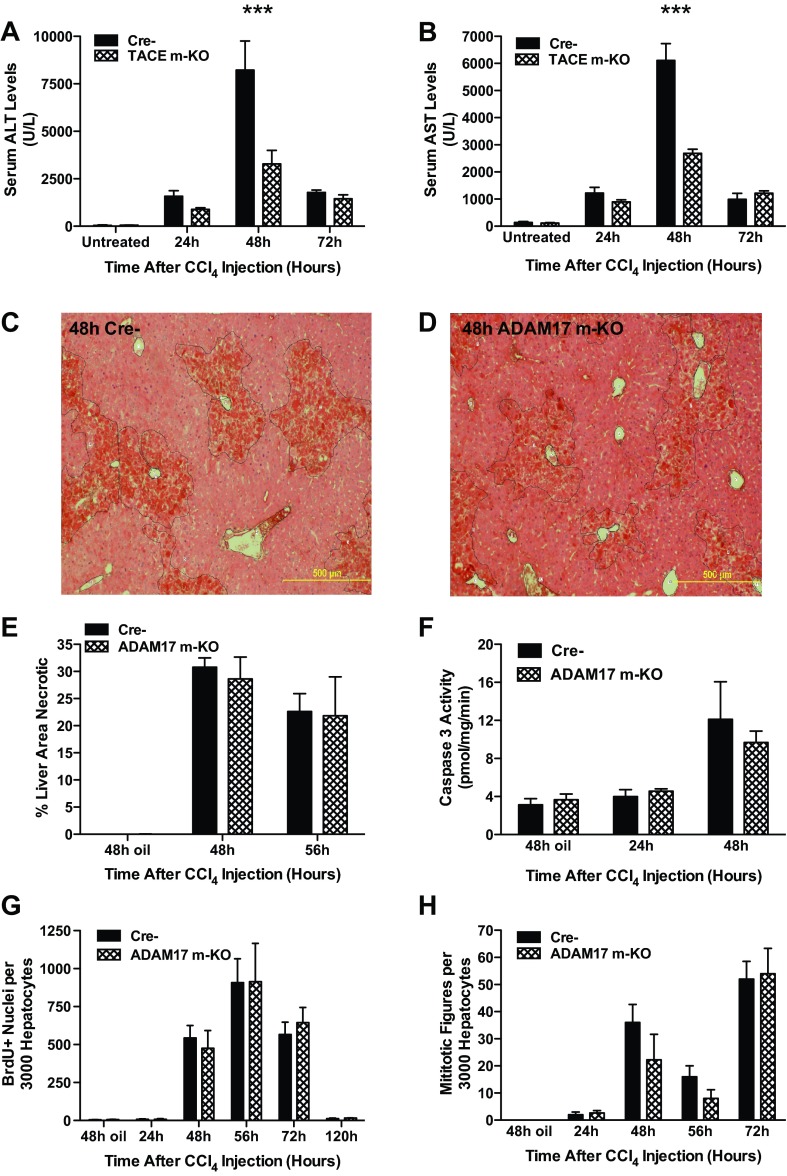
A disintegrin and metalloproteinase 17 (ADAM17), or tumor necrosis factor (TNF)-α-converting enzyme, is a key metalloproteinase and physiological convertase for a number of putative targets that play critical roles in cytokine and growth factor signaling. These interdependent pathways are essential components of the signaling network that links liver function with the compensatory growth that occurs during liver regeneration following 2/3 partial hepatectomy (PH) or chemically induced hepatotoxicity. Despite identification of many soluble factors needed for efficient liver regeneration, very little is known about how such ligands are regulated in the liver. To directly study the role of ADAM17 in the liver, we employed two cell-specific ADAM17 knockout (KO) mouse models. Using lipopolysaccharide (LPS) as a robust stimulus for TNF release, we found attenuated levels of circulating TNF in myeloid-specific ADAM17 KO mice (ADAM17 m-KO) and, unexpectedly, in mice with hepatocyte-specific ADAM17 deletion (ADAM17 h-KO), indicating that ADAM17 expression in both cell types plays a role in TNF shedding. After 2/3 PH, induction of TNF, TNFR1, and amphiregulin (AR) was significantly attenuated in ADAM17 h-KO mice, implicating ADAM17 as the primary sheddase for these factors in the liver. Surprisingly, the extent and timing of hepatocyte proliferation were not affected after PH or carbon tetrachloride injection in ADAM17 h-KO or ADAM17 m-KO mice. We conclude that ADAM17 regulates TNF, TNFR1, and AR in the liver, and its expression in both hepatocytes and myeloid cells is important for TNF regulation after LPS injury or 2/3 PH, but is not required for liver regeneration.
Keywords: amphiregulin; lipopolysaccharide; partial hepatectomy; tumor necrosis factor receptor; tumor necrosis factor-α converting enzyme.
Figures
References
-
- Amour A, Slocombe PM, Webster A, Butler M, Knight CG, Smith BJ, Stephens PE, Shelley C, Hutton M, Knäuper V, Docherty AJ, Murphy G. TNF-alpha converting enzyme (TACE) is inhibited by TIMP-3. FEBS Lett 435: 39–44, 1998 - PubMed
-
- Argast GM, Campbell JS, Brooling JT, Fausto N. Epidermal growth factor receptor transactivation mediates tumor necrosis factor-induced hepatocyte replication. J Biol Chem 279: 34530–34536, 2004 - PubMed
-
- Bemelmans MH, Gouma DJ, Buurman WA. LPS-induced sTNF-receptor release in vivo in a murine model. Investigation of the role of tumor necrosis factor, IL-1, leukemia inhibiting factor, and IFN-gamma. J Immunol 151: 5554–5562, 1993 - PubMed
-
- Berasain C, García-Trevijano ER, Castillo J, Erroba E, Lee DC, Prieto J, Avila MA. Amphiregulin: an early trigger of liver regeneration in mice. Gastroenterology 128: 424–432, 2005 - PubMed
-
- Bilzer M, Roggel F, Gerbes AL. Role of Kupffer cells in host defense and liver disease. Liver Int 26: 1175–1186, 2006 - PubMed
Publication types
MeSH terms
Substances
Grants and funding
LinkOut - more resources
Full Text Sources
Other Literature Sources
Molecular Biology Databases
Research Materials
Miscellaneous
