


Renal growth in isolated methylmalonic acidemia
- PMID: 23639900
- PMCID: PMC4149057
- DOI: 10.1038/gim.2013.42
Renal growth in isolated methylmalonic acidemia
Abstract
Purpose: We sought to predict renal growth based on clinical and metabolic parameters in patients with isolated methylmalonic acidemia, a group of disorders associated with chronic kidney disease.
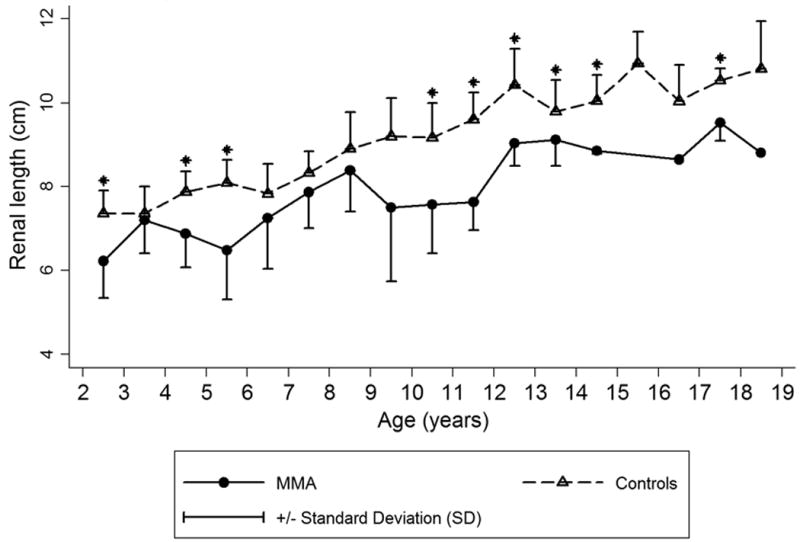
Methods: Fifty patients with methylmalonic acidemia, followed from 2004 to 2011, were classified by molecular genetics and studied using a combined cross-sectional and longitudinal design that included renal ultrasound examinations, anthropometric measurements, and metabolic phenotyping. Renal length was compared with that of healthy controls and modeled to other clinical parameters using multiple-regression analyses.
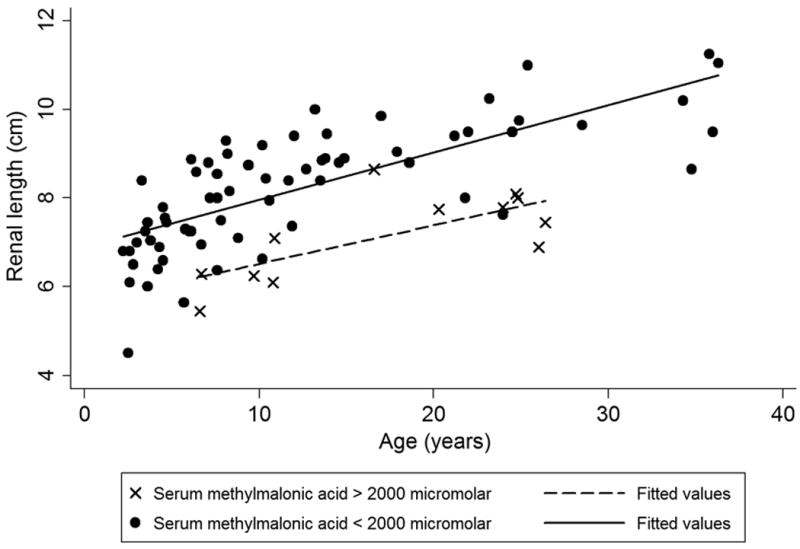
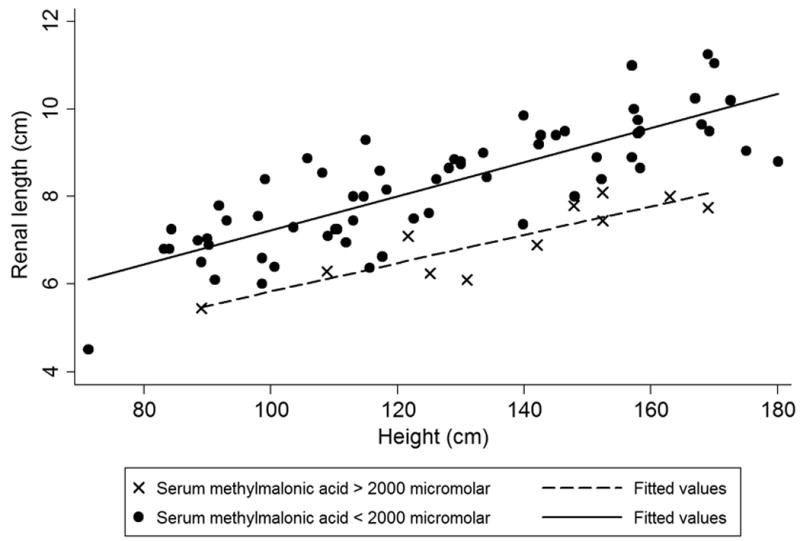
Results: Comparisons with age-matched controls showed that renal length in subjects with methylmalonic acidemia was significantly decreased (P < 0.05). Stepwise regression modeling found that combinations of height, serum cystatin C, and serum methymalonic acid concentrations best predicted kidney size. The regression equations used to generate methylmalonic acidemia kidney nomograms were renal length (cm) = 6.79 + 0.22 × age for the controls and 6.80 + 0.09 × age for the methylmalonic acidemia cohort (P < 0.001; constant and slope).
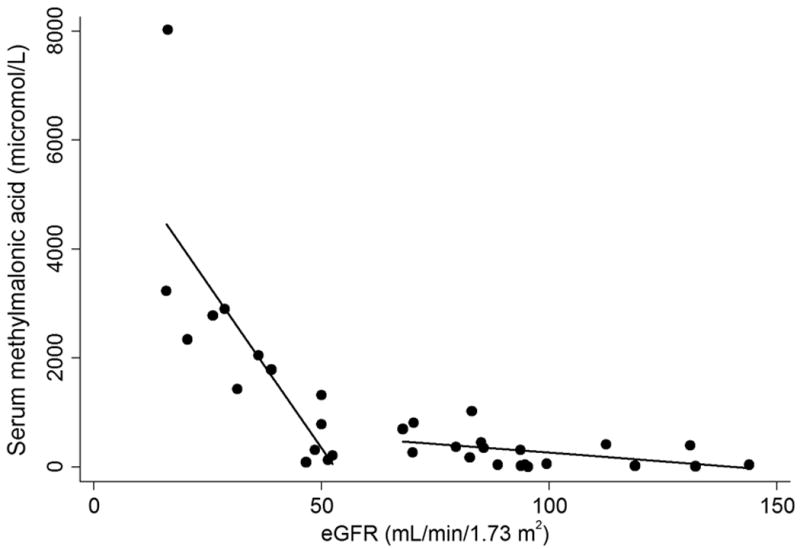
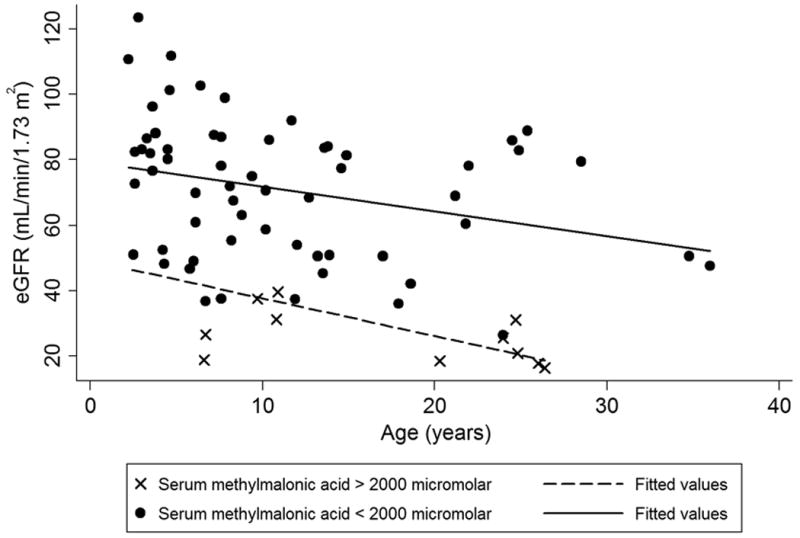
Conclusion: Renal length, reflective of kidney growth, significantly decreased in patients with methylmalonic acidemia over time as compared with controls and was predictable with select clinical parameters. Cystatin C and serum methylmalonic acid concentrations were highly correlated with smaller kidneys and decreased renal function in this patient population.
Figures
References
-
- Manoli I, Venditti CP. Methylmalonic Acidemia. 2005 Aug 16 [Updated 2010 Sep 28] In: Pagon RA, Bird TD, Dolan CR, et al., editors. GeneReviews™ [Internet] Seattle (WA): University of Washington, Seattle; 1993. Available from: http://www.ncbi.nlm.nih.gov/books/NBK1231/ - PubMed
-
- Matsui SM, Mahoney MJ, Rosenberg LE. The natural history of the inherited methylmalonic acidemias. N Engl J Med. 1983 Apr 14;308(15):857–861. - PubMed
-
- van der Meer SB, Poggi F, Spada M, et al. Clinical outcome of long-term management of patients with vitamin B12-unresponsive methylmalonic acidemia. J Pediatr. 1994 Dec;125(6 Pt 1):903–908. - PubMed
-
- Horster F, Baumgartner MR, Viardot C, et al. Long-term outcome in methylmalonic acidurias is influenced by the underlying defect (mut0, mut-, cblA, cblB) Pediatr Res. 2007 Aug;62(2):225–230. - PubMed
Publication types
MeSH terms
Substances
Supplementary concepts
Grants and funding
LinkOut - more resources
Full Text Sources
Other Literature Sources
Medical
