


Impact of reinforcement of diabetes self-care on poorly controlled diabetes: a randomized controlled trial
- PMID: 23640303
- PMCID: PMC3720792
- DOI: 10.1177/0145721713486837
Impact of reinforcement of diabetes self-care on poorly controlled diabetes: a randomized controlled trial
Abstract
Purpose: The purpose of the study was to assess the value of reinforcing diabetes self-management for improving glycemia and self-care among adults with type 2 diabetes who had at least 3 hours of prior diabetes education.
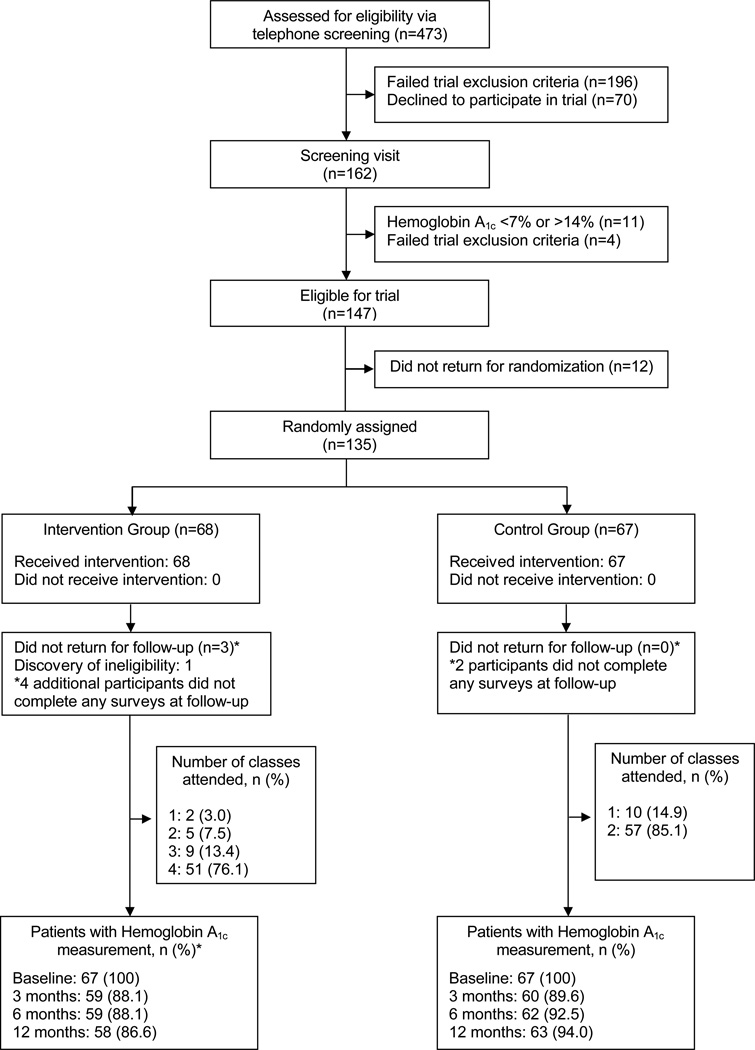
Methods: In this randomized controlled trial, 134 participants (75% white, 51% female, 59 ± 9 years old, 13 ± 8 years with diabetes, A1C = 8.4% ± 1.2%) were randomized to either a group map-based program (intervention) or group education on cholesterol and blood pressure (control). Participants were assessed for A1C levels, diabetes self-care behaviors (3-day pedometer readings, 6-minute walk test, blood glucose checks, frequency of self-care), and psychosocial factors (distress, frustration, quality of life) at baseline, 3, 6, and 12 months post intervention and health literacy at baseline.
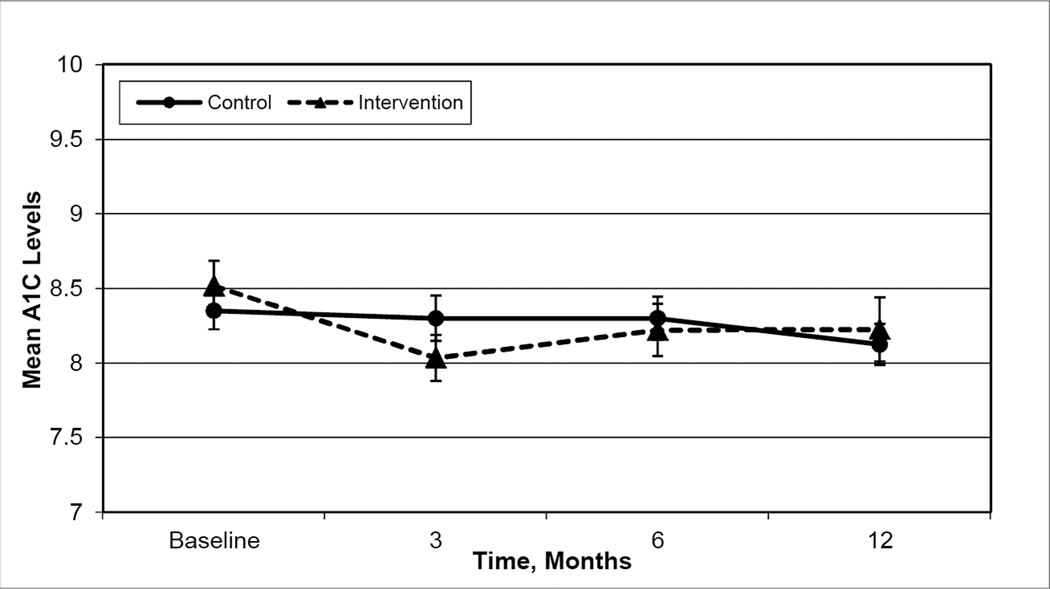
Results: Groups did not differ on baseline characteristics including A1C levels, health literacy, or self-care; however, the intervention group had more years of education than controls. Intervention arm participants modestly improved A1C levels at 3 months post intervention but did not maintain that improvement at 6 and 12 months while control patients did not improve A1C levels at any time during follow-up. Importantly, frequency of self-reported self-care, diabetes quality of life, diabetes-related distress, and frustration with diabetes self-care improved in both groups over time.
Conclusions: Reinforcing self-care with diabetes education for patients who have not met glycemic targets helps improve A1C and could be considered a necessary component of ongoing diabetes care. The best method to accomplish reinforcement needs to be established.
Conflict of interest statement
References
-
- Conn VS, Hafdahl AR, Mehr DR, Lemaster JW, Brown SA, Nielsen PJ. Metabolic effects of interventions to increase exercise in adults with type 2 diabetes. Diabetologia. 2007 May;50(5):913–921. - PubMed
-
- Maiorana A, O'Driscoll G, Goodman C, Taylor R, Green D. Combined aerobic and resistance exercise improves glycemic control and fitness in type 2 diabetes. Diabetes Res Clin Pract. 2002 May;56(2):115–123. - PubMed
-
- Karter AJ, Ackerson LM, Darbinian JA, et al. Self-monitoring of blood glucose levels and glycemic control: the Northern California Kaiser Permanente Diabetes registry*. The American Journal of Medicine. 2001;111(1):1–9. - PubMed
-
- Pi-Sunyer FX, Maggio CA, McCarron DA, et al. Multicenter randomized trial of a comprehensive prepared meal program in type 2 diabetes. Diabetes Care. 1999 Feb;22(2):191–197. - PubMed
-
- Jacobson AM, Adler AG, Derby L, Anderson BJ, Wolfsdorf JI. Clinic attendance and glycemic control Study of contrasting groups of patients with IDDM. Diabetes Care. 1991 Jul;14(7):599–601. - PubMed
Publication types
MeSH terms
Substances
Grants and funding
LinkOut - more resources
Full Text Sources
Other Literature Sources
Medical
Miscellaneous
