


Greater weight loss with increasing age in the weight loss maintenance trial
- PMID: 23640912
- PMCID: PMC3849225
- DOI: 10.1002/oby.20506
Greater weight loss with increasing age in the weight loss maintenance trial
Abstract
Objective: To determine the effect of age on weight loss and weight loss maintenance in participants in the Weight Loss Maintenance trial (WLM).
Design and methods: Secondary analysis of a randomized controlled trial of overweight/obese adults with CVD risk factors was conducted. Participants were 1685 adults with baseline BMI 25-45 kg m(2) with hypertension and/or dyslipidemia. Those who lost at least 4kg in an initial 6-month behavioral weight loss intervention (N = 1,032) were randomly assigned to a 30-month maintenance phase of self-directed control (SD), monthly personal counseling (PC), or unlimited access to an internet-based intervention (IT). Age groups were defined post-hoc and weight change was compared among age groups.
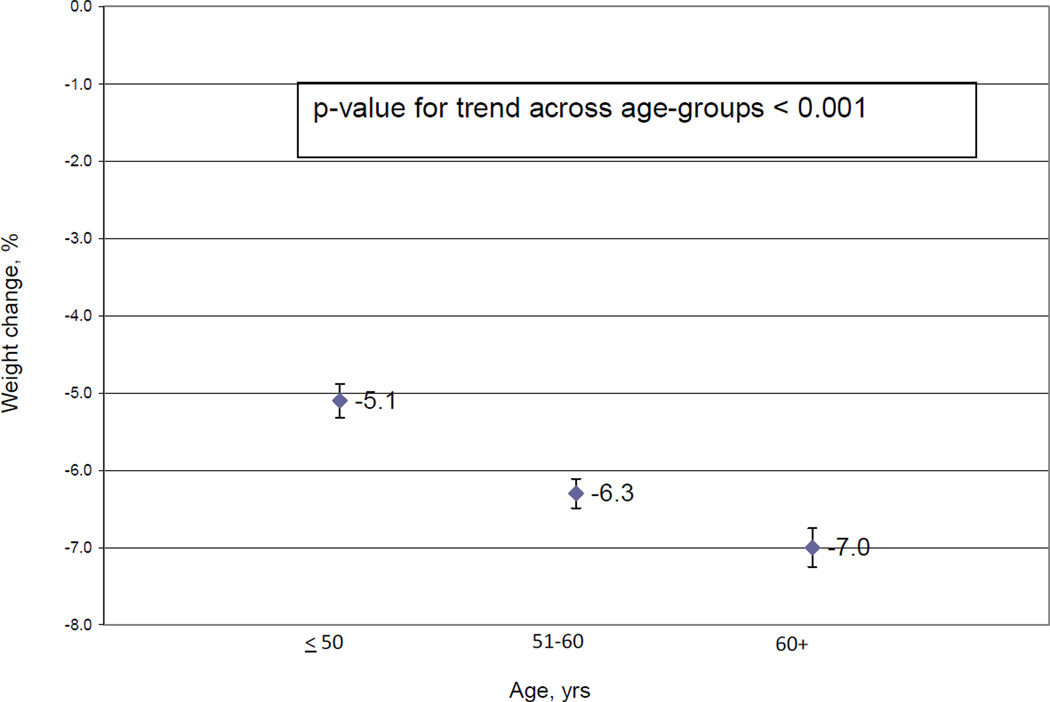
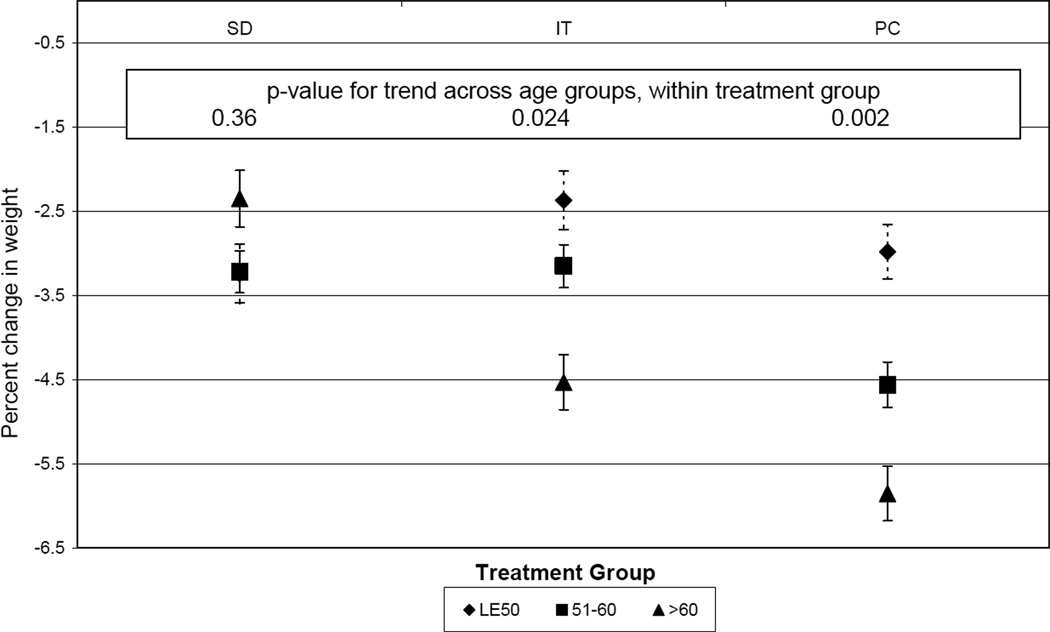
Results: Participants ≥60 years old initially lost more weight than younger individuals, and sustained greater weight loss in IT and PC but not in SD (P value for trend 0.024, 0.002, and 0.36, respectively).
Conclusions: In WLM, adults age ≥60 years had greater initial weight loss and greater sustained weight loss over 3 years, compared to younger adults. Older adults had greater weight loss maintenance with either personal counseling or internet-based intervention. Future research should determine optimal implementation strategies and effects of weight loss on health outcomes in older adults.
Copyright © 2013 The Obesity Society.
Conflict of interest statement
The authors have no competing interests.
Figures
References
-
- Ogden CL, Carroll MD, Curtin LR, McDowell MA, Tabak CJ, Flegal KM. Prevalence of overweight and obesity in the United States, 1999–2004. JAMA. 2006;295:1549–1555. - PubMed
-
- Sundquist J, Winkleby MA, Pudaric S. Cardiovascular disease risk factors among older black, Mexican-American, and white women and men: an analysis of NHANES III, 1988–1994. Third National Health and Nutrition Examination Survey. J Am Geriatr Soc. 2001;49:109–116. - PubMed
-
- Services USDoHaH. Clinical guidelines on the identification, evaluation, and treatment of overweight and obesity in adults. Washington D.C.: 1998. - PubMed
-
- Wadden TA, Butryn ML, Wilson C. Lifestyle modification for the management of obesity. Gastroenterology. 2007;132:2226–2238. - PubMed
Publication types
MeSH terms
Grants and funding
LinkOut - more resources
Full Text Sources
Other Literature Sources
Medical
