Review
. 2013:33:87-103.
doi: 10.1146/annurev-nutr-071812-161252. Epub 2013 Apr 29.

Vitamin E trafficking in neurologic health and disease

Affiliations
Review

Vitamin E trafficking in neurologic health and disease

Lynn Ulatowski et al. Annu Rev Nutr. 2013.

Abstract

Vitamin E was identified almost a century ago as a botanical compound necessary for rodent reproduction. Decades of research since then established that of all members of the vitamin E family, α-tocopherol is selectively enriched in human tissues, and it is essential for human health. The major function of α-tocopherol is thought to be that of a lipid-soluble antioxidant that prevents oxidative damage to biological components. As such, α-tocopherol is necessary for numerous physiological processes such as permeability of lipid bilayers, cell adhesion, and gene expression. Inadequate levels of α-tocopherol interfere with cellular function and precipitate diseases, notably ones that affect the central nervous system. The extreme hydrophobicity of α-tocopherol poses a serious thermodynamic barrier for proper distribution of the vitamin to target tissues and cells. Although transport of the vitamin shares some steps with that of other lipids, selected tissues evolved dedicated transport mechanisms involving the α-tocopherol transfer protein (αTTP). The critical roles of this protein and its ligand are underscored by the debilitating pathologies that characterize human carriers of mutations in the TTPA gene.


Figures
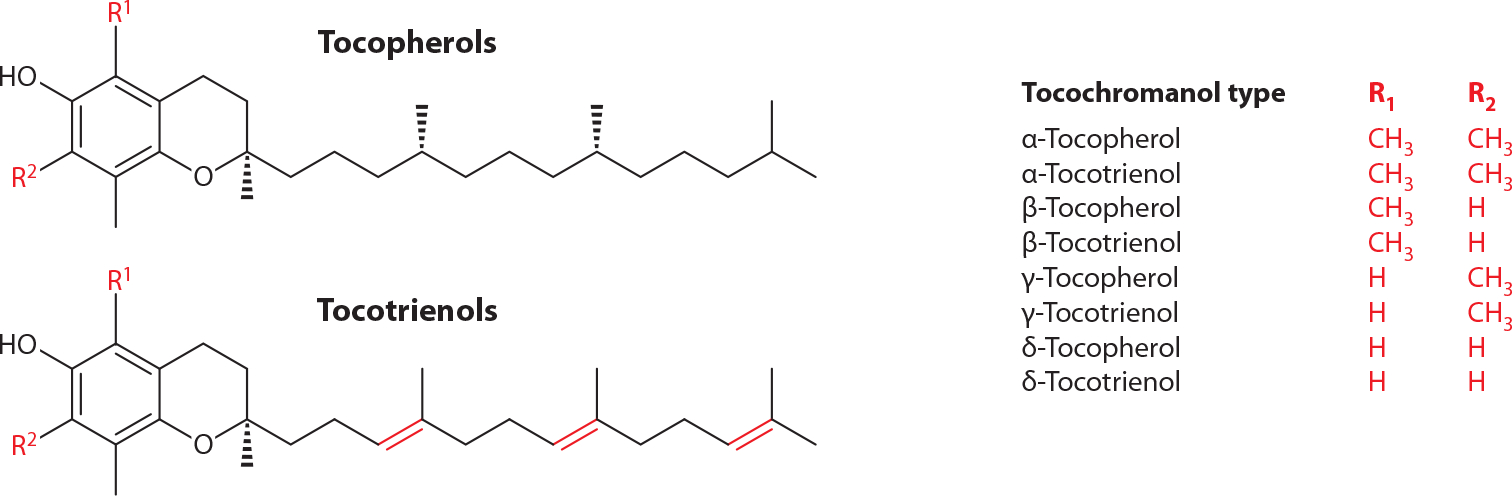
Figure 1
Figure 1
Molecular structures of vitamin E family members (the tocochromanols). Courtesy: J. Atkinson.
Figure 2
Figure 2
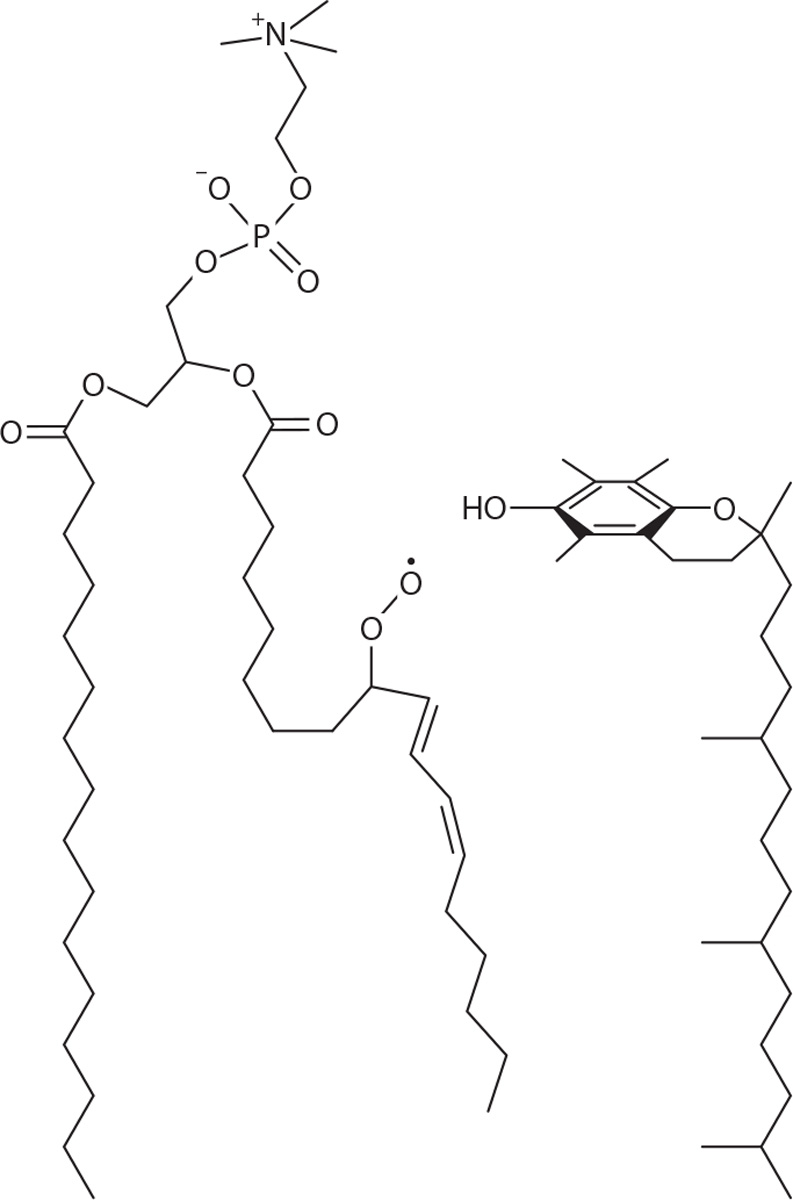
Conformational model of α-tocopherol within the lipid bilayer, in proximity to a radical product of unsaturated phospholipid peroxidation in phosphatidylcholine. Courtesy: J. Atkinson; drawn after (4).
Figure 3
Figure 3
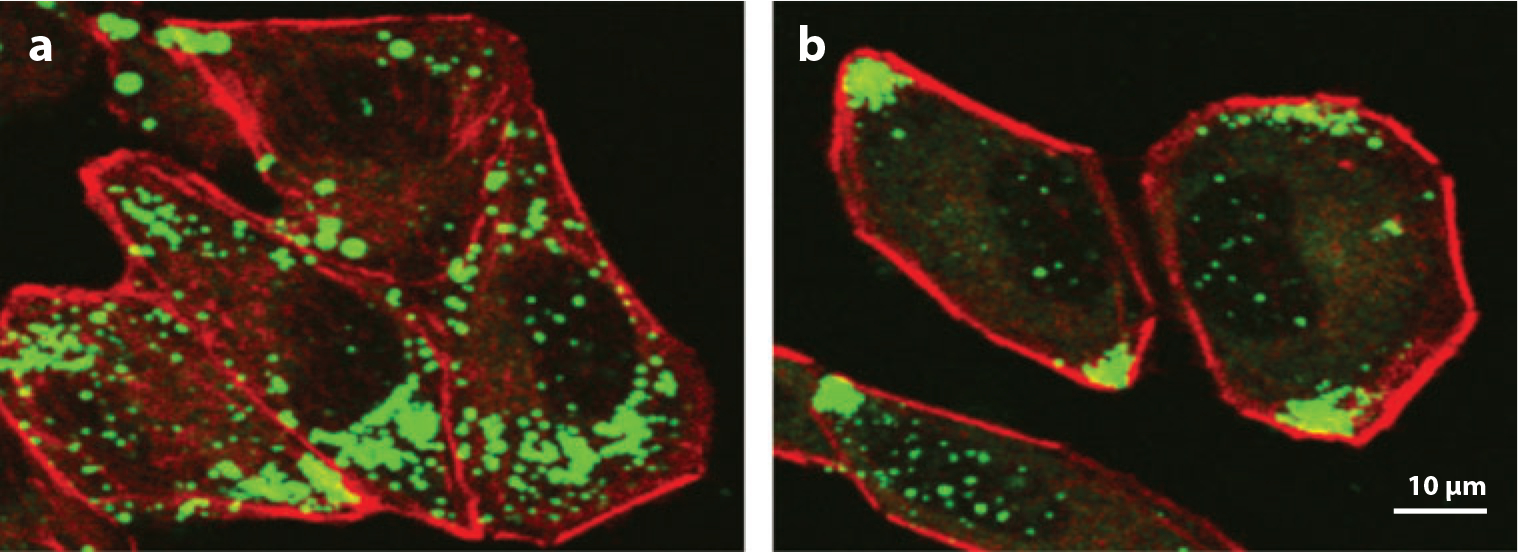
Facilitation of vitamin E secretion by αTTP. McA-RH7777 cells that express a control cDNA (a) or an αTTP expression vector (b) were “loaded” with nitrobenoxadiazyl-tocopherol, washed, and visualized using confocal fluorescence microscopy. Note that in αTTP-expressing cells, the fluorescent vitamin has translocated from perinuclear vesicles to the plasma membrane.
Figure 4
Figure 4
A model depicting the trafficking of vitamin E through hepatocytes and the role of αTTP in this process. Following endocytosis-mediated uptake, dietary vitamin E arrives at the late endocytic compartment. In the presence of functional lysosomal transporters NPC1 and NPC2, α-tocopherol exits this compartment, and αTTP facilitates its vesicular transport to the plasma membrane. After ABCA1-dependent secretion to the extracellular space, α-tocopherol is complexed to lipoproteins and delivered to nonhepatic tissues. AVED-causing mutations in αTTP inhibit trans-hepatocyte trafficking and result in an accumulation of vitamin E in the hepatocytes and deficiency in nonhepatic tissues. Abbreviations: αTTP, α-tocopherol transfer protein; AVED, ataxia with vitamin E deficiency; NPC, Niemann-Pick disease type C; SRB1, scavenger receptor B1; TTP, tocopherol transfer protein.
Figure 5
Figure 5
The three-dimensional structure of αTTP. (a) The electrostatic surface potential of the protein, emphasizing the abundance of basic (blue) and acidic (red) amino acids on the protein’s exterior surface. (b) The ligand binding pocket and the amphipathic lid that controls ligand access. Bound α-tocopherol is shown in red, and the lid is shown in the open, unligated conformation (green) and the closed, ligand-bound conformation (purple). (c) The association of αTTP with a lipid bilayer is shown based on a calculated model of free energies of binding to a model hydrophobic phase (cyan spheres) (52). The lid helix is colored purple. Courtesy: J. Atkinson & S. Chung.
Figure 6
Figure 6
Diminished Purkinje cell branching and arborization in vitamin E–deficient mice. Shown are thin sections of Golgi-Cox stained cerebella from (a) 17-month-old αTTP−/− mice and (b) wild-type control animals. From “Vitamin E Is Essential for Purkinje Neuron Integrity,” L. Ulatowski, G. Warrier, R. Sultana, D.A. Butterfield, R. Parker, & D. Manor, manuscript submitted.
Figure 7
Figure 7
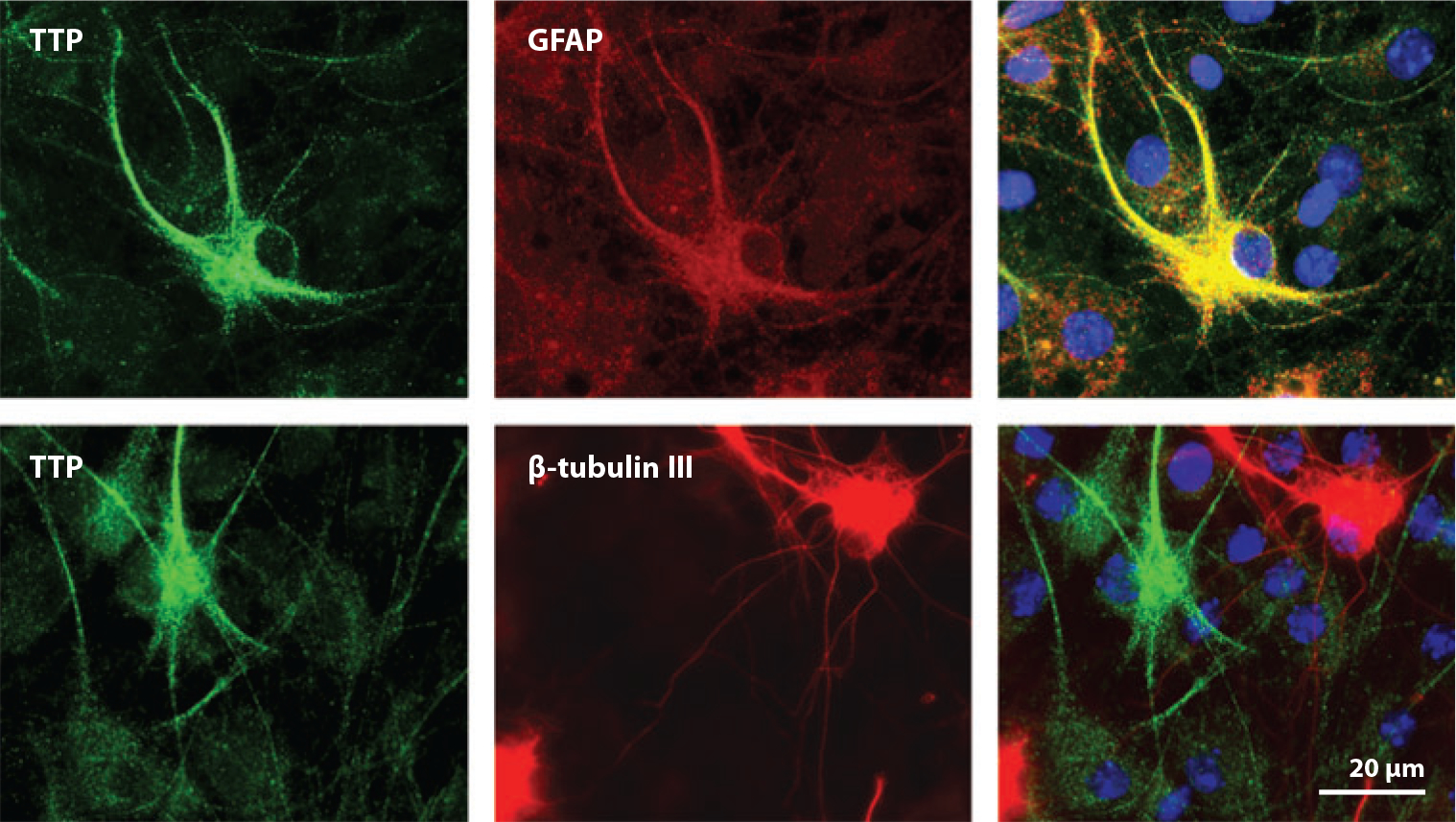
Astrocyte-specific expression of cerebellar αTTP. Primary cerebellar cells were stained with specific antibodies directed against αTTP (green) and the astrocyte marker glial fibrillary acidic protein (GFAP) (red, upper panel) or the neuronal marker β-tubulin III (red, lower panel). Note that αTTP and GFAP (yellow) localize to the same cells. From “Vitamin E Is Essential for Purkinje Neuron Integrity,” L. Ulatowski, G. Warrier, R. Sultana, D.A. Butterfield, R. Parker, & D. Manor, manuscript submitted.
Figure 8
Figure 8
Proposed model for trafficking of α-tocopherol between cerebellar astrocytes and neurons. α-Tocopherol is taken up by astrocytes and stored in perinuclear vesicles. αTTP facilitates egress of the vitamin via ABCA1 to nascent apolipoprotein E (ApoE)-containing lipoprotein particles. Particles are taken up by the neighboring neurons and distributed throughout its body, axon, and dendrites, where they quench lipid peroxidation. Since αTTP levels are the limiting factor in this transport chain, oxidative stress–induced increase in αTTP expression enhances vitamin E flux, thereby combating neuronal damage. Abbreviations: ABCA1, ATP-binding cassette transporter A1; Chol, cholesterol; LP, lipoprotein particle; PL, phospholipids; TTP, tocopherol transfer protein.

References

    1. Aggarwal B, Nesaretnam K. 2012. Vitamin E tocotrienols: life beyond tocopherols. Genes Nutr. 7:1. - PMC - PubMed
    1. Arita M, Nomura K, Arai H, Inoue K. 1997. α-Tocopherol transfer protein stimulates the secretion of α-tocopherol from a cultured liver cell line through a brefeldin A-insensitive pathway. Proc. Natl. Acad. Sci. USA 94:12437–41 - PMC - PubMed
    1. Arita M, Sato Y, Miyata A, Tanabe T, Takahashi E, et al. 1995. Human α-tocopherol transfer protein: cDNA cloning, expression and chromosomal localization. Biochem. J. 306:437–43 - PMC - PubMed
    1. Atkinson J, Epand RF, Epand RM. 2008. Tocopherols and tocotrienols in membranes: a critical review. Free Radic. Biol. Med. 44:739–64 - PubMed
    1. Atkinson J, Harroun T, Wassall SR, Stillwell W, Katsaras J. 2010. The location and behavior of α-tocopherol in membranes. Mol. Nutr. Food Res. 54:641–51 - PubMed

MeSH terms