


An application of item response theory to fMRI data: prospects and pitfalls
- PMID: 23642468
- PMCID: PMC3775707
- DOI: 10.1016/j.pscychresns.2013.01.009
An application of item response theory to fMRI data: prospects and pitfalls
Abstract
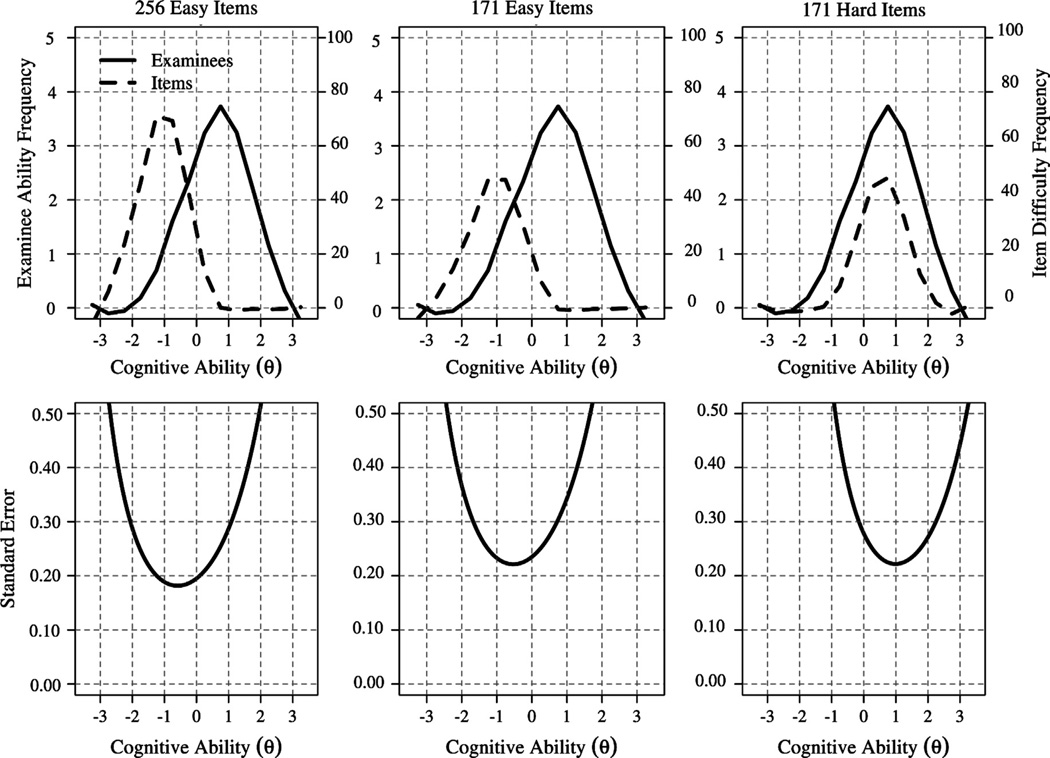
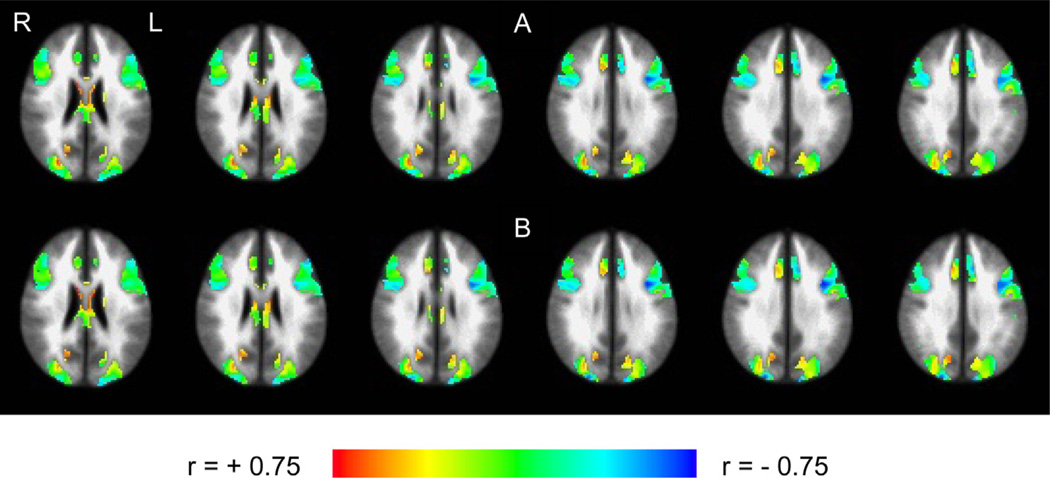
When using functional brain imaging to study neuropsychiatric patients an important challenge is determining whether the imaging task assesses individual differences with equal precision in healthy control and impaired patient groups. Classical test theory (CTT) requires separate reliability studies of patients and controls to determine equivalent measurement precision with additional studies to determine measurement precision for different levels of disease severity. Unlike CTT, item response theory (IRT) provides estimates of measurement error for different levels of ability, without the need for separate studies, and can determine if different tests are equivalently difficult when investigating differential deficits between groups. To determine the potential value of IRT in functional brain imaging, IRT was applied to behavioral data obtained during a multi-center functional MRI (fMRI) study of working memory (WM). Average item difficulty was approximately one standard deviation below the ability scale mean, supporting the task's sensitivity to individual differences within the ability range of patients with WM impairment, but not within the range of most controls. The correlation of IRT estimated ability with fMRI activation during the task recognition period supported the linkage of the latent IRT scale to brain activation data. IRT can meaningfully contribute to the design of fMRI tasks.
Published by Elsevier Ireland Ltd.
Figures
References
-
- Baker FB, Kim S-H. Item Response Theory: Parameter Estimation Techniques. second ed. New York: Dekker; 2004.
-
- Batchelder WH. Cognitive psychometrics: using multinomial processing tree models as measurement tools. In: Embretson SE, editor. Measuring Psychological Constructs: Advances in Model-Based Approaches. Washington, DC: American Psychological Association; 2010. pp. 71–93.
-
- Bedny M, Aguirre GK, Thompson-Schill SL. Item analysis in functional magnetic resonance imaging. NeuroImage. 2007;35:1093–1102. - PubMed
-
- Birnbaum A. Some latent trait models and their use in inferring an examinee’s ability. In: Lord FM, Novick MR, editors. Statistical Theories of Mental Test Scores. Oxford, England: Addison-Wesley; 1968.
-
- Brooks S, Gelman A. General methods for monitoring convergence of iterative simulations. Journal of Computational and Graphical Statistics. 1998;7:434–455.
Publication types
MeSH terms
Grants and funding
LinkOut - more resources
Full Text Sources
Other Literature Sources
Medical
