


A narrative review of yoga and mindfulness as complementary therapies for addiction
- PMID: 23642957
- PMCID: PMC3646290
- DOI: 10.1016/j.ctim.2013.01.008
A narrative review of yoga and mindfulness as complementary therapies for addiction
Abstract
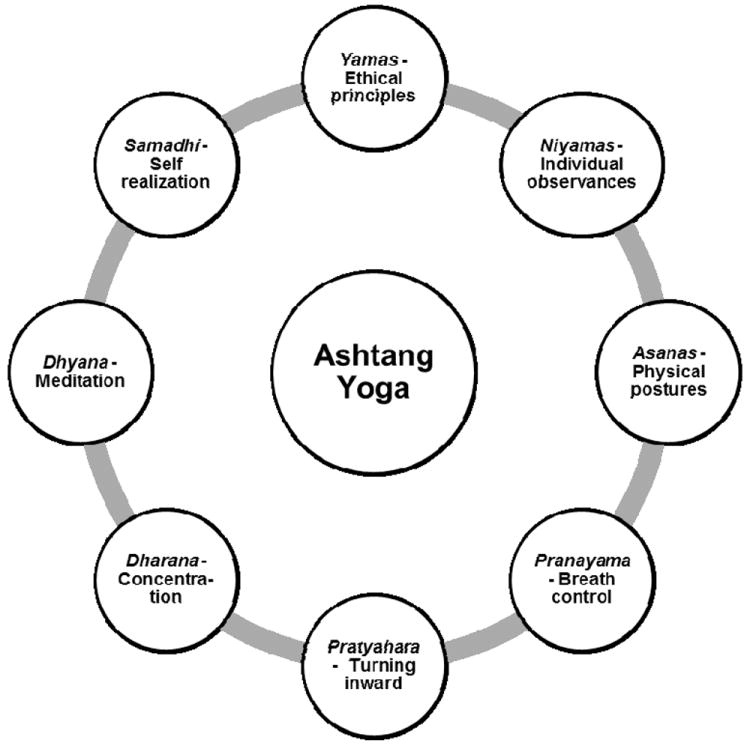
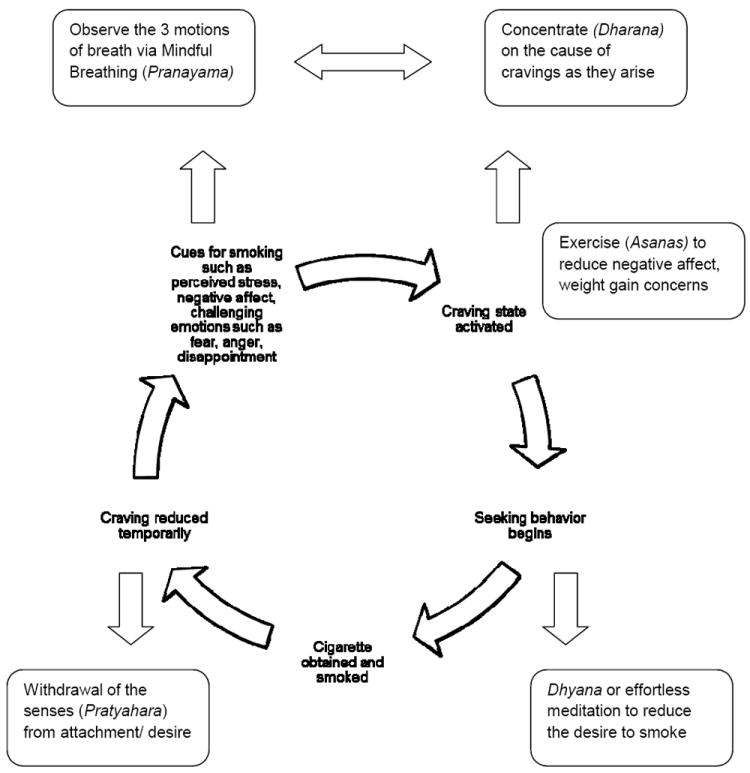
This paper reviews the philosophical origins, current scientific evidence, and clinical promise of yoga and mindfulness as complementary therapies for addiction. Historically, there are eight elements of yoga that, together, comprise ethical principles and practices for living a meaningful, purposeful, moral and self-disciplined life. Traditional yoga practices, including postures and meditation, direct attention toward one's health, while acknowledging the spiritual aspects of one's nature. Mindfulness derives from ancient Buddhist philosophy, and mindfulness meditation practices, such as gentle Hatha yoga and mindful breathing, are increasingly integrated into secular health care settings. Current theoretical models suggest that the skills, insights, and self-awareness learned through yoga and mindfulness practice can target multiple psychological, neural, physiological, and behavioral processes implicated in addiction and relapse. A small but growing number of well-designed clinical trials and experimental laboratory studies on smoking, alcohol dependence, and illicit substance use support the clinical effectiveness and hypothesized mechanisms of action underlying mindfulness-based interventions for treating addiction. Because very few studies have been conducted on the specific role of yoga in treating or preventing addiction, we propose a conceptual model to inform future studies on outcomes and possible mechanisms. Additional research is also needed to better understand what types of yoga and mindfulness-based interventions work best for what types of addiction, what types of patients, and under what conditions. Overall, current findings increasingly support yoga and mindfulness as promising complementary therapies for treating and preventing addictive behaviors.
Copyright © 2013 Elsevier Ltd. All rights reserved.
Conflict of interest statement
Figures
References
-
- World Health Organization (WHO), Global Health Observatory (GHO) [8/31/2012]; Available at: http://www.who.int/gho/substance_abuse/en/index.html.
-
- Brandon TH, Vidrine JI, Litvin EB. Relapse and relapse prevention. Annu Rev Clin Psychol. 2007;3:257–284. - PubMed
-
- Miller WR, Westerberg VS, Harris RJ, Tonigan JS. What prevents relapse? Prospective testing of antecedent models. Addiction. 1996;91(Suppl):S155–172. - PubMed
-
- Fortney L, Taylor M. Meditation in medical practice: A review of the evidence and practice. Prim Care Clin Office Pract. 2010;37(1):81–90. - PubMed
Publication types
MeSH terms
Grants and funding
LinkOut - more resources
Full Text Sources
Other Literature Sources
