Review
. 2014 Jan;76 Pt B(0 0):259-68.
doi: 10.1016/j.neuropharm.2013.04.004. Epub 2013 Apr 30.

Epigenetic mechanisms of drug addiction

Affiliations
Review

Epigenetic mechanisms of drug addiction

Eric J Nestler. Neuropharmacology. 2014 Jan.

Abstract

Drug addiction involves potentially life-long behavioral abnormalities that are caused in vulnerable individuals by repeated exposure to a drug of abuse. The persistence of these behavioral changes suggests that long-lasting changes in gene expression, within particular regions of the brain, may contribute importantly to the addiction phenotype. Work over the past decade has demonstrated a crucial role for epigenetic mechanisms in driving lasting changes in gene expression in diverse tissues, including brain. This has prompted recent research aimed at characterizing the influence of epigenetic regulatory events in mediating the lasting effects of drugs of abuse on the brain in animal models of drug addiction. This review provides a progress report of this still early work in the field. As will be seen, there is robust evidence that repeated exposure to drugs of abuse induces changes within the brain's reward regions in three major modes of epigenetic regulation-histone modifications such as acetylation and methylation, DNA methylation, and non-coding RNAs. In several instances, it has been possible to demonstrate directly the contribution of such epigenetic changes to addiction-related behavioral abnormalities. Studies of epigenetic mechanisms of addiction are also providing an unprecedented view of the range of genes and non-genic regions that are affected by repeated drug exposure and the precise molecular basis of that regulation. Work is now needed to validate key aspects of this work in human addiction and evaluate the possibility of mining this information to develop new diagnostic tests and more effective treatments for addiction syndromes. This article is part of a Special Issue entitled 'NIDA 40th Anniversary Issue'.

Keywords: Cocaine; DNA methylation; Histone acetylation; Histone methylation; Opiates; microRNA.


Figures

Figure 1
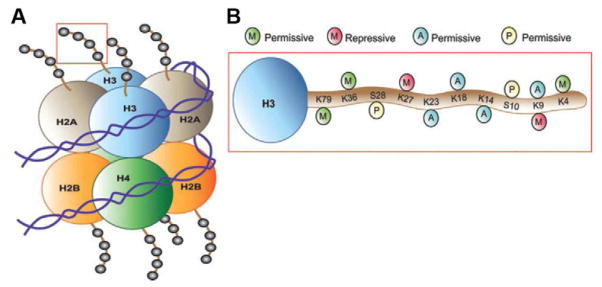
Figure 1. Scheme of post-translational modifications of histones
(A) The nucleosome is the functional unit of chromatin, composed of 147 bp of DNA wrapped around a core octamer of histone proteins (two copies each of H2A, H2B, H3, and H4). The N-terminal tails of these histones face outward from the nucleosome. (B) Combinations of acetylation, phosphorylation, methylation, etc., on histone tails (here, H3 is depicted) alter chromatin compaction and regulate gene expression. Histone modifications that weaken the interaction between histones and DNA or that promote the recruitment of transcriptional activating complexes (e.g., H3 acetylation at K23, K18, K14, and K9, as well as methylation at K79, K36, and K4 or phosphorylation at S28 and S10) correlate with permissive gene expression. Histone deacetylation, which strengthens histone:DNA contacts, or histone methylation on K27 or K9, which recruits repressive complexes to chromatin, promote a state of transcriptional repression. Adapted from Tsankova et al. (2007) and Maze and Nestler (2011) with permission.
Figure 2
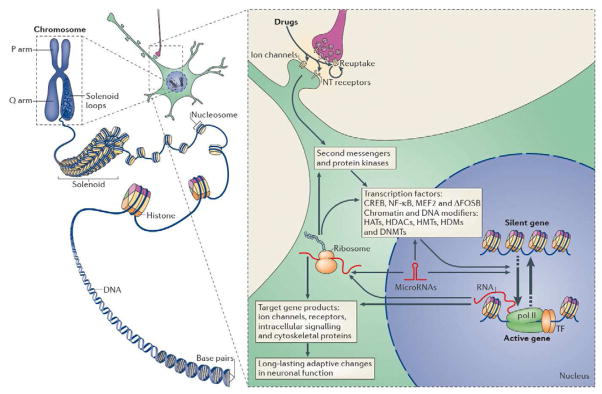
Figure 2. Epigenetic regulation by drugs of abuse
In eukaryotic cells, DNA wraps around histone octomers to form nucleosomes, which are then further organized and condensed to form chromosomes (right). Unraveling compacted chromatin makes the DNA of a specific gene accessible to the transcriptional machinery. Drugs of abuse (left) act through synaptic targets to alter intracellular signaling cascades, which leads to the activation or inhibition of transcription factors and of many other nuclear proteins; the detailed mechanisms involved in the latter remain poorly understood. This leads to the induction or repression of particular genes, including those for noncoding RNAs; altered expression of some of these genes can in turn further regulate gene transcription. It is hypothesized that some of these drug-induced changes at the chromatin level are extremely stable and thereby underlie the long-lasting behaviors that define addiction. CREB, cAMP response element binding protein; DNMTs, DNA methyltransferases; HATs, histone acetyltransferases; HDACs, histone deacetylases; HDMs, histone demethylases; HMTs, histone methyltransferases; MEF2, myocyte enhancing factor-2; NFκB, nuclear factor κB; pol II, RNA polymerase II. From Robison and Nestler (2011) with permission.
Figure 3
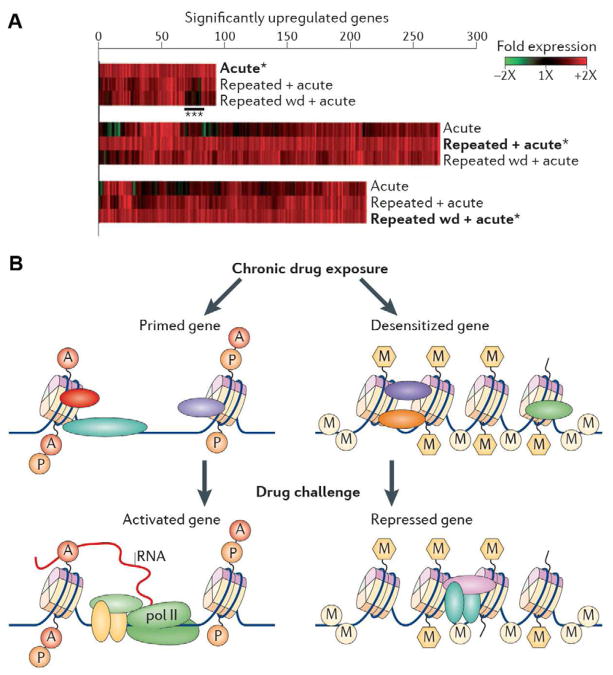
Figure 3. Gene priming and desensitization
In addition to regulating the steady-state expression levels of certain genes, cocaine induces latent effects at many other genes, which alter their inducibility in response to a subsequent stimulus. A. Analysis of mRNA expression after acute or repeated cocaine. Heat maps marked with an asterisk (*) show all genes that are upregulated in the NAc 1 hr after a cocaine challenge in naïve animals (acute), in animals treated repeatedly with cocaine (repeated + acute), or in animals after 1 wk of withdrawal from repeated cocaine (repeated wd + acute). Associated heat maps show how the same genes are affected under the other two conditions. Desensitized transcriptional responses after repeated cocaine are indicated (***). B. Early evidence suggests that epigenetic mechanisms are important in mediating such gene priming and desensitization and that many such changes are latent, meaning that they are not reflected by stable changes in steady-state mRNA levels. Rather, such changes alter chromatin structure such that later drug challenge induces a given gene to a greater (primed) or lesser (desensitized) extent based on the epigenetic modifications induced by previous chronic drug exposure. A major goal of current research is to identify the chromatin signatures that underlie such regulation. From Robison and Nestler (2011) with permission.
Figure 4
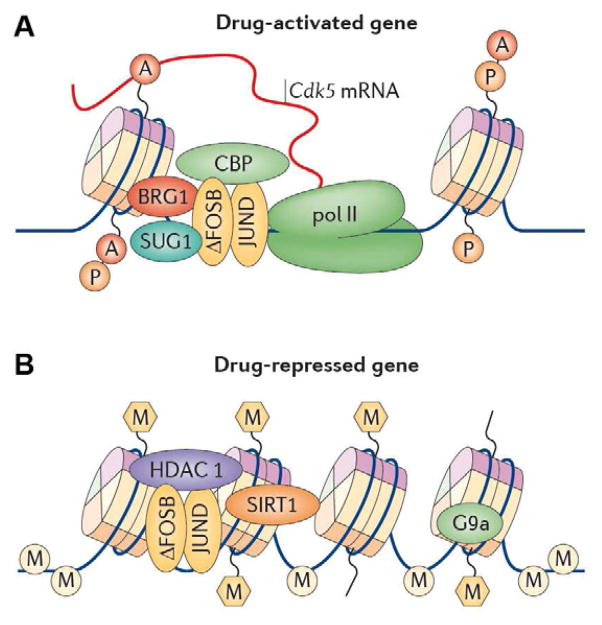
Figure 4. Epigenetic basis of drug regulation of gene expression
The figure is based on the mechanisms by which chronic cocaine, through ΔFosB, activates the Cdk5 gene (top) and represses the c-Fos gene (bottom). Top: ΔFosB binds to the Cdk5 gene and recruits several co-activators, including CBP (CREB binding protein) — a type of histone acetyltransferase (HAT) leading to increased histone acetylation, BRG1 (brahma-related gene 1) — a type of chromatin remodeling factor — and SUG1 (proteasome 26S ATPase subunit 5), another type of chromatin regulatory protein. ΔFosB also represses G9a expression, leading to reduced repressive histone methylation at the Cdk5 gene. The net result is gene activation and increased CDK5 expression. Bottom: In contrast, ΔFosB binds to the c-Fos gene and recruits several co-repressors, including HDAC1 (histone deacetylase 1) and SIRT1 (sirtuin 1). The gene also shows increased G9a binding and repressive histone methylation (despite global decreases in these marks). The net result is c-Fos gene repression. As transcriptional regulatory complexes contain dozens or hundreds of proteins, much further work is needed to further define the activational and repressive complexes that cocaine recruits to particular genes to mediate their transcriptional regulation and to explore the range of distinct activational and repressive complexes involved in cocaine action. From Robison and Nestler (2011) with permission.
Figure 5
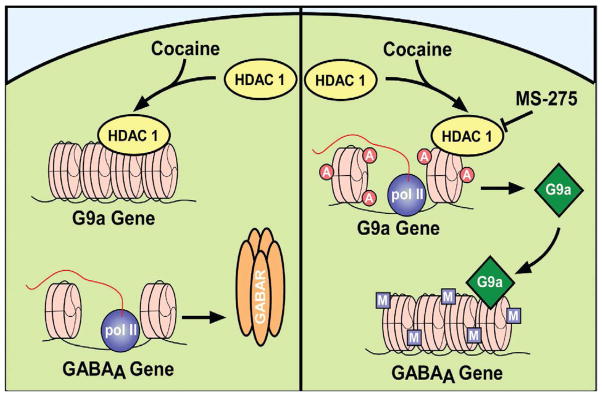
Figure 5. Schema depicting regulation of GABAA receptor subunit gene expression in NAc through cross-talk between histone acetylation and repressive methylation
Repeated cocaine targets HDAC1 to the G9a/GLP (G9a like protein) promoters, leading to decreased G9a/GLP gene expression and decreased binding of these histone methyltransferases (HMTs) at the promoters of certain GABAA receptor subunit genes. The resulting decreased repressive histone methylation (reduced H3K9me2) allows for increased transcription of the GABAA receptor subunits and increased inhibitory tone in the NAc. Chronic cocaine plus chronic intra-NAc infusion of MS-275, by inhibiting HDAC1, promotes excessive histone acetylation and leads to the induction of G9a/GLP gene expression. These HMTs then catalyze increased H3K9me2 at GABAA receptor subunit gene promoters to block cocaine-induced transcriptional activation of the GABAA subunits and increased inhibitory tone. From Kennedy et al. (2013) with permission.

References

    1. Anier K, Malinovskaja K, Aonurm-Helm A, Zharkovsky A, Kalda A. DNA methylation regulates cocaine-induced behavioral sensitization in mice. Neuropsychopharmacology. 2010;35:2450–2461. - PMC - PubMed
    1. Bertran-Gonzalez J, Bosch C, Maroteaux M, Matamales M, Hervé D, Valjent E, Girault JA. Opposing patterns of signaling activation in dopamine D1 and D2 receptor-expressing striatal neurons in response to cocaine and haloperidol. J Neurosci. 2008;28:5671–5685. - PMC - PubMed
    1. Botia B, Legastelois R, Alaux-Cantin S, Naassila M. Expression of ethanol-induced behavioral sensitization is associated with alteration of chromatin remodeling in mice. PLoS One. 2012;7:e47527. - PMC - PubMed
    1. Brami-Cherrier K, Valjent E, Hervé D, Darragh J, Corvol JC, Pages C, Arthur SJ, Girault JA, Caboche J. Parsing molecular and behavioral effects of cocaine in mitogen- and stress-activated protein kinase-1-deficient mice. J Neurosci. 2005;25:11444–11454. - PMC - PubMed
    1. Adli M, Bernstein BE. Whole-genome chromatin profiling from limited numbers of cells using nano-ChIP-seq. Nat Protoc. 2011;6:1656–1668. - PMC - PubMed

Publication types

MeSH terms