


Comparison of artificial total disc replacement versus fusion for lumbar degenerative disc disease: a meta-analysis of randomized controlled trials
- PMID: 23645003
- PMCID: PMC3685666
- DOI: 10.1007/s00264-013-1883-8
Comparison of artificial total disc replacement versus fusion for lumbar degenerative disc disease: a meta-analysis of randomized controlled trials
Abstract
Purpose: To compare the efficacy and safety of TDR to that of the fusion for the treatment of lumbar degenerative disc disease (LDDD).
Methods: Randomized controlled trials comparing TDR with any other intervention for LDDD were acquired by a comprehensive search in PubMedCentral, MEDLINE, EMBASE, BIOSIS, ClinicalTrials.gov, and the FDA trials register. Methodologic quality was assessed and relevant data were retrieved, and appropriate meta-analysis was performed. Two review authors independently selected studies, extracted data, and assessed risk of bias. Results and upper bounds of confidence intervals were compared with predefined clinically relevant differences.
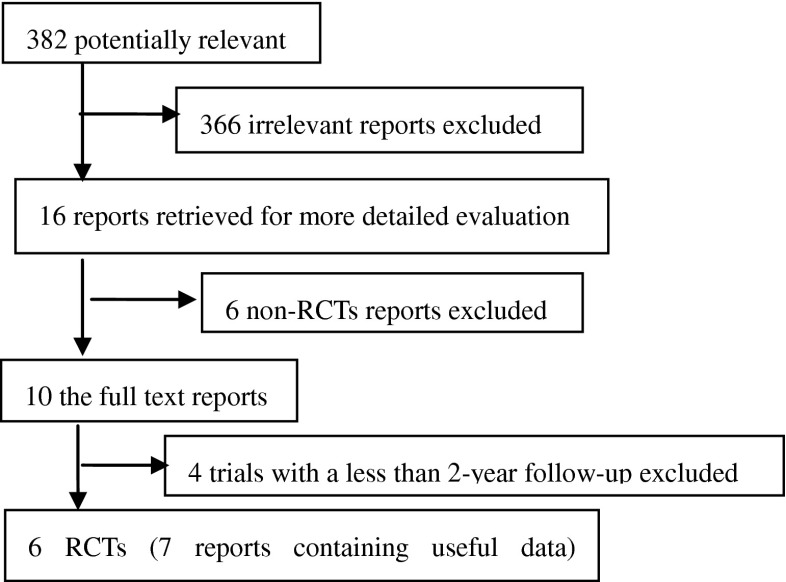
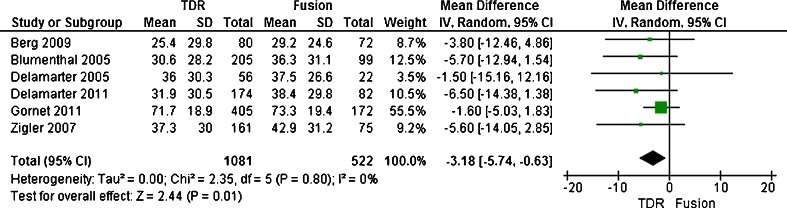
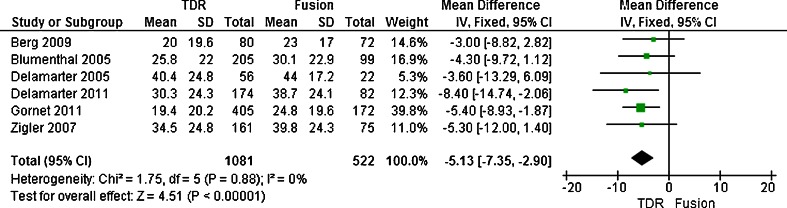
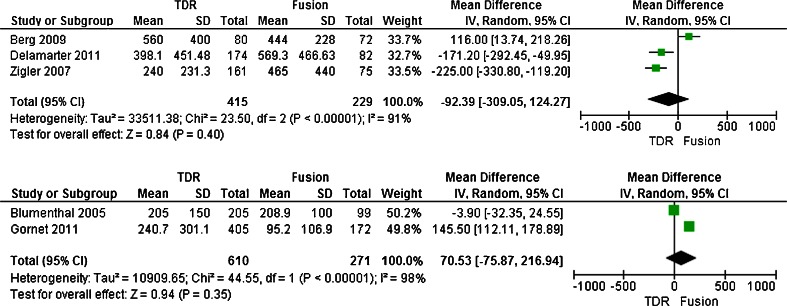
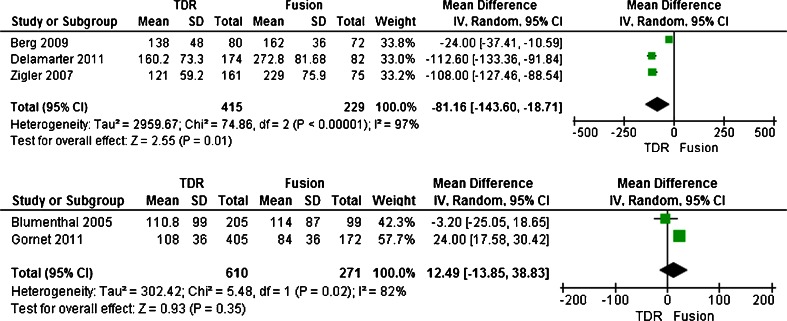
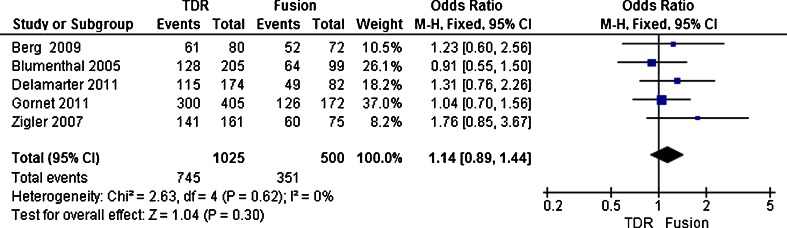
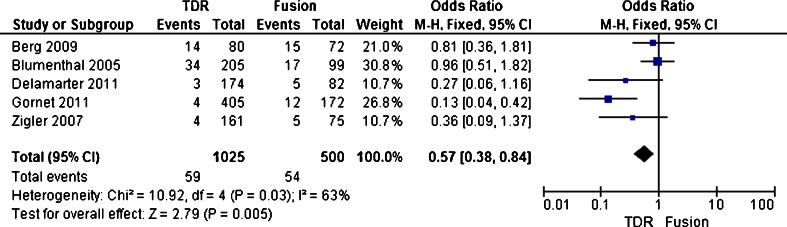
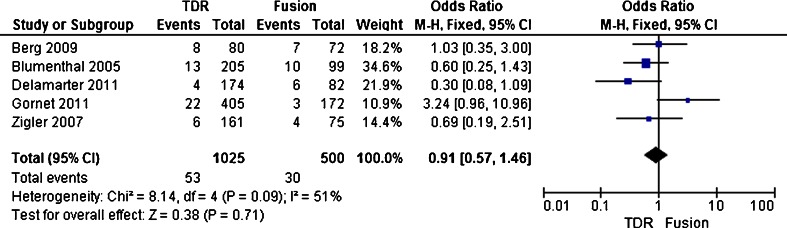
Results: Six relevant randomized controlled trials (RCTs) involving 1,603 patients were identified and reported two year follow-up results. Patients in TDR group compared with lumbar fusion group demonstrated significant improvements in ODI, VAS scores and complication rates at the two year follow-up. Meanwhile, except for operating time in anterior group, intra-operative blood loss, operating time in posterior group, and reoperation rate were without clinical significance between the two groups. In addition, the range of motion (ROM) was maintained within normal ranges after TDR.
Conclusions: The results showed the TDR has significant safety and efficacy comparable to lumbar fusion at two year follow-up. Although superiority compared to fusion could not be proved, by comparing clinical symptoms relieved, motion preserved, and the low reoperation rate during long-term follow-up on TDR, TDR was considered safe and effective. Therefore, the authors suggest adopting TDR on a large scale; with failure of TDR, interbody fusion would be performed.
Figures
Comment in
-
Comment on Wei et al.: Comparison of artificial total disc replacement versus fusion for lumbar degenerative disc disease: a meta-analysis of randomized controlled trials.Int Orthop. 2013 Oct;37(10):2107-8. doi: 10.1007/s00264-013-1991-5. Epub 2013 Jul 20. Int Orthop. 2013. PMID: 23873172 Free PMC article. No abstract available.
-
Letter regarding article by Wei et al.: Comparison of artificial total disc replacement versus fusion for lumbar degenerative disc disease: a meta-analysis of randomised controlled trials.Int Orthop. 2014 Jan;38(1):211. doi: 10.1007/s00264-013-2150-8. Epub 2013 Nov 1. Int Orthop. 2014. PMID: 24178062 Free PMC article. No abstract available.
References
-
- Glaser J, Stanley M, Sayre H, et al. A 10-year follow-up evaluation of lumbar spine fusion with pedicle screw fixation. Spine. 2003;28(13):1390–1395. - PubMed
-
- Chou WY, Hsu CJ, Chang WN, Wong CY, et al. Adjacent segment degeneration after lumbar spinal posterolateral fusion with instrumentation in elderly patients. Arch Orthop Trauma Surg. 2002;122:39–43. - PubMed
Publication types
MeSH terms
LinkOut - more resources
Full Text Sources
Other Literature Sources
Medical
