Long-term comparison of full-bed deep anterior lamellar keratoplasty and penetrating keratoplasty in treating keratoconus
- PMID: 23645180
- PMCID: PMC3650457
- DOI: 10.1631/jzus.B1200272
Long-term comparison of full-bed deep anterior lamellar keratoplasty and penetrating keratoplasty in treating keratoconus
Abstract
Objective: To compare postoperative outcomes of full-bed deep anterior lamellar keratoplasty (DALK) with penetrating keratoplasty (PK) in treating keratoconus.
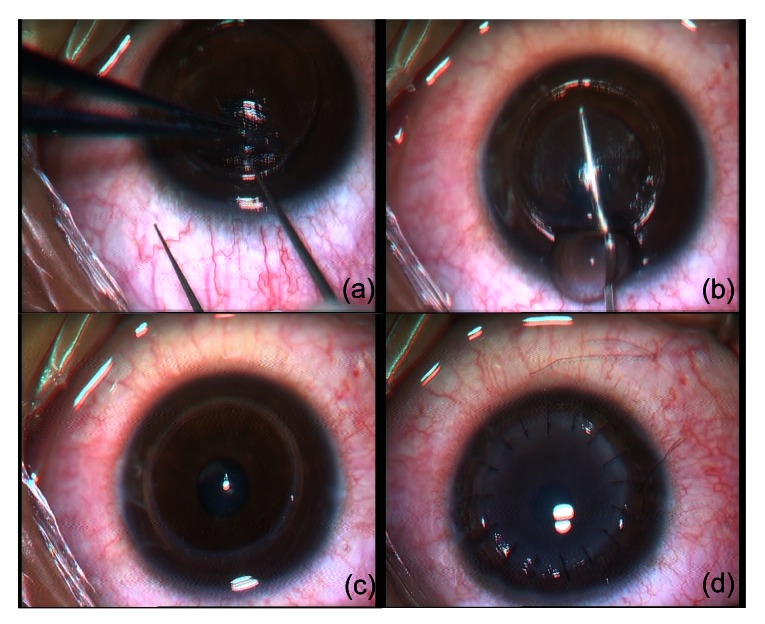
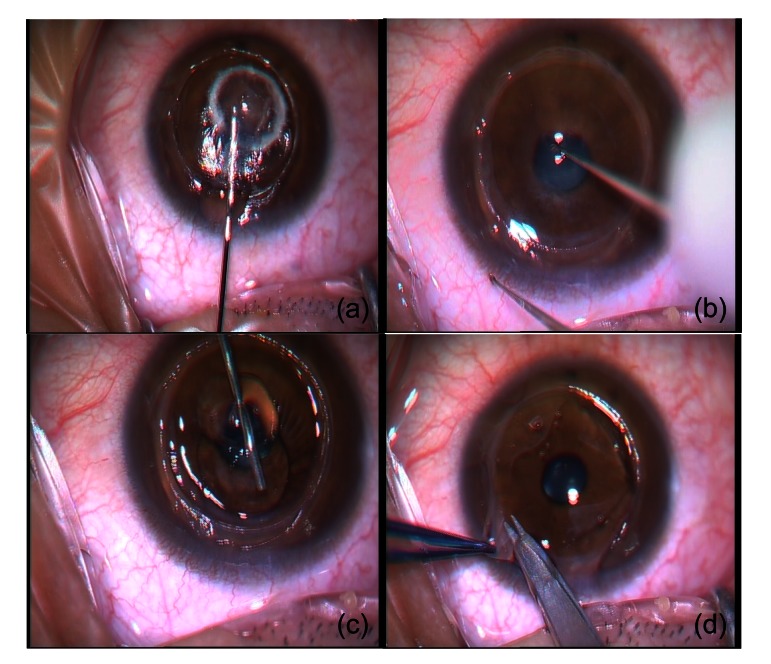
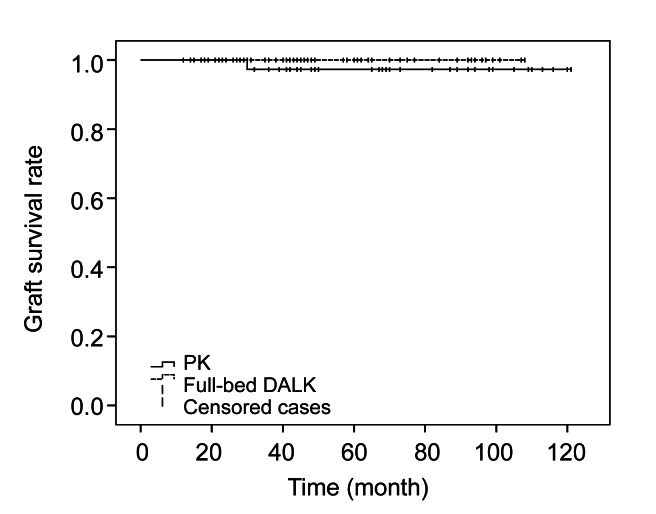
Methods: Seventy-five eyes of 64 patients who received full-bed DALK and 52 eyes of 51 patients who received PK between June 2000 and August 2010 were included in this retrospective study. Full-bed DALK was performed using Yao's hooking-detaching technique. PK was performed using a standard technique. Intraoperative and postoperative complications, visual acuity, rejection, graft survival, endothelial cell density, corneal sensation recovery, and re-innervation were compared between the two groups.
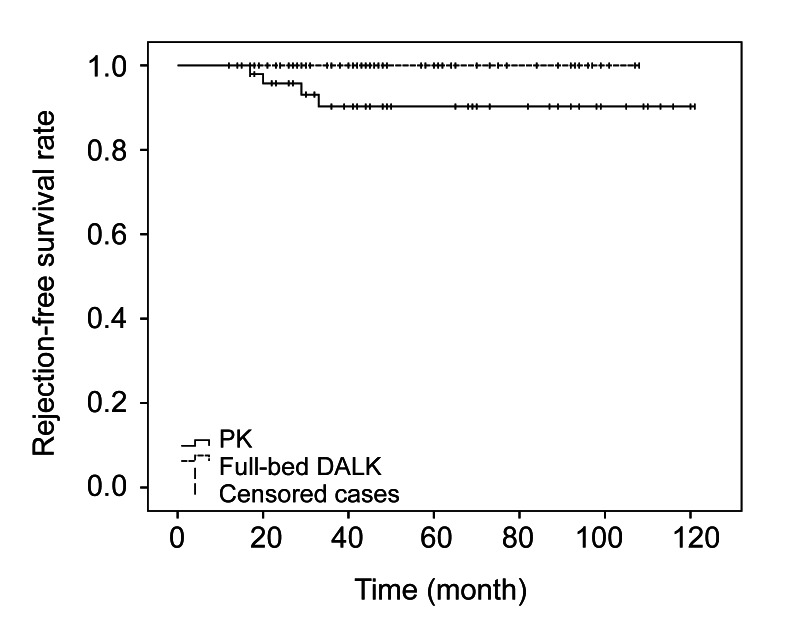
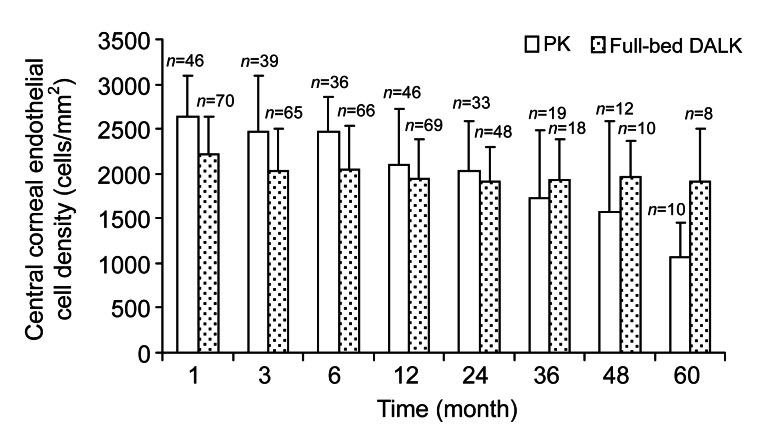
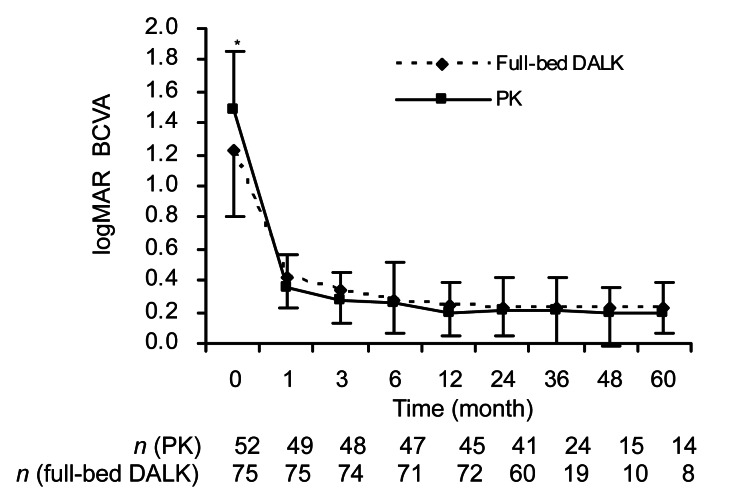
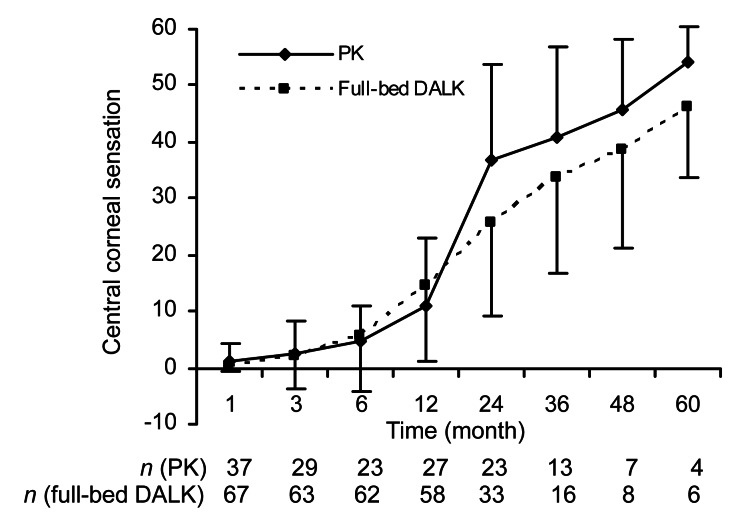
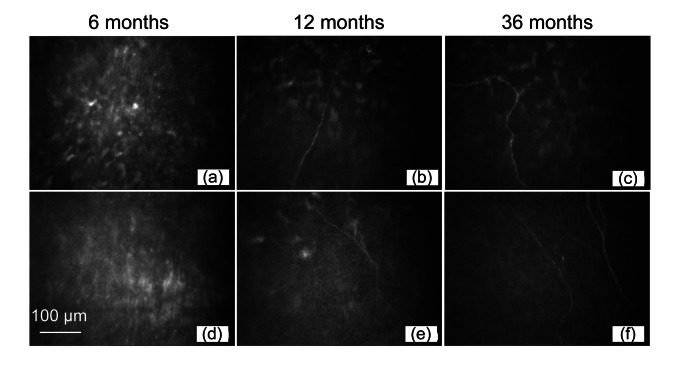
Results: A best correct visual acuity of 0.5 or better was achieved in 90.7% of eyes after full-bed DALK and in 92.3% of eyes after PK (P=0.75). By the fifth postoperative year, graft endothelial cell loss reached 34.6% in the PK group vs. 13.9% in the full-bed DALK group (P<0.001). There were no statistical differences in corneal sensitivity recovery or corneal re-innervation between the groups (P>0.05). Intraoperative microperforation occurred in seven out of 75 (9.3%) eyes with a temporally postoperative double anterior chamber in two eyes in the full-bed DALK group. Postoperative complications in the PK vs. the full-bed DALK groups respectively were: rejection (7.7% vs. 0%, P=0.015), high intraocular pressure (IOP) (46.2% vs. 1.3%, P<0.001), secondary glaucoma (9.6% vs. 0%, P=0.006), complicated cataract (19.2% vs. 0%, P<0.001), and wound dehiscence (9.6% vs. 0%, P=0.006).
Conclusions: Both full-bed DALK and PK can offer long-term satisfactory visual outcomes for keratoconus. Graft rejection, secondary glaucoma, complicated cataracts, and constant endothelial cell loss were observed in eyes only after PK.
Conflict of interest statement
All procedures followed were in accordance with the ethical standards of the Ethics Committee of Sir Run Run Shaw Hospital, Zhejiang University School of Medicine, China and with the Helsinki Declaration of 1975, as revised in 2000(5). Informed consent was obtained from all patients for being included in the study.
Figures
References
-
- Al-Torbak AA, Al-Motowa S, Al-Assiri A, Al-Kharashi S, Al-Shahwan S, Al-Mezaine H, Teichmann K. Deep anterior lamellar keratoplasty for keratoconus. Cornea. 2006;25(4):408–412. - PubMed
-
- Amayem AF, Anwar M. Fluid lamellar keratoplasty in keratoconus. Ophthalmology. 2000;107(1):76–79. discussion 80. - PubMed
-
- Cheng YY, Visser N, Schouten JS, Wijdh RJ, Pels E, van Cleynenbreugel H, Eggink CA, Zaal MJ, Rijneveld WJ, Nuijts RM. Endothelial cell loss and visual outcome of deep anterior lamellar keratoplasty versus penetrating keratoplasty: a randomized multicenter clinical trial. Ophthalmology. 2011;118(2):302–309. doi: 10.1016/j.ophtha.2010.06.005. - DOI - PubMed
Publication types
MeSH terms
LinkOut - more resources
Full Text Sources
Other Literature Sources
Medical