


Suppression of cholangiocarcinoma cell growth by human umbilical cord mesenchymal stem cells: a possible role of Wnt and Akt signaling
- PMID: 23646150
- PMCID: PMC3639969
- DOI: 10.1371/journal.pone.0062844
Suppression of cholangiocarcinoma cell growth by human umbilical cord mesenchymal stem cells: a possible role of Wnt and Akt signaling
Erratum in
- PLoS One. 2013;8(7). doi:10.1371/annotation/7fff93fa-8e80-41f3-b35a-e658cb7256a9
Abstract
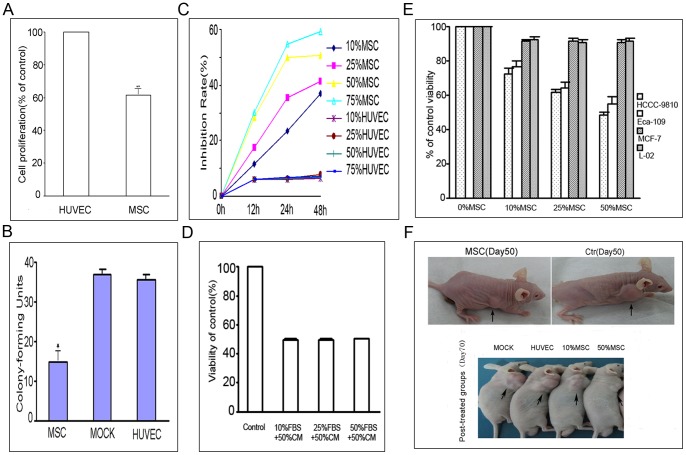
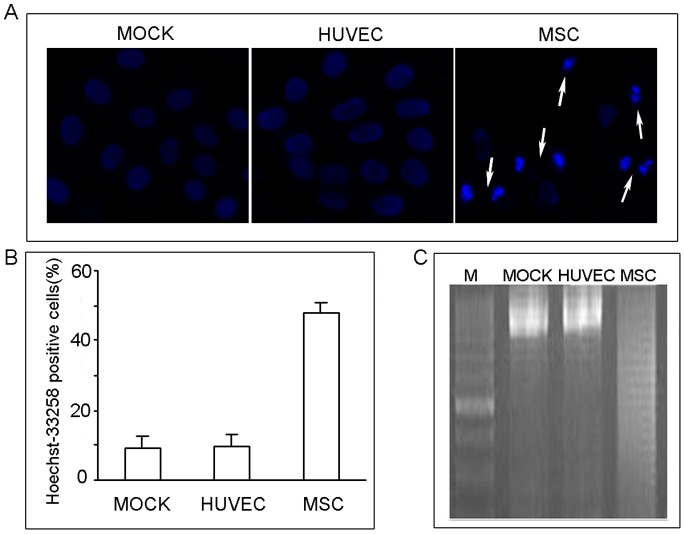
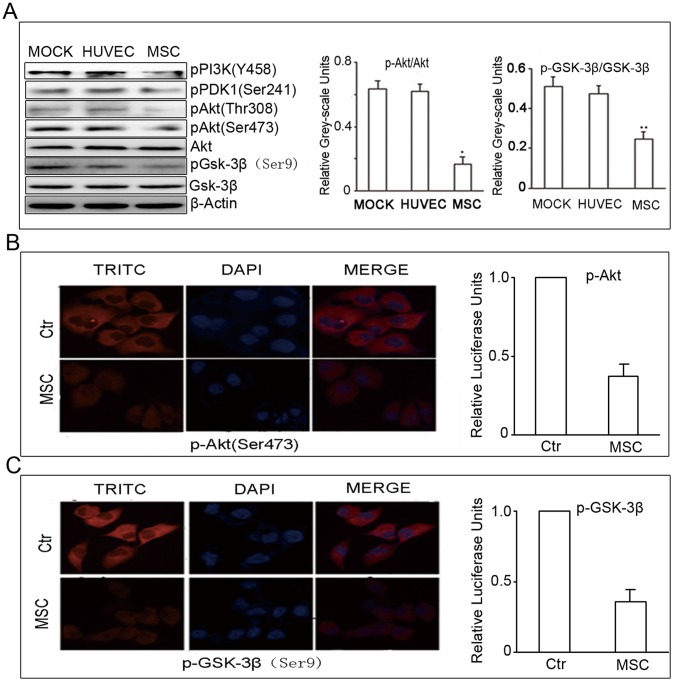
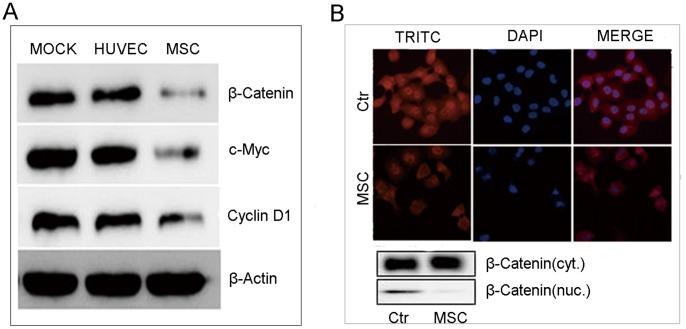
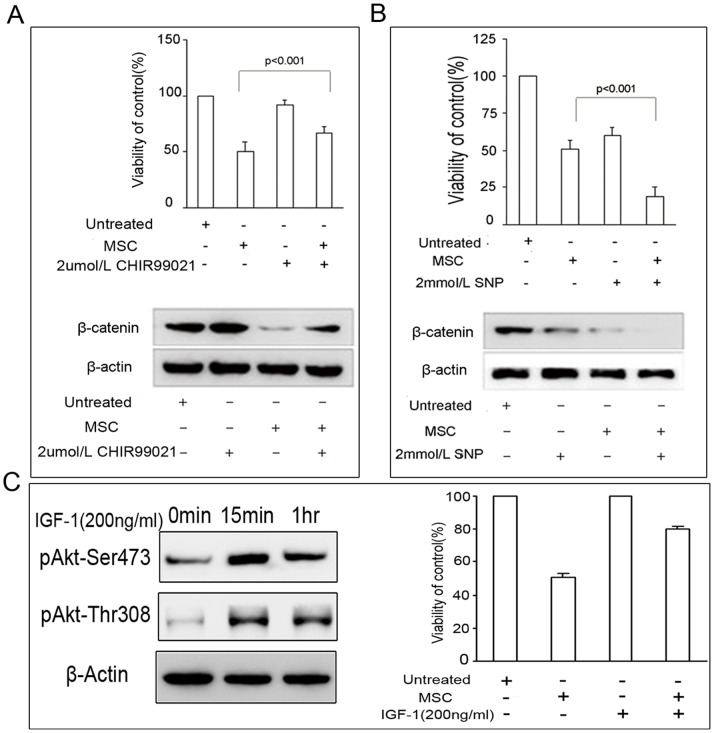
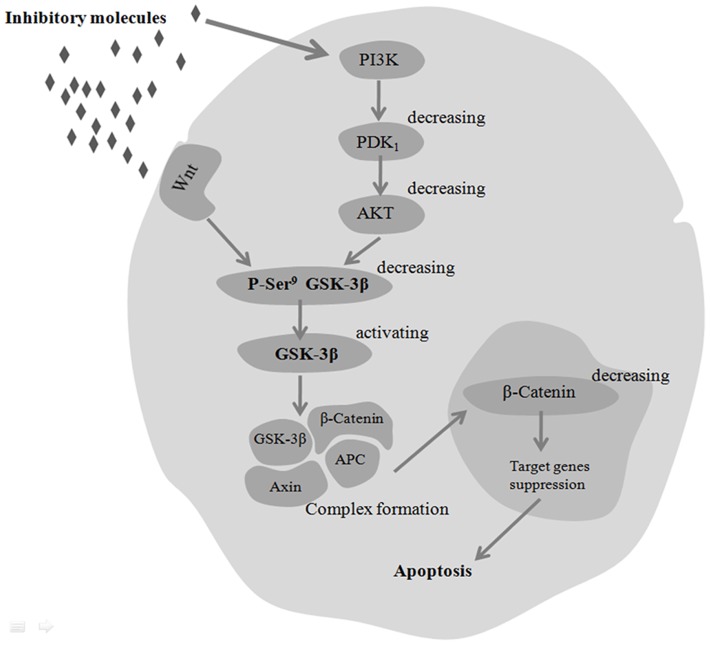
Emerging evidence indicates that human mesenchymal stem cells (hMSCs) can be recruited to tumor sites, and affect the growth of human malignancies. However, little is known about the underlying molecular mechanisms. Here, we observed the effects of hMSCs on the human cholangiocarcinoma cell line, HCCC-9810, using an animal transplantation model, and conditioned media from human umbilical cord-derived mesenchymal stem cells (hUC-MSCs). Animal studies showed that hUC-MSCs can inhibit the growth of cholangiocarcinoma xenograft tumors. In cell culture, conditioned media from hUC-MSCs inhibited proliferation and induced apoptosis of tumor cells in a dose- and time-dependent manner. The proliferation inhibition rate increased from 6.21% to 49.86%, whereas the apoptosis rate increased from 9.3% to 48.1% when HCCC-9810 cells were cultured with 50% hUC-MSC conditioned media for 24 h. Immunoblot analysis showed that the expression of phosphor-PDK1 (Ser241), phosphor-Akt (Ser 437 and Thr308), phosphorylated glycogen synthase kinase 3β (phospho-GSK-3β(Ser9)), β-catenin, cyclin-D1, and c-myc were down-regulated. We further demonstrated that CHIR99021, a GSK-3β inhibitor reversed the suppressive effects of hUC-MSCs on HCCC-9810 cells and increased the expression of β-catenin. The GSK-3β activator, sodium nitroprusside dehydrate (SNP), augmented the anti-tumor effects of hUC-MSCs and decreased the expression of β-catenin. IGF-1 acted as an Akt activator, and also reversed the suppressive effects of hUC-MSCs on HCCC-9810 cells. All these results suggest that hUC-MSCs could inhibit the malignant phenotype of HCCC-9810 human cholangiocarcinoma cell line. The cross-talk role of Wnt/β-catenin and PI3K/Akt signaling pathway, with GSK-3β as the key enzyme bridging these pathways, may contribute to the inhibition of cholangiocarcinoma cells by hUC-MSCs.
Conflict of interest statement
Figures
References
-
- Higashi M, Yamada N, Yokoyama S, Kitamoto S, Tabata K, et al. (2012) Pathobiological implications of MUC16/CA125 expression in intrahepatic cholangiocarcinoma-mass forming type. Pathobiology 79(2): 101–106. - PubMed
-
- Nathan H, Pawlik TM, Wolfgang CL, Choti MA, Cameron JL, et al. (2007) Trends in survival after surgery for cholangiocarcinoma: a 30-year population-based SEER database analysis. J Gastrointest Surg 11: 1488–1496. - PubMed
-
- Pittenger MF, Mackay AM, Beck SC, Jaiswal RK, Douglas R, et al. (1999) Multilineage potential of adult human mesenchymal stem cells. Science 284: 143–147. - PubMed
-
- Pittenger MF, Martin BJ (2004) Mesenchymal stem cells and their potential as cardiac therapeutics. Circ Res 95: 9–20. - PubMed
Publication types
MeSH terms
Substances
LinkOut - more resources
Full Text Sources
Other Literature Sources
Medical
Research Materials
Miscellaneous
