. 2013 Apr 30;8(4):e62917.
doi: 10.1371/journal.pone.0062917. Print 2013.

Inflammation and airway microbiota during cystic fibrosis pulmonary exacerbations

Affiliations

Inflammation and airway microbiota during cystic fibrosis pulmonary exacerbations

Edith T Zemanick et al. PLoS One. .

Abstract

Background: Pulmonary exacerbations (PEx), frequently associated with airway infection and inflammation, are the leading cause of morbidity in cystic fibrosis (CF). Molecular microbiologic approaches detect complex microbiota from CF airway samples taken during PEx. The relationship between airway microbiota, inflammation, and lung function during CF PEx is not well understood.

Objective: To determine the relationships between airway microbiota, inflammation, and lung function in CF subjects treated for PEx.

Methods: Expectorated sputum and blood were collected and lung function testing performed in CF subjects during early (0-3d.) and late treatment (>7d.) for PEx. Sputum was analyzed by culture, pyrosequencing of 16S rRNA amplicons, and quantitative PCR for total and specific bacteria. Sputum IL-8 and neutrophil elastase (NE); and circulating C-reactive protein (CRP) were measured.

Results: Thirty-seven sputum samples were collected from 21 CF subjects. At early treatment, lower diversity was associated with high relative abundance (RA) of Pseudomonas (r = -0.67, p<0.001), decreased FEV(1%) predicted (r = 0.49, p = 0.03) and increased CRP (r = -0.58, p = 0.01). In contrast to Pseudomonas, obligate and facultative anaerobic genera were associated with less inflammation and higher FEV₁. With treatment, Pseudomonas RA and P. aeruginosa by qPCR decreased while anaerobic genera showed marked variability in response. Change in RA of Prevotella was associated with more variability in FEV₁ response to treatment than Pseudomonas or Staphylococcus.

Conclusions: Anaerobes identified from sputum by sequencing are associated with less inflammation and higher lung function compared to Pseudomonas at early exacerbation. CF PEx treatment results in variable changes of anaerobic genera suggesting the need for larger studies particularly of patients without traditional CF pathogens.


Conflict of interest statement

Competing Interests: The authors have declared that no competing interests exist.

Figures

Figure 1
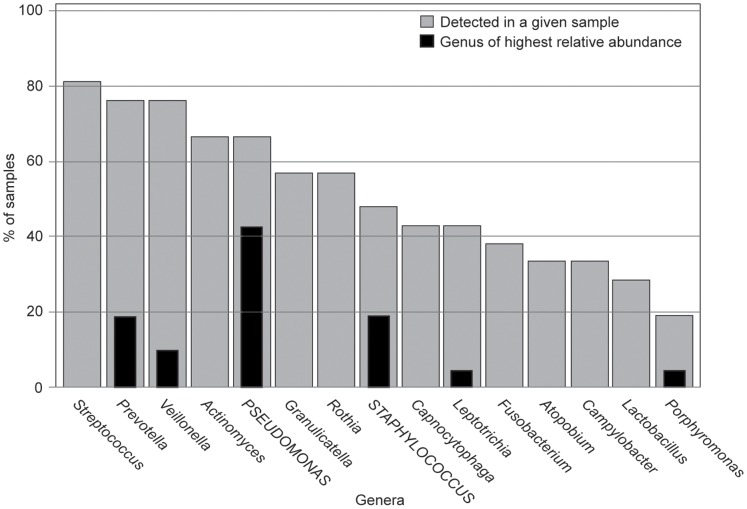
Figure 1. Summary of most prevalent and top ranked (highest relative abundance) genera from early treatment CF sputum samples.
Prevalence of genera that are top ranked or detected in more than 25% of early-treatment sputum samples are shown. Grey bars show the percent of samples with a given bacterial genera detected by pyrosequencing. Black bars indicate the percent of samples in which the bacterial genera was the top ranked genus detected. (N = 21 early treatment sputum samples).
Figure 2
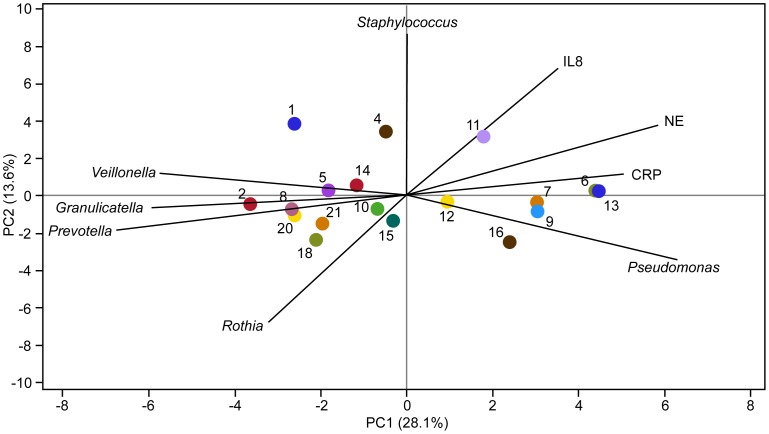
Figure 2. PCA plot of bacterial genera relative abundance and inflammatory markers at Early Treatment of PEx.
Colored dots represent individual subjects with subject identification number (SID) (n = 21). The length of the vectors represents the PCA loadings of the variables on the first two principal components, which explain 42% of the variability. Staphylococcus and Pseudomonas are both positively correlated with NE and CRP, while Veillonella, Granulicatella, Prevotella and Rothia are negatively correlated.. The first principal component (PC) was negatively correlated with FEV1% predicted indicating that sputum samples with higher inflammation and higher RA of Pseudomonas had lower FEV1 and those with lower inflammation and higher RA of Veillonella, Granulicatella or Prevotella had higher FEV1.
Figure 3
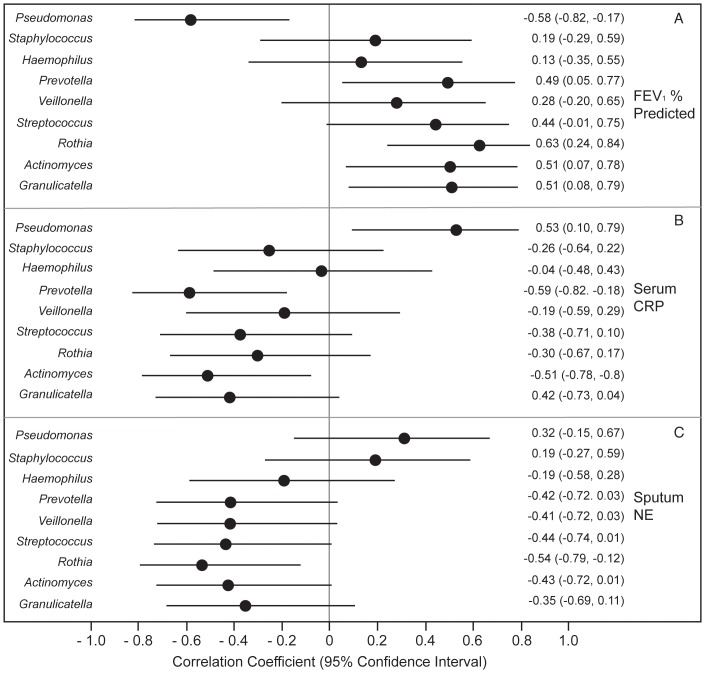
Figure 3. Cross-sectional relationship between airway microbiota, lung function and inflammation measured at Early Treatment of PEx.
(n = 21 subjects) Spearman’s rank correlation coefficients and 95% confidence intervals (bars) are shown, measuring the association between the relative abundance of each genera with FEV1% predicted, C-reactive protein (CRP) and sputum neutrophil elastase (NE).
Figure 4
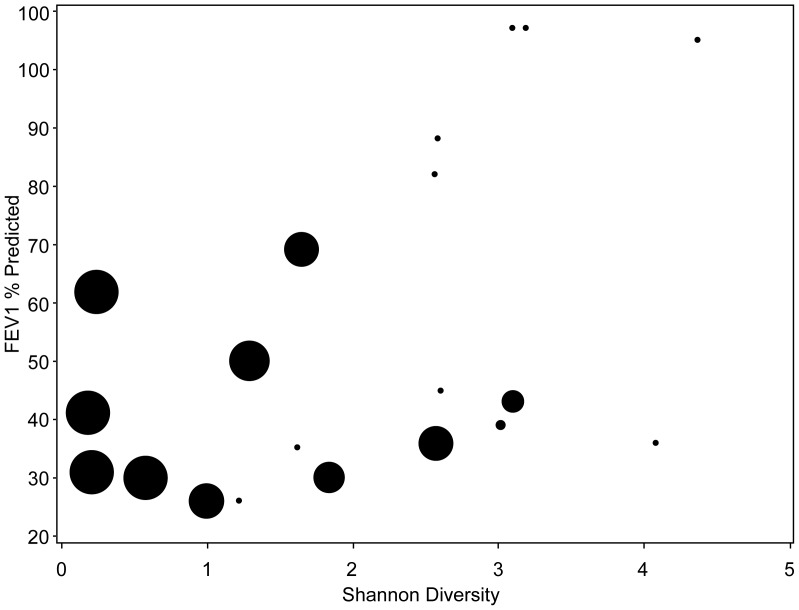
Figure 4. Relationship between diversity, FEV1 and Pseudomonas RA.
Lower diversity is associated with lower FEV1 percent predicted and higher RA of Pseudomonas. Circle size corresponds to relative abundance of Pseudomonas demonstrating that samples with larger relative abundance of Pseudomonas have lower diversity, while samples with no or low relative abundance of Pseudomonas (small circles) generally have higher diversity.
Figure 5
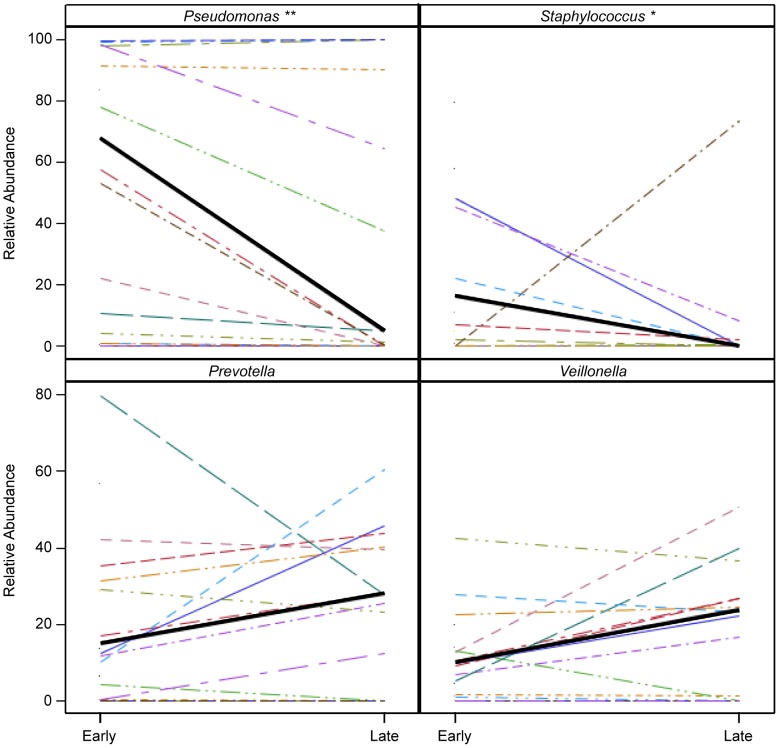
Figure 5. Bacterial genera with the largest magnitude of change in relative abundance by pyrosequencing with treatment of PEx.
The median values for samples where the genus was detected during early treatment are connected with a thick black line. Statistically significant and marginally significant differences are represented by **(p = 0.01) and *(p = 0.06), for Pseudomonas and Staphylococcus respectively. (N = 16 subjects).
Figure 6
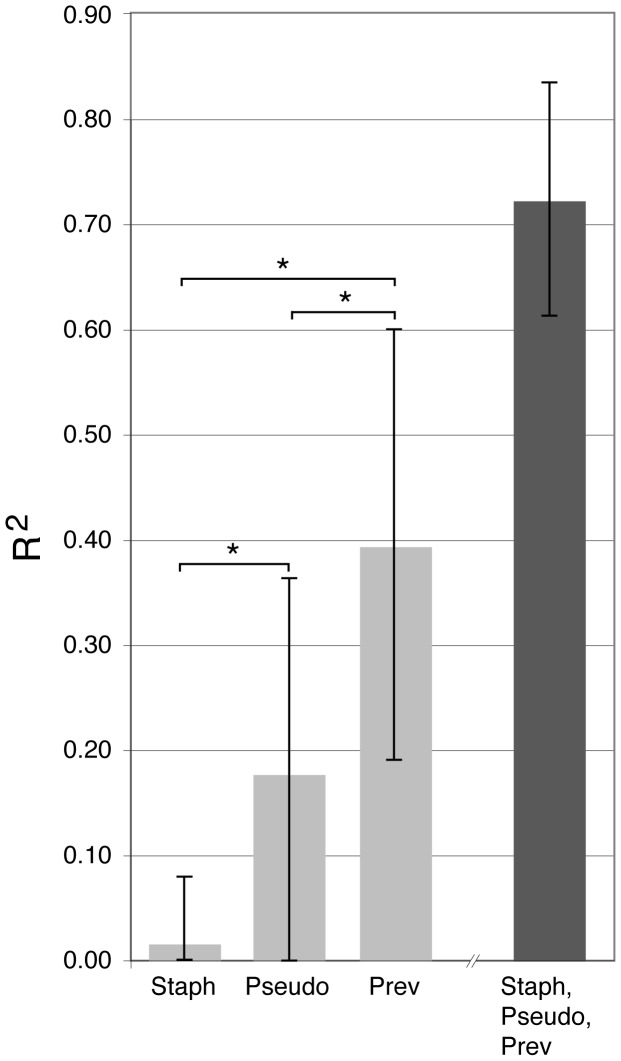
Figure 6. Contribution of change in relative abundance of the genera Staphylococcus (Staph), Pseudomonas (Pseudo), and Prevotella (Prev) and all three combined in explaining the variation in response to treatment measured by change in FEV1% predicted.
The height of the bars correspond to the R-squared values, the lines indicate the upper 95% confidence intervals. The black bar corresponds to a model with all three predictors while the grey bars contain one predictor; R-squared values should only be compared across models with the same number of predictors. *Indicates p-values less than 0.05.

References

    1. Gibson RL, Burns JL, Ramsey BW (2003) Pathophysiology and management of pulmonary infections in cystic fibrosis. Am J Respir Crit Care Med 168: 918–951. - PubMed
    1. Amadori A, Antonelli A, Balteri I, Schreiber A, Bugiani M, et al. (2009) Recurrent exacerbations affect FEV(1) decline in adult patients with cystic fibrosis. Respir Med 103: 407–413. - PubMed
    1. Liou TG, Adler FR, Fitzsimmons SC, Cahill BC, Hibbs JR, et al. (2001) Predictive 5-year survivorship model of cystic fibrosis. Am J Epidemiol 153: 345–352. - PMC - PubMed
    1. Sanders DB, Bittner RC, Rosenfeld M, Redding GJ, Goss CH (2011) Pulmonary exacerbations are associated with subsequent FEV1 decline in both adults and children with cystic fibrosis. Pediatr Pulmonol 46: 393–400. - PubMed
    1. Goss CH, Burns JL (2007) Exacerbations in cystic fibrosis. 1: Epidemiology and pathogenesis. Thorax 62: 360–367. - PMC - PubMed

Publication types

MeSH terms

Substances