Simplified negative pressure wound therapy: clinical evaluation of an ultraportable, no-canister system
- PMID: 23647737
- PMCID: PMC7950749
- DOI: 10.1111/iwj.12080
Simplified negative pressure wound therapy: clinical evaluation of an ultraportable, no-canister system
Abstract
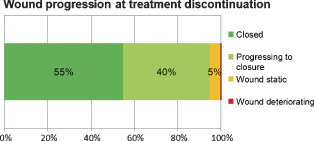
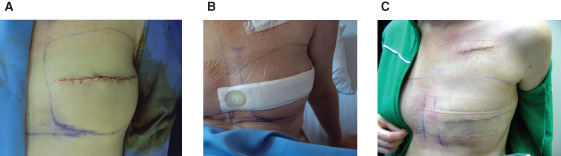
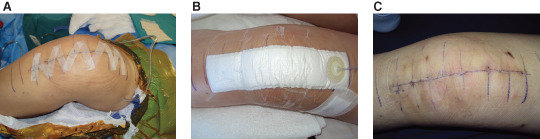
The aim of this study was to evaluate a prototype negative pressure wound therapy (NPWT) system that has been developed to simplify NPWT for wounds at the lower end of the acuity scale. The new device has a single preset pressure of -80 mmHg, is single use and operates without an exudate canister. The disposable NPWT system (PICO™) was tested in a prospective, non-comparative, multicentre clinical trial to assess device functionality and clinical acceptance. Twenty patients were recruited for a maximum treatment period of 14 days. The NPWT devices were fitted with data log chips to enable longitudinal assessment of negative pressure and leak rates during therapy. Sixteen (80%) patients had closed surgical wounds, two (10%) patients had traumatic wounds and two (10%) patients received meshed split thickness skin grafts. The mean study duration was 10·7 days (range: 5-14 days) and the mean dressing wear time per individual patient was 4·6 days (range: 2-11). Fifty-five percent of wounds had closed by the end of the 14-day study or earlier, with a further 40% of wounds progressing to closure. Real-time pressure monitoring showed continuous delivery of NPWT. Three cases are discussed representing different wound locations and different patient factors that can increase the risk of post-surgical complications. Clinical studies of the disposable NPWT system confirmed the ability of the simplified single-use device to function consistently over the expected wear time. The anticipated reduced costs, ease of use and increased mobility of patients using this system may enable NPWT benefits to be available to a greater proportion of patients.
Keywords: Closed surgical incision; Negative pressure wound therapy; Portable; Postoperative care; Wound healing.
© 2013 The Authors. International Wound Journal published by Medicalhelplines.com Inc and John Wiley & Sons Ltd.
Figures


References
-
- Armstrong DG, Lavery LA. Negative pressure wound therapy after partial diabetic foot amputation: a multicentre, randomised controlled trial. Lancet 2005;366:1704–10. - PubMed
-
- Wanner MB, Schwarzl F, Strub B, Zaech GA, Pierer G. Vacuum‐assisted wound closure for cheaper and more comfortable healing of pressure sores: a prospective study. Scand J Plast Reconstr Surg Hand Surg 2003;37:28–33. - PubMed
-
- Vuerstaek JDD, Vainas T, Wuite J, Nelemans P, Neumann MH, Veraart JC. State‐of‐the‐art treatment of chronic leg ulcers: a randomized controlled trial comparing vacuum‐assisted closure (V.A.C.) with modern wound dressings. J Vasc Surg 2006;44:1029–37, discussion 1038. - PubMed
-
- Kamolz L‐P, Andel H, Haslik W, Winter W, Meissl G, Frey M. Use of subatmospheric pressure therapy to prevent burn wound progression in human: first experiences. Burns 2004;30:253–8. - PubMed
Publication types
MeSH terms
LinkOut - more resources
Full Text Sources
Other Literature Sources
Medical