


Smad4 loss in mouse keratinocytes leads to increased susceptibility to UV carcinogenesis with reduced Ercc1-mediated DNA repair
- PMID: 23648546
- PMCID: PMC3783584
- DOI: 10.1038/jid.2013.213
Smad4 loss in mouse keratinocytes leads to increased susceptibility to UV carcinogenesis with reduced Ercc1-mediated DNA repair
Abstract
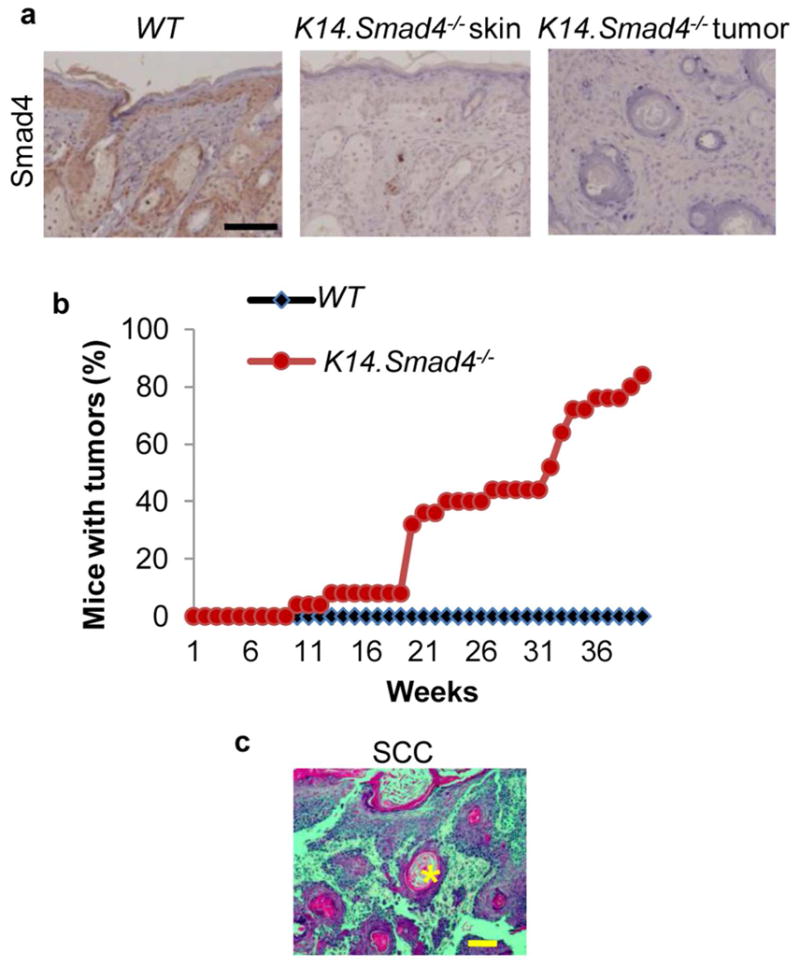
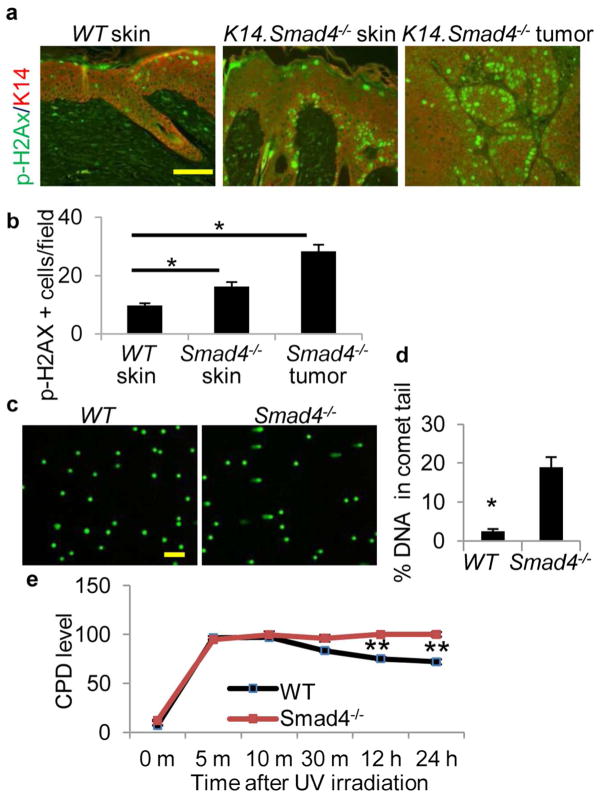
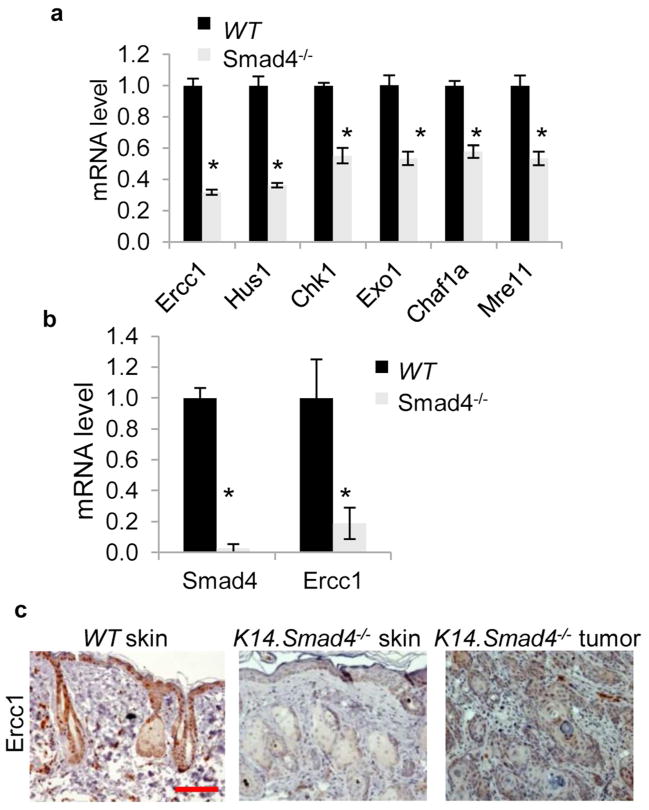
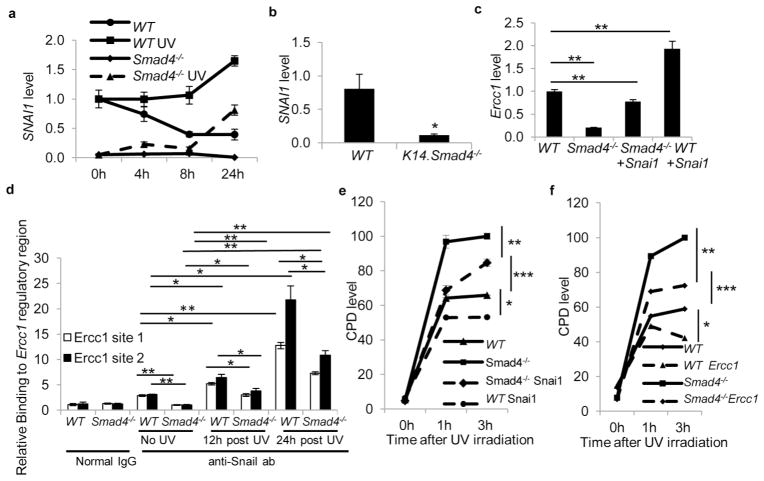
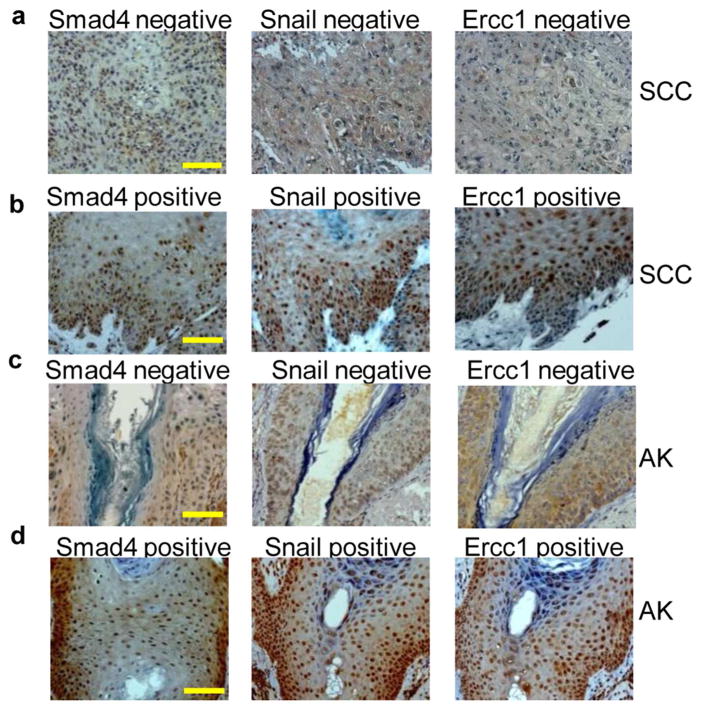
Smad4 loss occurs frequently in human skin squamous cell carcinoma (SCC), but it is unknown whether this loss increases UV-induced carcinogenesis, a major etiological factor in skin cancer. In the present study, mice with keratinocyte-specific Smad4 deletion (K14.Smad4(-/-)) and wild-type (WT) littermates were chronically UV-irradiated. Compared with WT, K14.Smad4(-/-) mice exhibited increased DNA damage and increased susceptibility to UV-induced skin cancer. Among genes involved in repairing UV-induced DNA damage, Excision repair cross-complementation group 1 (Ercc1) messenger RNA was significantly reduced in UV-treated K14.Smad4(-/-) skin compared with WT skin. Further analysis revealed that Smad4 loss confers reduced Snail binding to the Ercc1 regulatory elements, resulting in reduced Ercc1 transcription. Consistently, transient transfection of Snai1 into Smad4(-/-) keratinocytes led to increased repair of UV-induced DNA lesions. Transfection of Ercc1 into Smad4(-/-) keratinocytes restored repair of UV-induced DNA damage. Further, immunostaining revealed that the presence of Smad4 protein is associated with the presence of Snail and Ercc1 proteins in human skin SCC and precancerous actinic keratoses. Collectively, Smad4 loss-associated Snail reduction compromises Ercc1-mediated DNA repair, contributing to increased UV-induced skin carcinogenesis. Thus, we identified a role for Snail in UV-induced DNA repair.
Conflict of interest statement
The authors declare no conflict of interest.
Figures
References
-
- Batlle E, Sancho E, Franci C, Dominguez D, Monfar M, Baulida J, et al. The transcription factor snail is a repressor of E-cadherin gene expression in epithelial tumour cells. Nature cell biology. 2000;2:84–9. - PubMed
-
- Berton TR, Wang XJ, Zhou Z, Kellendonk C, Schutz G, Tsai S, et al. Characterization of an inducible, epidermal-specific knockout system: differential expression of lacZ in different Cre reporter mouse strains. Genesis. 2000;26:160–1. - PubMed
-
- Cano A, Perez-Moreno MA, Rodrigo I, Locascio A, Blanco MJ, del Barrio MG, et al. The transcription factor snail controls epithelial-mesenchymal transitions by repressing E-cadherin expression. Nature cell biology. 2000;2:76–83. - PubMed
Publication types
MeSH terms
Substances
Grants and funding
LinkOut - more resources
Full Text Sources
Other Literature Sources
Medical
Molecular Biology Databases
Research Materials
Miscellaneous
